Sunday, November 17, 2013

Nearly 40 years after Birmingham bombings, families still kept from finding out truth

 I was in Birmingham yesterday, and as I hastened from a crowed city centre pub through busy early evening streets to New Street station, my mind briefly went to that other November evening almost forty years ago when bombs ripped through two other pubs nearby, blasting people, glass and rubble about in bloody shambles.

It was on November 21, 1974.
At 20:11 a man with an Irish accent telephoned the Birmingham Post newspaper and said: "There is a bomb planted in the Rotunda and there is a bomb in New Street at the tax office".[8] A telephoned warning was also sent to the Evening Mail newspaper.[9] The Rotunda was a 25-storey office block that housed the "Mulberry Bush" pub on its lower two floors.[10] The police started to check the upper floors of the Rotunda but failed to clear the crowded pub at street level. Six minutes after the warning, at 20:17, the bomb exploded inside a duffel bag, devastating the pub.[8] Ten people were killed in this explosion and dozens injured, including one woman who was so badly wounded she was given the last rites administered by the Catholic Church to those on the point of death.
Police were attempting to clear the nearby "Tavern in the Town" basement pub on New Street below King Edward House, when at 20:27 a second bomb exploded there, killing another 11 people and leaving many with appalling injuries. The bodies of the dead and injured were strewn about the ruined pub.[3] A passing West Midlands bus was wrecked in the blast.[11] The explosion was so powerful that several victims were blown through a brick wall into an area just below the main front entrance to King Edward House. Their remains were wedged between the rubble and underground electric cables; it took hours for firemen to remove them.[12] The two pubs were about 50 yards (46 m) apart.[3] Buildings near the pubs were damaged and passersby in the street were struck by flying glass from shattered shop windows.
A third device, an "Eversoft Frangex" bomb,[13] was placed outside a branch of Barclays Bank on Hagley Road but failed to detonate.[14]
Altogether, 21 people were killed and 182 people were injured. Most of the dead and wounded were young people between the ages of 17 and 25, including two brothers, Desmond and Eugene Reilly. One of the victims, 18-year-old Maxine Hambleton, had not been a customer. She had just gone into the "Tavern in the Town" to hand out tickets to friends for a party. She was killed seconds after entering the pub and had been standing beside the bag containing the bomb when it exploded. Her friend Jane Davis, aged 17, was the youngest victim of the two bombings
It was immediately assumed by the authorities and media that this was the work of the Provisional IRA, although neither they nor Sinn Fein have ever claimed or admitted responsibility. Six Irish men who had been living in the Birmingham area were arrested that night on their way to the Belfast ferry and the following year sentenced to life imprisonment. It took 16 years of campaigning and protests before their sentences were quashed, and the "Birmingham Six" were released as innocent.

More immediately after the bombing there was a wave of revulsion and hatred against Irish people in the West Midlands and around the country, and within two days the government was able to bring in the Prevention of Terrorism Act which it had been preparing. This has not prevented terrorism but it did enable police harassment and persecution of Irish people in particular, and has become permanent legislation that can be put to other use.

By sheer coincidence, while I was returning from Birmingham, a friend was posting an item on Facebook. Thirty-nine years after the Birmingham bombings relatives of victims have sought an inquiry, and are trying to get at the truth themselves, without much help it seems.     

 http://www.bbc.co.uk/news/uk-england-birmingham-1702947

http://www.bbc.co.uk/news/uk-england-12664938

That was from last year, and since then though David Cameron appeared to agree there should be an investigation, the government doesn't seem to have moved.  Birmingham campaigners have continued their efforts to get attention. They protested when Martin McGuiness was speaking, sought a meeting with Gerry Adams at a London conference, and went to Warrington to meet Paddy Hill, one of the "Birmingham Six", who deplored the bombings, and told them that while under interrogation he had given three names to police of people he thought were involved.


http://www.birminghammail.co.uk/news/local-news/birmingham-pub-bombings-campaigners-reveal-6286695

http://www.birminghammail.co.uk/news/local-news/birmingham-pub-bombings-campaigners-set-6206380

West Midlands police have reportedly re-opened their investigations, something they previously said could not be done without fresh evidence. But today comes news that shows things in another light.

Justice For The 21 (J421) campaigner Julie Hambleton, whose 18-year-old sister Maxine was among those killed when the bombs devastated the Mulberry Bush and the Tavern in the Town in Birmingham city centre, contacted the police and CPS to ask for records about the case.

But she said that the West Midlands Police Counter Terrorism Unit (CTU) said that files are so top secret that they cannot be accessed.
he sought access to the full transcripts of the trial of the Birmingham Six at Lancaster Crown Court in 1975, which she had been told were in the MoJ’s possession.

“They said it was out of the boundaries of cost and that the files should be in the National Archive,” said the 50-year-old lecturer.

“Yet the National Archive had already told me they held some of the transcripts, and the rest were with the Government.

“It just gets murkier and messier.”

 Julie Hambleton had been meeting a Detective Chief Superintendant Kenny Bell, head of the West Midlands Counter Terrorism Unit.

“On the last two meetings with Mr Bell he told us we would need half a day to go through the whole of the 1993 investigation in detail,” she said.

“But, all of a sudden, he has told us that the file is top secret and cannot be accessed."


http://www.mirror.co.uk/news/uk-news/birmingham-pub-bombings-police-launch-1150663

http://www.birminghammail.co.uk/news/local-news/police-denying-victims-families-access-6311838

In the aftermath of the Birmingham bombings I was in the West Midlands, and involved in opposing the Prevention of Terrorism Act, and I remember some people saying they did not believe the bombs were the work of the IRA.  They also told me that not only were the pubs bombed not obvious targets but both were popular with Irish people.

A biographer of Ruairi O Bradaigh, then Sinn Fein president, says the IRA  leadership and  supporters were "horrified" by the bombings. Ó Brádaigh "made inquiries and confirmed that the IRA leadership had not sanctioned the bombs". Others have said that low-ranking members of the IRA were involved but the bombings were a "mistake".  Sinn Féin called the bombings "wrong" and said that if "issues relating to the IRA concerning the Birmingham bombings are still to be addressed, then it is very clearly the Sinn Féin position that this should happen".


Some time ago I wrote about the women from Ballymurphy who were demanding an inquiry into the British Army shootings of people in their town.
 http://randompottins.blogspot.co.uk/2010/06/ballymurphy-to-bogside-extra-ghosts-at.html
Unlike the people of Derry, who obtained the truth, if not justice, for the Bloody Sunday murders, but like those of Ballymurphy, the Birmingham victims have yet to be awarded either.

And we might also bracket Birmingham with the Dublin and Monaghan bombings which occurred in May 1974, killing 33 people and wounding hundreds. The Ulster Volunteer Force later claimed responsibility though many believe they were assisted by, if not acting as a cover for, the British Army.

However complicated the truth about these awful events, and whatever discomfort it brings to politicians, the relatives of those who died, and indeed the people of both these islands, are entitled to demand it. 

Labels: , , , ,

Sunday, July 01, 2007

Blair blusters, as bombs threaten


AS car bombs are found in London and a blazing jeep rams the main terminal building at Glasgow airport, our former prime minister turned Middle East "peace envoy" pours more inflammatory material on the fire.

(having written this I discover cartoonist Carlos Latuff had a similar idea about Blair's "peace" role, so I've added his work above. Great minds think alike. Thanks for this to my blogging colleague in Jerusalem, Desert Peace

Today's Observer reports:
"Tony Blair has launched a powerful attack on 'absurd' British Islamists who have nurtured a false 'sense of grievance' that they are being oppressed by Britain and the United States.
In his most outspoken remarks on Islamists, the former Prime Minister warns that Britain is in danger of losing the battle against terrorists unless mainstream society confronts the threat.
Blair's remarks, in which he also attacks some civil liberty campaigners as 'loopy loo', were made in a Channel 4 documentary recorded last Tuesday on the eve of his departure from Downing Street."
http://observer.guardian.co.uk/politics/story/0,,2115929,00.html

For many of us, the sense of relief felt when we saw the back of Tony B-Liar as Prime Minister, even if we know Brown won't change anything, was soon tempered by the realisation that he could do still more damage in the Middle East. This is the "peace envoy" who lied to his parliament and people, using fabricated "intelligence" to drag us into war with Iraq; and who stood alone with George W.Bush opposing the call for a cease-fire in Lebanon, as Israeli bombs hit Beirut.

As well as inventing information about Iraq, the Blair government during its presidency of the European Union suppressed a report by Britain's own consular officials on what was happening to people in Occupied Palestine. Then British officers who were supposed to be keeping a watch on the Palestine Authority's Jericho prison were withdrawn half an hour before Israeli forces stormed the prison and kidnapped Palestinian prisoners. Foreign Secretary Jack Straw assured MPs at Westminster there had been no British collusion.

Some friends of mine did not believe him. They tried to stage a peaceful demonstration in Whitehall and were arrested under New Labour's "Serious Crimes Act"! (and this is the government that wants to teach "democracy" in the Middle East - or did until Palestinians voted for the wrong party, and Britain, the US and EU decided to take their ballot away, or at least, to make them and their children all pay for it.)

The "serious criminals" charged over the Jericho demo in Whitehall were not Muslim jihadis. Matter of fact three of the five charged were Jews. We don't trust this government as peacemakers, so why should Muslims?

A petition at
http://www.petitiononline.com/27062007/petition.html
says:
"To: Jose Manuel Barroso, President of the European Commission
"We call on you, as President of the European Commission, to resist pressures from outside Europe to appoint Tony Blair as special envoy to the Middle East on behalf of the "Quartet".
We have no confidence that Mr Blair will act impartially and we want to see a person appointed to this role who understands the rights and needs of everyone in the Middle East and who will work for a just and lasting peace for both Palestinians and Israelis."

Alas, by the time I saw and signed this petition it was already a forlorn hope, though to date more than 1,400 people have signed it. But what faith can we place in this Quartet led by Bush or in his appointed envoy? Veteran Israeli journalist and peace campaigner Uri Avnery sometimes dares to be optimistic b'kol zot, in spite of all disappointments, but not this time. After observing that the Sharm el Sheikh summit avoided the issue of occupation, Avnery writes:
'INTO THIS reality Tony Blair is now stepping.He is being sent by the Quartet - something that does not really exist, a diplomatic fiction of four that are one.
Europe does not exist as far as the Israeli-Palestinian conflict is concerned, except as a financial instrument of the White House. When the President of the USA wants it, Europe sends alms to the Palestinians (and arms to Israel). When the President of the USA wants to starve the Palestinians, Europe imposes a blockade on them.
The UN has long ago become an instrument of the US Department of State, especially in the Middle East. When the American drill sergeant shouts, the UN jumps to attention or stands at ease.
Russia dreams of regaining the status of a Great Power. As in the days of the Czars and Stalin, it thinks in terms of "spheres of influence". The Middle East is an American sphere of influence. Therefore, Russia will not interfere, except by mouthing high-sounding phrases.
The Quartet is simply an American front organization. And Tony Blair is sent to Palestine as a special envoy of President Bush. The master sends his poodle.'


Uri Avnery suspects that besides rewarding his servant with a prestigious well-paid job, Bush is using Blair to play for time, helping the pretence that something new is happening while preparing something worse. As always, Avnery's article is well-worth reading.
http://www.avnery-news.co.il/english/index.html

I could not help reflecting that Blair's career might yet be brought to an explosive climax, though perhaps the array of groups which we're told constitute Al Qaida are not as efficent or well-backed as the Stern gang remnant who killed UN peace envoy Bernadotte (ex-gang member Yitzhak Shamir went on to become Israeli premier), or whoever (the CIA?) arranged the death of Dag Hammarskjold. Only the good die young, as they say, and the devil looks after his own, so I guess Blair will be safe enough.

Could the appointment of Blair have had any bearing on the launch of fresh bombings in Britain? Some men have been arrested, and we may yet learn, but together with the war in Iraq (and the promise that British troops will stay in Afghanistan for 30 years), it seems possible. More likely anyway than the claim given credence by some British newspapers catering for idiots, that it was about Salman Rushdie's knighthood, though I admit that the priorities of religious persons - if such be involved- are often beyond us mere leftists.

The attack on Glasgow airport could have been a misdirected retaliation for the use of Glasgow Prestwick last year as a staging base for US flights carrying bombs for Israel's war in Lebanon, in which as Israeli officers commented critically afterwards "we scattered cluster bombs like confetti". Bombs which are still killing Lebanese children. As we remarked at the time it was the British authorities who had removed the distinction between military and civilian airfields.

We shall see.

Whatever the bombers' motives, targeting members of the public for the sins of the government we elected is misguided and wrong. Just as it was wrong when the British, US and Israeli governments did it to the Palestinians.
But there is nothing misguided nor "absurd" about people hating the British government. Let's not find excuses for these actions aimed at ordinary people. But don't let the terror attacks or the government and media propaganda make us forget that we don't like or trust this government and its policies either.

Labels:

Saturday, June 30, 2007

Bombers who target civilians


TWO car bombs which could have killed and maimed any number of civilians have been found and disabled in London. Neither bomb was placed near any known military or governmental target. One was in a Mercedes left outside the Tiger Tiger nightclub in Haymarket, popular with city workers and tourists. The other bomb was found in a Merc that had been parked in Cockspur Street nearby.

The car outside the club contained gas cylinders, petrol and a large quantity of nails, so that besides damage to the building it was designed to cause maximum injury to people around.

Although no one has claimed responsibility for the two bombs, which sound improvised, the fact that two Mercedes were used points to organisation, and the media have been quick to point to al Qaida. In the past it was the IRA that brought car bombings to London, and the Haymarket attempt recalls the Ealing Broadway bombing in August 2001, when miraculously nobody was killed on a busy Friday night though extensive damage was caused. That was attributed to the breakaway "Real IRA", and three Irish people were arrested two years later, charged with conspiracy to launch a bombing campaign.

Two years before the west London bombs a British Nazi psychopath called David Copeland carried out his own nail bomb campaign, hitting Brixton, Brick Lane, and finally the Admiral Duncan pub in Soho, where his bomb killed three people, one of them a pregnant woman, and injured 129 more, many of them seriously.

But the targeting of clubbers also recalls what a secret police bugging revealed of the mentality of some young Islamicist bomb-plotters tried last year. Here's one of them, Jawad Akbar, discussing possible targets:
"What about easy stuff where you don't need no experience and nothing and you could get a job, yeah, like for example the biggest nightclub in central London where no-one can even turn round and say "oh they were innocent" those slags dancing around?"

The latest incidents may have been timed to coincide with Gordon Brown's coming to office and Britain's ongoing war in Iraq. Media commentators compared the intended car bombings with those carried out by insurgents there, though at least some of those do aim for military targets. The Daily Mail today says the London bombs bore "all the hallmarks of al Qaida", as though no one else has ever carried out car bombings. The British state has had its expert hidden hand in a few from time to time, the best-known being the three that went off in Dublin in 1974, killing shoppers and rush-hour commuters.
http://www.irishdemocrat.co.uk/features/real-inquiry/

Not all bombs are delivered by car, nor do all the killings in Iraq get reported in our media. Here's some news from Iraq that didn't make our British TV screens.

British Air Strikes Kill 11, Injure 34 in Amara
AMSI reports (June 18th.): Eleven citizens were killed and a further 34 were injured in a British air strike against Amara city, Majar and Qalat Saleh districts. Witnesses said that the British planes shelled some houses while the locals were sleeping on the roofs; a matter which led to the killing and injuring of 45 citizens including a woman and four policemen.

They added that the planes targeted also the civilian cars especially the trucks on the highway. They said, " Some houses in Mulimeen jadeed neighbourhood were burned because cluster bombs were used against them."

Al-Jazeera adds (June 19th): Jameel Mohammed, an Amara health department director, confirmed receiving at least 16 bodies and another 37 wounded people. Latif al-Tamimi, chief of the security committee on the Maysan council, called the operation a "catastrophe", accusing troops of firing randomly. Azzaman adds (June 19th): According to Dr. Zamel Shayyaa, head of the city's Health Department, those killed in the operation were civilians, among them women and children.

(Thanks to Iraq Occupation Focus, who carried this in their latest newsletter, available from http://www.iraqoccupationfocus.org.uk/)

Britain has a tradition of using air power against Iraqis, going back to the 1920s mandate. The hypocrisy with which the British ruling class and media denounce "violence" and "terror" is nothing new, and needs little comment.
What's more, if the London bombing attempts and previous bombings are related to events in Iraq, then Bush and Blair (and Gordon Brown) have been responsible for the war, and for bringing death to innocent Londoners as well as Iraqis.

But that said, and while recognising the right of the Iraqi people to fight back against the occupiers of their country, there is no excuse for bombers targeting innocent civilians, whatever the means of delivery used, and whether those targeted are labourers and cleaners caught queueing for work in Iraq or office workers enjoying a night out with their friends in London. Whatever the religious, patriotic even moralising pretexts for murder adopted by some disturbed indivduals, or the reactionary forces using them, such attempts betray their affinity with the imperialist oppressors they may claim to fight against. They do nothing for liberation or justice.

Labels: , ,

Monday, June 18, 2007

Who really bombed Pan Am flight 103?

NEWSPAPERS have been trying to shock readers with the news that "Lockerbie bomber" Abdelbaset al Megrahi, currently serving a 27-year sentence in Scotland, may be allowed to return to Libya under a high-level prisoner deal.

But writing in the London Review of Books, Hugh Miles has questioned whether the prisoner was guilty at all.

Pan Am flight 103 was blown up at 31,000 feet on December 21, 1988. The nose of the aircraft was torn clean off. Within three seconds of the bomb detonating, the cockpit, fuselage and No. 3 engine were falling separately out of the sky. It happened so quickly that no distress call was sent out and no oxygen masks deployed. With the cockpit gone, the fuselage depressurised instantly and the passengers in the rear section of the aircraft found themselves staring out into the Scottish night air.

Anyone not strapped down was whipped out of the plane; the change in air pressure made the passengers’ lungs expand to four times their normal volume and everyone lost consciousness. As the fuselage plummeted and the air pressure began to return to normal, some passengers came round, including the captain. A few survived all the way down, until they hit the ground. Rescuers found them clutching crucifixes, or holding hands, still strapped into their seats.

The fuselage of the plane landed on a row of homes in Lockerbie. The wing section of the Boeing 747, loaded with enough fuel for a transatlantic flight, hit the ground at more than 500 miles an hour and exploded in a fireball that lit the sky. The cockpit, with the first-class section still attached, landed beside a church in the village of Tundergarth.

Altogether 243 passengers, 16 crew members and 11 people on the ground were killed. Bodies and debris were strewn across the Scottish countryside. Among items found were the remains of a Samsonite suitcase, which investigators later established had been used to transport the bomb. The suitcase had contained clothes that were subsequently traced to the shop of a Maltese man called Tony Gauci, who later became a key prosecution witness. Fragments of a circuit board and a Toshiba radio were also recovered and identified as parts of the bomb.

Twelve years later, on 31 January 2001, a panel of three Scottish judges convicted a former Libyan intelligence officer for mass murder at Lockerbie. Abdelbaset Ali al-Megrahi was tried at a specially convened court on a former US air force base near the Dutch town of Zeist. Under a special international arrangement, the court, which sat without a jury, was temporarily declared sovereign territory of the United Kingdom, under the jurisdiction of Scottish law.

Al-Megrahi was sentenced to 27 years in jail. His co-accused, Al Amin Khalifa Fhimah, a fellow Libyan intelligence officer, was acquitted. Al-Megrahi was initially told that he would spend at least twenty years in prison, but the Crown, which was prosecuting, protested that this sentence was unduly lenient and petitioned the judges for a longer one. In 2003 the judges reconvened to rule that he must serve no less than 27 years before the parole board would consider his eligibility for release. Al-Megrahi’s defence team had already lodged an appeal against the conviction, but in March 2002 the guilty verdict was upheld.

The Lockerbie bombing was the deadliest terror attack on American civilians until 11 September 2001. Pan Am never recovered from the damage to its reputation. The trial at Camp Zeist was the longest and – at a cost of £75 million – the most expensive in Scottish legal history. The appeal hearing was the first Scottish trial to be broadcast live on both television and the internet.

But was Megrahi really guilty? Robert Black QC, an emeritus professor of Scottish law at Edinburgh University, and one of the architects of the original trial in Holland has closely followed developments since the disaster happened and in 2000 devised the non-jury trial system for the al-Megrahi case.

Even before the trial he was so sure the evidence against al-Megrahi would not stand up in court that he is on record as saying that a conviction would be impossible. He is still convinced that al-Megrahi should not have been convited on the evidence heard and that what the Scottish court did was an outrage.

Al-Megrahi lost his appeal in 2002, but under Scottish law he is entitled to a further legal review, to be conducted by the Scottish Criminal Cases Review Commission (SCCRC), an independent public body made up of senior police officers and lawyers. Its job is to re-examine cases where a miscarriage of justice may have occurred: it handles cases after the appeal process has been exhausted, and if it finds evidence that a miscarriage of justice may have taken place it refers the case to the High Court to be heard again. Al-Megrahi applied to the SCCRC for a review of his case in 2003 and the commission has been reinspecting evidence from the trial for the last four years. It will submit its findings at the end of June.

Miles thinks it likely that the SCCRC will find that there is enough evidence to refer al-Megrahi’s case back to the appeal court. The Crown Office has already begun reinforcing its Lockerbie legal team in anticipation of a referral. If al-Megrahi is granted a second appeal, it will take place in Scotland, and may not be heard before the summer of 2008. Al-Megrahi’s defence team would be ready to launch an appeal in a matter of weeks, but the prosecution would be likely to delay the hearing for as long as possible.

"If an appeal takes place, al-Megrahi’s defence team will produce important evidence that was not available at the time of the first appeal, evidence that seems likely not only to exonerate al-Megrahi but to do so by pointing the finger of blame at the real perpetrators of the Lockerbie bombing and revealing some inconvenient truths".

Even the judge who presided over the Lockerbie investigation and issued the 1991 arrest warrants for the two Libyans has cast doubt on the prosecution’s case. In an interview with the Sunday Times in October 2005, Lord Fraser of Carmyllie, Scotland’s lord advocate from 1989 to 1992, questioned the reliability of the shopkeeper Tony Gauci, the prosecution’s star witness. ‘Gauci was not quite the full shilling. I think even his family would say [that he] was an apple short of a picnic. He was quite a tricky guy, I don’t think he was deliberately lying but if you asked him the same question three times he would just get irritated and refuse to answer.’

Pages of reports, detailing freight and baggage movements in and out of Frankfurt airport, have been handed over to the defence. Largely in German and many handwritten, the papers were translated by the Crown at the taxpayer’s expense, but the Crown refused to share the translations with the defence and left it no time to commission its own. The Privy Council’s judicial committee, made up of law lords and senior judges, has declared that the Crown’s refusal to disclose this evidence is a breach of the European Convention on Human Rights.

More damaging still, an unnamed senior British police officer – known to be a member of the Association of Chief Police Officers in Scotland (ACPOS), which implies that his rank is assistant chief constable or higher – has testified to al-Megrahi’s defence team that crucial evidence at the trial was fabricated.

Many people believe that the US government had a hand in fixing the trial. Hans Köchler, the UN observer at Camp Zeist, reported at the time that the trial was politically charged and the verdict ‘totally incomprehensible’.
In his report Köchler wrote that he found the presence of US Justice Department representatives in the court ‘highly problematic’, because it gave the impression that they were ‘“supervisors” handling vital matters of the prosecution strategy and deciding . . . which documents . . . were to be released in open court and what parts of information contained in a certain document were to be withheld.’ ‘The alternative theory of the defence,’ he went on, ‘was never seriously investigated.
http://www.lrb.co.uk/v29/n12/mile01_.html

al-Megrahi may be free this summer, if the judge is persuaded he will come back from Libya for another round in court. If al-Megrahi is exonerated, the question arises, what about the $2.7 billion compensation paid by Libya to the relatives of the victims of the bombing? And who really bombed Flight 103?

In the first few years after the bombing, police, the FBI, and news reports figured they knew who carried out the Lockerbie bombing, and why. This relates to another airliner attacked that year, the Iran Air Airbus, shot down by the USS Vincennes while on a scheduled flight from Bandar Abbas to Dubai. Almost 300 passengers, including 66 children, were killed when the Vincennes' two missiles ripped through Iran Air Flight 655. US forces claimed they and their sophisticated radar had mistaken the big airbus for an F14 fighter. It was the day before the 4th of July, and Americans went ahead and celebrated. Nobody was ever put on trial for this attack. In fact, the captain of the Vincennes was later decorated.

Ayatollah Khomeini vowed the skies would ‘rain blood’ in revenge and offered a $10 million reward to anyone who ‘obtained justice’ for Iran. The Syrian government and intelligence services might have been able to cement relations with Iran by putting the Iranians in touch with a Syrian-based asset that could undertake the job. The Popular Front for the Liberation of Palestine (General Command), led by a former Syrian army officer called Ahmed Jibril, and not to be confused with the bigger PFLP, has made up for lack of a popular movement and ideology by concentrating on technical skills. This is the group that tried using hang gliders to raid into Israel.

Evidence obtained by al-Megrahi’s defence shows that a member of the PFLP(Ahmed Jibril) called Abu Talb was in Malta when the Lockerbie bombing took place. The Maltese man whose testimony convicted al-Megrahi has also identified Abu Talb. During al-Megrahi’s trial Abu Talb was named as someone who – rather than the accused – might have carried out the bombing. At the time he was serving a life sentence in Sweden for the bombing of a synagogue, but he was summoned to Camp Zeist to give evidence. He ended up testifying as a prosecution witness, denying that he had anything to do with Lockerbie. In exchange for his testimony, he received lifelong immunity from prosecution.


Other evidence has emerged showing that the bomb could have been placed on the plane at Frankfurt airport, where the Ahmed Jibril group had an active cell. Most significantly, according to Hugh Miles, German federal police have provided financial records showing that on 23 December 1988, two days after the bombing, the Iranian government deposited £5.9 million into a Swiss bank account that belonged to the arrested members of the PFLP-GC.

Why would the US have turned attention away from the Ahmed Jibril gropup, Syria and Iran? In the run-up to the first US intervention against their erstwhile ally Iraq, US strategy required a coalition including Iran and Syria to back them over Kuwait. Syria subsequently joined the UN forces. "Quietly, the evidence incriminating Jibril, so painstakingly sifted from the debris, was binned", says Hugh Miles.

That wasn't all. Juval Aviv, head of a New York investigation company looking into the bombing for Pan Am was indicted for mail fraud. "Lester Coleman, a former Defense Intelligence Agency operative who was researching a book about the PFLP-GC and Lockerbie, was charged by the FBI with ‘falsely procuring a passport’. William Casey, a lobbyist who made similar allegations in 1995, found his bank accounts frozen and federal agents searching through his trash."

There were other stories that fuelled conspiracy theory and gave the US possible motives for a cover-up. It was said the CIA had a drugs-for-information operation which the PFLP-GC was able to penetrate so they found a way of getting explosives on board the plane unchecked. At least four US intelligence officers, including the CIA’s deputy station chief in Beirut, were on the Flight 103 passenger list.

CIA agents, some in Pan Am overalls, scoured the Scottish countryside after the plane came down. Mary Boylan, then a constable with Lothian and Borders police, has said that senior police officers told her not to make an official record of the CIA badge she recovered from the wreckage, asking her instead to hand it over to a senior colleague. Jim Wilson, a farmer from Tundergarth, reported shortly after the bombing that he had found in his field a suitcase packed with a powdery substance that looked ‘like drugs’. He last saw the suitcase when he handed it over to the police, he said; he was never asked about it again.

When Libya handed al-Megrahi over for trial, sanctions on Libya authorised by the Security Council were suspended and diplomatic relations with Britain restored. Gaddafi has always contested that al-Megrahi is not the Lockerbie bomber and that he should be allowed to return home. One of Tony Blair's last acts as prime minister was to drop in on the Libyan leader for confidential talks. There is speculation that Gaddafi might have asked for the prisoner back. If Libya claimed its compensation back too the British government rather than the relatives might be asked to pay.

Now that Libya has been brought back in from the cold, US hostility is focussed on Syria (to the extent that Condoleeza Rice told Israeli premier Olmert not to accept a Syrian approach for talks), and of course on Iran. It might be enough to give the quest for justice over Lockerbie another twist. But if the US authorities now support a turn to blaming Ian and Syria, will they also admit that it was the action of the USS Vincennes, approved by the US area command and rewarded with decoration, that was the first shot in this air war? Somehow I doubt it.

Labels: , , , ,

Monday, December 18, 2006

The Mysterious Mr.Mughrabi


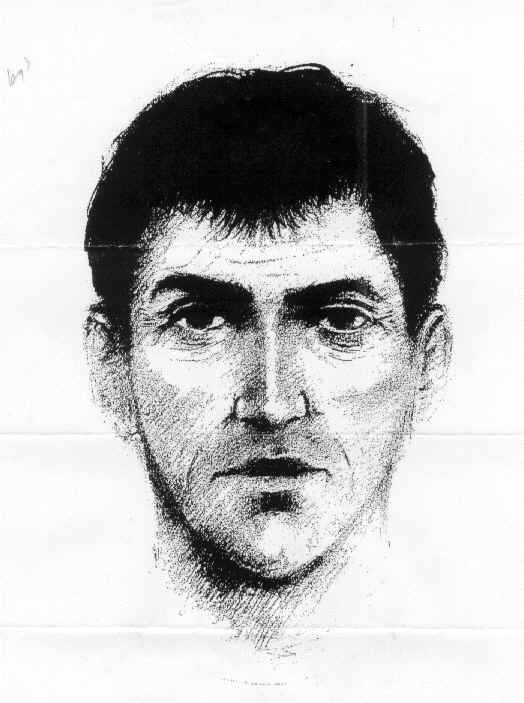
THIS is the mystery figure involved in the 1994 London bombings, for which two Palestinians, both claiming innocence, are half-way through a 20 year sentence. The portraits are of
RIDA MUGHRABI, as described separately by Jawad Botmeh(version on left) and Samar Alami (version on right). Close enough to be the same man. But police were not interested.

SAMAR Alami met Rida Mughrabi in the spring of 1992, at a lecture in London on the Middle East. He also attended various political discussions and poetry readings at the Arab Club in London.

Apparently Mughrabi was from the West Bank. He had been detained by the Israelis in the late 1970s, had taught at a refugee camp in Jordan and had been involved in fighting Israeli forces in occupied southern Lebanon during the 1982 war. Samar, and then Jawad, were impressed by his seeming experience and knowledge of resistance.

Samar and Jawed had mixed feelings about the "peace process" which the 1993 Oslo Accords were supposed to open up, promising Palestinian "self-government". Samar had hopes of using her studies on Water Resources, a vital issue in the region. Jawed started a business to send high-tech products for development in the West Bank. But fearing to place too much hope in the Oslo deal, they had also secretly experimented amateurishly with home-made explosive devices, and use of radio-controlled model planes, seeking a modern equivalent of David's slingshot which Palestinian villagers might be able to use against the heavily-armed Israeli Goliath.

They wanted to keep this their secret. But in 1993 Mughrabi began discussing methods of resistance open to Palestinians inside the Occupied Territories. He knew a lot about electric and electronic aspects of military surveillance. He seemed to have direct experience in the field during the Israeli invasion and occupation of Lebanon. Indeed, Mughrabi told Samar that he had been doing some experimenting of his own and what he was giving her was the product. She thought that he had actually been performing his experiments for the same reasons as she and Jawad had e.g. directed at what could be done inside the Occupied Territories. (The Popular Front for the Liberation of Palestine, with which Samar and Jawad sympathised, had decided decades before to carry out no more operations in overseas countries).

Later, piecing together what he told them, it seemed Mughrabi had left Lebanon in the early 1980s after falling out with the PLO and with Arafat's opponents, and then came to Britain via Cyprus. In the mid-1980s he moved to Saudi Arabia, then Kuwait, but when Iraq invaded he returned to Britain and went to live in Birmingham.

Jawad Botmeh had a hobby. He had started buying and selling cars while still an engineering student. Friends and acquaintances often sought his advice. So he was not surprised when Rida Mughrabi contacted him on June 14, asking Jawad to come with him to a car auction. They had been on such trips before. They drove up to Northampton together later that day, but did not find anything worth buying for the £1,000 that Mughrabi had to spend.

The following day they went to an auction in Milton Keynes, and this was where Mughrabi bought an Audi. This was to be the car used in the Israeli embassy bombing, though by then it was equipped with fake number plates. The car used in the Balfour House bombing was a Triumph Acclaim, also with false plates, but traced back to an auction in Birmingham on June 13, where it was bought by a man calling himself "George Davis".

Jawad Botmen had not been at the Birmingham auction, nor had Rida Mughrabi said anything to him about having bought another car. But when police started enquiring about those car auctions they became interested in a distinctive old white BMW seen at the auction in Milton Keynes. Trawling though the owners of old white BMWs they came up with Jawad Botmeh. In fact while driving up to Northampton with Mughrabi on June 14, Jawad had overtaken a police car, and was stopped on the M1 for speeding, having to show his licence. Evidently he was not being as careful to avoid attention as someone might have been who knew the significance of what seemed a casual car-shopping trip.

The fingerprints and handwriting on the purchase documents of both cars, and the descriptions of the purchasers as given by witnesses, match none of the defendants. There is no trace of the people who bought the cars and neither is it known where they were stored and made into car bombs.

But Jawad had been at the wrong place with the wrong person. He was put under sustained police surveillance from September 1994, at least, onwards and then arrested at home in January 1995 in a dawn police raid. On January 17 police acting under the Prevention of Terrorism Act raided the homes of four other people of Palestinian origin who had been observed to be his 'associates'. Their homes were searched without any legal representatives being present. One of his friends was also arrested by the army while she was on holiday in Israel. Those arrested in Britain included Jawad's friend Samar Alami, his friend and business partner Mahmoud Abu-Wardeh and Mrs Nadia Zekra whom he only knew slightly because he sometimes used to play football with her son.

Jawad and Nadia were charged with conspiracy to cause explosions in the United Kingdom. They were detained as 'Category A'prisoners, imprisoned in London at Belmarsh and Holloway respectively. The others, including Samar and Mahmoud, were released without charge and allowed to go home.
Successive police swoops over the next few months concentrated on the same group of people. Samar's sister and Jawad's wife Elizabeth were among those arrested. Jawad's friend who had been detained in Israel was arrested when she returned to Britain, she was detained until the next day but then released without charge.

In March 1995 Samar was arrested again by the Anti-Terrorist Branch, in a 7.00am raid. She too was charged with being involved in the conspiracy and was remanded in custody at Holloway prison, where she met Nadia for the first time. Samar's sister was also arrested, but later released without charge, and their shared family home was again searched by the police without anyone being present.

Samar was released on bail a couple of months later in May. More than fifty letters were written in support of her bail application and the judge granting it said that he had never seen such serious and significant tributes to any single individual. Nadia was also released on bail in May.

But then, in June, Samar was arrested again after the police investigated a small locker unit at Nationwide Storage in west London. This locker contained a small quantity of TATP explosive powder, a little more made into two tiny basic explosive devices, two guns, some chemicals, timers, electronic circuitry, an aerial, some political books and magazines and various other items. The three timers were linked to an order of six bought under a false name in May/June 1994 and as the judge confirmed, "There is absolutely nothing to connect any of these defendants with the purchase of the timers."

Once again, Rida Mughrabi was involved. He had met Samar in central London one afternoon, at the end of June 1994, and given her some boxes. He said that he no longer needed the products of his experiments because he was leaving England. Samar felt uncomfortable, and unsure what to do, did not feel she could say no and so she accepted them. "I guess I was a bit naive." she said at the trial, "I never felt threatened by Rida Mughrabi. I didn't take nearly enough precautions."

Samar and Jawad used a little of the TATP Mughrabi gave them to make up two little 'bomblets' on 15 July. But Samar was about to join her parents in France on holiday two days later and she and Jawad did not have time to try them out before she went, so she rented the locker on 16 July to store them safely. When the bomblets were discovered by the police they were not in any state to have ever gone off and the two metal rods stuck into the TATP had corroded and were useless.

Samar had returned to Britain after that holiday in France, just as she also returned from her trip to Lebanon later in the year to carry out some research for her MSc thesis. She made no attempts to escape from Britain, despite having every opportunity to do so -- hardly the actions of a guilty person.

The chemicals in the locker turned out to have been part of a much larger order collected from Hays Chemicals in Birmingham in June 1994 by someone giving the name 'G Davis' - more or less the same name used in the car purchase. The contents of this locker unit became a major part of the prosecution case despite the fact that nothing in the locker has ever been connected with the Israeli Embassy or Balfour House explosions. The explosive used in the bombings has never been identified, but both British and Israeli government scientists ruled out TATP, which experts say is not suitable for car bombs.

Jawas and Samar had been reluctant to talk about their experiments or involvement with explosives. Even if they got off they feared being deported, and becoming marked targets for the Israeli But once they came to realise they had been set up, named Rida Mughrabi, and talked about his involvement they found the authorities were not interested. The police did not even ask for a detailed description. It was left to their solicitor, Gareth Pierce, to arrange for a portrait to be compiled. When it was, after Samar and Jawad had each been in separate prisons for over a year since the trial, their descriptions ennabled the sketch artist to draw two faces, similar enough to be the same man, who was clearly involved in the bombings.

As lawyer Daniel Guedella comments in his pamphlet "Justice Denied", "The police admit that the case is not 'solved', that the actual bombers have not been caught. So it is odd, to say the least, that they have so little interest in Rida Mughrabi".
http://www.freesaj.org.uk/

Could it be that they were told not to follow up this trail for fear of where it leads? Perhaps by whoever had decided to do nothing with the information which the intelligence services had before the bombings took place? We don't know. But whatever the bigger picture, it looks like those in power would sooner keep two most likely innocent people in prison than pursue the real culprits, or the truth, which may be "undiplomatic". Those happy to refer to Jawad and Samar as "the embassy bombers" and retail lies about them being "linked with Hizbollah" are helping in the conspiracy.

Labels: , , , ,

Sunday, December 17, 2006

Justice Denied: Ten years inside, the "bombers" who never were.


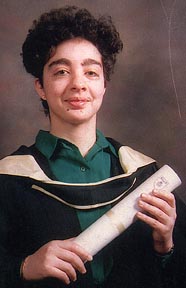
HAPPIER DAYS. Samar Alami on graduation (right), and Jawad Botmeh (below). Sentenced to 20 years on circumstantial evidence in December 1996.
Despite appeals and petitions they remain imprisoned, Despite being caught out lying, the security services continue suppressing evidence.


LAST week saw the tenth anniversary pass by of the imprisonment of two Palestinians on "conspiracy" charges arising from the bombing of the Israeli embassy in London on July 26, 1994 and of the Zionist Federation's Balfour House headquarters, in Finchley, north London, some twelve hours later.

Samar Alami and Jawad Botmeh have both denied involvment in either of the bombings, and in fact neither of them were caught near the targetted premises, nor did any forensic evidence link them with the explosions.
Hence the charge of "conspiracy" which supposes they were somehow involved with others in the bombings.
But these others -including whoever actually delivered the bombs -have not been found. Nor have the police apparently made any effort to trace a third person whom the two identified and described, a possible suspect by the name of Rida Mughrabi.
In fact, the British security services have been less than transparent throughout this case. They initially claimed that the embassy bombing took them by surprise, although MI5 defector David Shayler revealed they had been given advance warning. They appear to have ignored claims from an Iranian defector that London was next after bombings perpetrated in Buenos Aires. They have used secret hearings and Public Interest Immunity certificates to conceal large amounts of evidence, and they have gone out of their way to discourage witnesses from appearing with other evidence that might spoil or complicate their case.

ANYBODY who has been to, or near, the Israeli embassy in London will know that it is on Kensington Palace Green, a private road of embassies and exclusive residences with gates at each end, patrolled by armed police. Demonstrators are not even allowed near the gates, and traffic is monitored of course.

On the afternoon of 26 July 1994 a woman drove an Audi car into the road, and parked outside the Israeli embassy. She asked PC Duncan, the armed officer of the Diplomatic Protection Group, to let her leave it while she went for some cigarettes.

Soon after she had gone the car exploded. The explosion caused extensive damage, and injured fourteen people, but fortunately nobody was killed.

According to the Israeli embassy, their security cameras on either side of the building had no film that day, so there is no visual record of what happened or who was there. The only description of the woman driver is that she was middle aged, of Middle Eastern appearance, and carrying a Harrods shopping bag; and that she was not Samar Alami.

When Samar Alami was questioned a year later she could not remember off hand where she had been that afternoon, not having thought she would need an alibi. It was ascertained that she had been in the library at Imperial College, of which she is an M.Sc graduate, and had made a phone call from there to a relative which was recorded. Jawad Botmeh had been in Sussex, taking a younger family member to see a language school.

There were no witnesses to the bombing at Balfour House. However, the day before, a woman who lives nearby became concerned about some men whom she described as looking of Middle East origin, sitting in two cars outside the building. They were blocking her drive, so she asked them to move. They went away, but she reported the incident, and did so again after the explosion. The cars and these men were not traced. In fact, a police presence on Balfour House that day was removed, an hour before the explosion. Again, nobody was killed, but the building was damaged and six people were hurt.

Both of these bombs exploded without leaving any traces behind. Nothing is known about what explosive was used or how the explosions were triggered. As the judge said, "We do not know what the explosive was...There were no residues, and that indicated a high performance explosive. There was no trace of any timing or remote control device or of any detonator or other initiating process."

Letters claiming responsibility for the bombings, written in Arabic, were posted on the afternoon of 26 July to the London offices of two Arab newspapers, Al-Quds and Al-Hayat, and to the London offices of the PLO. These letters were signed by the 'Jaffa Unit' or 'Jaffa Team' of the 'Palestinian Resistance', an unknown organisation that has never been heard from before or since.

Both Samar Alami and Jawad Botmeh were known Palestinian political and social activists, and both hoped to use their training and skills to help their people back home. Samar, whose MSc was in water resource engineering, had worked as an environmental engineering consultant and part-time as a health adviser for the immigrant Arab community in Newham in east London. She was a prominent member of the Palestinian Women's Group and the General Union of Palestinian Women (GUPW) in the UK, and had lectured on Palestinian culture, helping with her sister Randa to organise an exhibition of Palestinian costume and embroidery at the Museum of Mankind.

Jawad, born in Bethlehem, where he and his family had directly expereienced the brutality of occupation, was on the national executive of the General Union of Palestinian Students, and organised conferences and seminars for the Palestine Solidarity Campaign. Jawad was also involved with the National Union of Students, having been vice-president of Leicester University's students union, and sometimes acted as 'peacemaker' when there was tension between Arab and Israeli students.

Like many people at the time, and even more with the benefit of hindsight since, Samar and Jawad were not happy with the Oslo agreements, feeling the PLO leaders, negotiating behind the backs of the people, had conceded too much to Israel, with too little to show in return. Leaning politically towards the left-wing Popular Front for the Liberation of Palestine, they hoped to work constructively -as indicated by Samar's specialising in water resources - but sensing this was not yet freedom, that people's armed resistance might still be needed, they tried some amateurish experiments with explosive devices that might be useful to the people back home.

They did not intend carrying out bombings in Britain, says Jawad, or they would not have devoted their time to open political work. They considered the London bombings detrimental to their cause.

No known Palestinian opposition group nor any Muslim organisation in Lebanon accepted responsibility for the London bombings. The language and ideas in the letter claiming them were not those of the defendants. Neither the letters nor the envelopes contained the defendants' fingerprints. As the judge summed up, "There is nothing in the type to link [the claim letters] to any of the defendants nor, indeed, in the paper or copying or anything."

Although the prosecution naturally used the defendents' contact with explosive materials to present them as violent people, it had to admit that they had not possessed the kind of sophisticated explosives used in the bombings, which were of a kind only governments and state-backed terrorist organisations would have been able to obtain. Yet the security services continued to dismiss suggestions that any such forces were behind the bombings.

As for the mysterious Rida Mughrabi, who had asked Samar to look after some boxes of chemicals for him a month before the attacks, and got Jawad to go with him to some car auctions - where the Audi was purchased that was used at the embassy - not only was he nowhere to be found; the police appeared to have no interest in finding him. We'll have a look at this character next.

For the full background on this case and efforts to obtain justice and free Samar and Jawad, see http://www.freesaj.org.uk/

Labels: , , , ,

Wednesday, December 13, 2006

A Tale of Two Cities

Tangled web behind terror, and trials without justice

BUENOS AIRES, 1994

ARGENTINE prosecutor Alberto Nisman announced at the end of last month that he had "irrefutable evidence" to back up international arrest warrants issued at his request for former Iranian president Rafsanjani and eight other former officials, in connection with the 1994 bombing of the main Jewish community centre in Buenos Aires.

The destruction of the AMIA (Asociación Mutual Israelita Argentina) building, which housed mutual aid, social welfare and cultural societies, killed 85 people and injured another 300. No one has ever admitted responsibility and nobody has been successfully brought to justice. Several police officers and one civilian were prosecuted, in connection with a vehicle used in the bombing, but the trial was annulled in 2004 due to serious irregularities.

But Nisman's performance in this "local connection" trial led to his designation that year as the head of a special unit set up to investigate the case. Shortly after the Argentine court issued the arrest warrants for the former Iranian officials, the Iranian regime threatened to issue its own warrants for the arrest of Nisman and Judge Rodolfo Canicoba Corral. A few days later, an anonymous voice warned him over the phone that if the investigation continued, he and his family would be "blown up."

Niesman says there are precedents for indicting senior Iranian officials, pointing to cases such as the murder of Iranian Kurdish militants in Germany. But none have so far been successful. And while the Iranian government's hand and motives were clear in tracking down its opponents, its interest in the Argentine bombing are not so obvious. Unlike the Israeli embassy in Buenos Aires which had been bombed two years before, with 29 deaths, -also unsolved - the AMIA building had no Zionist or governmental significance.

For Israeli and US Zionist propaganda it may suffice to say that the Iranian government and the Hizbollahi it is supposed to have employed are just anti-Jewish, and the present President Ahmadinejad, currently hosting a conference for Holocaust revisionists, may seem happy to fit the part. But Iran has its own Jewish community, as well as others nearer at hand than Buenos Aires if it had merely wanted to hit Jews.

Relations between Argentina's Jewish and Arab, mainly Lebanese communities have not been bad, at least until recently affected by tensions over the Middle East. But there is a tradition of violent antisemitism in Argentina, linked historically with the Army and the Church (which has also issued anti-Muslim statements). In the 1960s, the Tacuara youth movement carried out violent attacks on Jews, and under military rule from 1976-83, (notwithstanding links with Israel), a disproportionate number of Jews were "disappeared" or tortured in the junta's "dirty war" against the Left. Many Argentine Jews have little doubt that, with or without outside involvment, local forces, including police and army officers, had a part in the bombing.

Nor should it be forgotten that many Nazis from Europe found a haven in Argentina after the Second World War, setting up businesses and connexions in high places. In 1992 President Carlos Menem announced an investigation into the Nazi link. People with a vested interest to stop this going too far would also have had the connections - in Argentina and abroad (including old colleagues for whom the CIA found niches in the Arab world) -to strike out at those they feared. There was even a suggestion that some documents might be stored in the AMIA building.

Menem lost office when the US fell out with him. Besides general economic crisis, there was a story - since withdrawn - from an Iranian defector, claiming the Iranians had secretly paid the Argentine president with a Swiss bank account for suppressing their role in the bombing. Abdolghassem Mesbahi, a former Iranian intelligence officer whom some dismiss as a CIA asset also supplied a more sophisticated motive for the attack, claiming Iran had been angered by the cancellation of an agreement on nuclear co-operation.

(Another defector claimed the Iranians mistakenly believed the AMIA welfare building was Mossad headquarters. Sounds far-fetched, but if so, I wonder who might have fed them that story? Someone worried about those files?)

The AMIA bombing was allegedly planned at a meeting in Mashad between Iranian intelligence officers, officers of the Syrian-backed PFLP General Command (Ahmed Jibril group) and the Hizbollahi. (A Lebanese-born driver is said to have driven the vehicle used in the bombing). Two Iranian diplomats normally based in Argentina were also invited. Nieman seems satisfied that this explains the AMIA bombing; "The pieces fit perfectly". But critics say they fit too perfectly, and suggest the picture was put together by Mossad and the CIA.
http://ipsnews.net/news.asp?idnews=35642

Besides, doubt was cast on the nuclear row story by the revelation last month that Argentina was continuing to provide Iran with low-grade enriched uranium, and the two governments were in serious negotiations on broader nuclear cooperation when the bombing occurred. This suggests that the last thing President Rafsanjani would have wanted then was a bombing in Buenos Aires to wreck relations with Argentina. It was the United States that wanted to stop the deal.

The New York Jewish Daily Forward has reported that the United States put pressure on the Argentine authorities to go for the Iranians. "The U.S. Urges Argentina To Indict Iranians Link Eyed to ’94 AMIA Bombing
Marc Perelman, Fri. Mar 17, 2006. On November 3, Perelman said the Bush administration intended to cite the indictment as part of its campaign to get Russia and China to support a Security Council resolution on sanctions against Iran.
http://ipsnews.net/news.asp?idnews=35530

While keeping an open mind on the the Buenos Aires bombings, there are implications concerning bombings in London. In 1994, another former Iranian intelligence operative, Manoucheh Moatamer, alleged that his country's diplomats had been involved in both the AMIA bombing and that at the Israeli embassy two years before it.

Moatamer moved from Venezuela to the United States, coming under witness protection. Although the Iranian government rubbished Moatamer's allegations, he gained some credibility from accurately predicting that London would be next. On July 26, 1994, a car bomb explosed outside the Israeli embassy in London, and later there was an explosion at Balfour House, in Finchley, home of the Zionist Federation and the Jewish National Fund. Nobody was killed in the London bombings.

Two young Palestinians, Samar Alami and Jawad Botmeh, have spent the last ten years in jail for "conspiracy" to cause these explosions. Both claim innocence. In fact neither of them was near either building, nor were they likely to have obtained the sophisticated explosives that were used. The only evidence linking them to the attacks was that Jawad, a keen motor enthusiast, had accompanied a man called Rida Mughrabi to some car auctions, at which Rida bought the Audi used in the embassy bombing. Neither this man, nor the woman who drove the car up to the embassy under the watchful eye of a policeman, nor any other conspirators, have been found.

At the time of the bombings, the British security services claimed they had no warning, and that a hitherto unknown Palestinian group must have carried them out. Then in 1997, ex-MI5 officer David Shayler blew the whistle, saying MI5 had been given a warning from a reliable source and did nothing. Home Secretary Jack Straw slapped a ban on such evidence, and had Shayler pursued abroad.

As for the "Iranian connection", which the police and prosecution had pooh-poohed, here's a passage from an Institute of Jewish Policy Research report on Argentina, talking about Moatamer's allegations:

"Curiously, an Iranian link with the attacks on the Israeli embassy and Balfour House in the British capital was never mentioned by UK sources; instead, those apprehended and prosecuted in London were identified as Palestinian. Making matters worse for Moatamer's claims was the UK's coolness vis-à-vis such an apparently privileged source of information. Indeed, unlike (Argentine Judge) Galeano's rushing to Caracas to interview him, UK officials neither questioned the Iranian during his brief Venezuelan sojourn nor relayed specific questions for the US officials to put to him, according to Lord Avebury, chairman of the UK parliamentary human rights group (monitoring, among other things, Iranian terrorism)".
http://www.axt.org.uk/antisem/archive/archive1/argentina/index.htm

See also:http://www.tau.ac.il/Anti-Semitism/asw97-8/la-int.html, concerning Argentine police.

Former Iranian diplomat Hade Soleimanpour, accused of involvement in the AMIA bombing, was arrested in Durham in 2003, but after Iranian protests the Home Office decided to drop extradition proceedings, claiming Argentina had failed to produce prima facie evidence. It's different when the British - or US - security authorities want someone.

Anyone who knows either Samar or Jawad can have no doubts about their commitment to the Palestinian cause or their wish to put their education to constructive use for their people's good. Likewise, it is hard to imagine either of them subordinating their efforts to the Ayatollahs or as Hizbollahi. Indeed, the authorities who jailed them not only failed to show they were bombers but did not try to link them with any known guerrilla organisation, let alone with Iran.

But just as US organisations and media "know" without needing an investigation who bombed the AMIA building, so various right-wing commentators, from American neo-cons to the BNP, assert as fact that "two Palestinians close to Hizbollah" bombed the London embassy. (Should there be a change of policy the "facts" may change accordingly)

President Kirchner of Argentina said last year that it was a disgrace that no one was in jail yet for the Buenos Aires bombings. Perhaps. But not as disgraceful as the apparent complacency of the British authorities, satisfied that so long as they have someone in jail for the London bombings, even two innocent Palestinians, they need not worry about pursuing anyone who might be guilty. Besides, looking for an Iranian connection, and whatever is behind it, might bring diplomatic and trading complications. Palestinians don't have a state.

Labels: ,