Thursday, August 13, 2009

Truth and justice not on offer, humanity must do

REMEMBERING another airliner destroyed. Iranian stamp commemorates Iran Air Flight 655, shot down by missiles from USS Vincennes, with loss of 290 passengers and crew on July 3, 1988. The US captain was decorated.


Abdelbaset Ali Mohmed al-Megrahi, sentenced to a minimum life term of 25 years in 2001 for his alleged part in the 1988 bombing of Pan Am 103 over Lockerbie, could be released on compassionate grounds and home to his family before Ramadan. Megrahi, who has always insisted on his innocence, has terminal prostate cancer.

This news - as yet unconfirmed - comes after earlier reports that the prisoner, currently in a prison hospital bed, might be transferred to serve out his sentence in Libya. The Scottish Justice Secretary visited Megrahi last week.

Some 270 people lost their lives in the Lockerbie bombing, and the media are quoting US relatives outraged that the man they call a "mass murderer" should be considered worthy of compassion. It's a different story in Scotland where many people, including relatives, who have followed the case clearly, are not convinced Megrahi was even guilty as charged.

The Scottish Criminal Cases Review Commission last year re-examined the evidence - or lack of it - in this case, ruled that there had been a miscarriage of justice, and thus gave Megrahi the go-ahead for a second appeal. This could be delayed by a transfer, but a release on compassionate grounds need not prevent it continuing, . On the other hand we wonder what chance a seriously ill and dying man would have of conducting his case, which seems to have waited so long.

Talks have reportedly been held between British and Libyan officials over what would happen if Megrahi was allowed to go home.

While some people say the Libyan only played a small part in the bombing, for which no one else has been convicted, others believe that not only was he not responsible for the bombing, but Libya was not involved.

For two years after the Lockerbie bombing the widespread view was that a Syrian-based group, the Popular Front for the Liberation of Palestine-General Command-GC , had arranged the attack on the US airliner on behalf of the Iranian government, and its Syrian allies. The PFLP-GC, formed by a Syrian officer, Ahmed Jibreel, had a reputation for high-profile technically proficient operations. According to Scottish former MP Tam Dalziel there is evidence that the PFLP-GC received £10 million from the Iranians. The attack was seen as revenge for the shooting down by the US navy's missile cruiser Vincennes of an Iranian airbus, in which 290 people were killed.

But by 1990, with Iraqi tanks about to enter Kuwait, the US and British governments had to set their sights on Iraq, and needed Syria and Iran on side. So looking around for someone else to blame for Lockerbie, they found it convenient to make Libya the culprit.

It would be embarrassing for both governments, and their intelligence services, if a succesful appeal by Megrahi was to re-open the question of responsibility for the bombing. For the British government on the other hand the matter is complicated by the relative autonomy of the Scottish justice system and executive, which is not after all responsible for foreign policy. For the United States, ironically, Iran and to a lesser extent Syria, are back among the 'bad boys', though Obama may be more willing to try and improve relations than George Dubya was.

  • Meanwhile, to those Americans whom the BBC is deferentially broadcasting talking about "mass murder", one can sympathise with their feelings over lost relatives, but in their moral indignation against any compassion, might they consider what was handed out to the captain and crew of the USS Vincennes, after IR655 was brought down within Iranian airspace, by the US ship within Iranian waters? Some 290 people, mostly pilgrims going to Mecca, were killed, including 66 children. The American navy men were awarded Combat Action Ribbons, air warfare co-ordinator Lustig received the Navy Commendation Medal, citing his ability to "quickly and precisely complete the firing procedure."and Captain Rogers was awarded the Legion of Merit "for exceptionally meritorious conduct in the performance of outstanding service as commanding officer ... from April 1987 to May 1989."

  • If the Lockerbie case is re-opened, or even if people are only asking questions again, there is another case for compassion - and justice - that.I would like to make. Two young Palestinians, Samar Alami and Jawad Botmeh, were sentenced and jailed for their alleged part in the bombing of the Israeli embassy in London. They were nowhere near the embassy at the time, but were charged with "conspiracy", on circumstantial evidence, much of it heard in secret. No fellow conspirators were produced, a third person named by the accused was not pursued by the authorities, nor did British police try to interview an Iranian diplomatic defector who had predicted the London bombings. Former MI5 man David Shayler and others say the security services knew an attack on the embassy was planned..
It would seem that where Middle East-related terror investigations cross the path of secret diplomacy, neither truth nor justice can be expected. If that is the case, humanity and compassion is the least we can demand.

Labels: , , , ,

Monday, December 18, 2006

The Mysterious Mr.Mughrabi


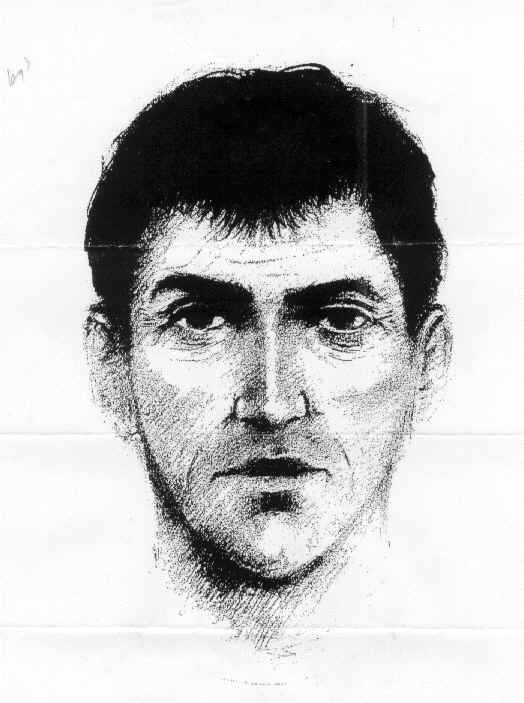
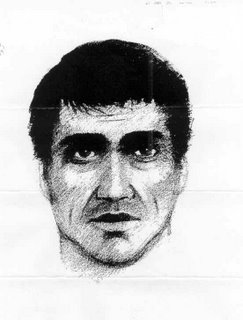
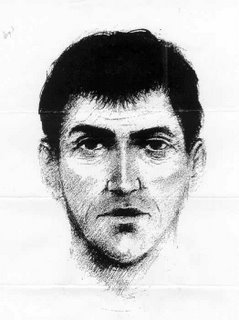
THIS is the mystery figure involved in the 1994 London bombings, for which two Palestinians, both claiming innocence, are half-way through a 20 year sentence. The portraits are of
RIDA MUGHRABI, as described separately by Jawad Botmeh(version on left) and Samar Alami (version on right). Close enough to be the same man. But police were not interested.
SAMAR Alami met Rida Mughrabi in the spring of 1992, at a lecture in London on the Middle East. He also attended various political discussions and poetry readings at the Arab Club in London.

Apparently Mughrabi was from the West Bank. He had been detained by the Israelis in the late 1970s, had taught at a refugee camp in Jordan and had been involved in fighting Israeli forces in occupied southern Lebanon during the 1982 war. Samar, and then Jawad, were impressed by his seeming experience and knowledge of resistance.

Samar and Jawed had mixed feelings about the "peace process" which the 1993 Oslo Accords were supposed to open up, promising Palestinian "self-government". Samar had hopes of using her studies on Water Resources, a vital issue in the region. Jawed started a business to send high-tech products for development in the West Bank. But fearing to place too much hope in the Oslo deal, they had also secretly experimented amateurishly with home-made explosive devices, and use of radio-controlled model planes, seeking a modern equivalent of David's slingshot which Palestinian villagers might be able to use against the heavily-armed Israeli Goliath.

They wanted to keep this their secret. But in 1993 Mughrabi began discussing methods of resistance open to Palestinians inside the Occupied Territories. He knew a lot about electric and electronic aspects of military surveillance. He seemed to have direct experience in the field during the Israeli invasion and occupation of Lebanon. Indeed, Mughrabi told Samar that he had been doing some experimenting of his own and what he was giving her was the product. She thought that he had actually been performing his experiments for the same reasons as she and Jawad had e.g. directed at what could be done inside the Occupied Territories. (The Popular Front for the Liberation of Palestine, with which Samar and Jawad sympathised, had decided decades before to carry out no more operations in overseas countries).

Later, piecing together what he told them, it seemed Mughrabi had left Lebanon in the early 1980s after falling out with the PLO and with Arafat's opponents, and then came to Britain via Cyprus. In the mid-1980s he moved to Saudi Arabia, then Kuwait, but when Iraq invaded he returned to Britain and went to live in Birmingham.

Jawad Botmeh had a hobby. He had started buying and selling cars while still an engineering student. Friends and acquaintances often sought his advice. So he was not surprised when Rida Mughrabi contacted him on June 14, asking Jawad to come with him to a car auction. They had been on such trips before. They drove up to Northampton together later that day, but did not find anything worth buying for the £1,000 that Mughrabi had to spend.

The following day they went to an auction in Milton Keynes, and this was where Mughrabi bought an Audi. This was to be the car used in the Israeli embassy bombing, though by then it was equipped with fake number plates. The car used in the Balfour House bombing was a Triumph Acclaim, also with false plates, but traced back to an auction in Birmingham on June 13, where it was bought by a man calling himself "George Davis".

Jawad Botmen had not been at the Birmingham auction, nor had Rida Mughrabi said anything to him about having bought another car. But when police started enquiring about those car auctions they became interested in a distinctive old white BMW seen at the auction in Milton Keynes. Trawling though the owners of old white BMWs they came up with Jawad Botmeh. In fact while driving up to Northampton with Mughrabi on June 14, Jawad had overtaken a police car, and was stopped on the M1 for speeding, having to show his licence. Evidently he was not being as careful to avoid attention as someone might have been who knew the significance of what seemed a casual car-shopping trip.

The fingerprints and handwriting on the purchase documents of both cars, and the descriptions of the purchasers as given by witnesses, match none of the defendants. There is no trace of the people who bought the cars and neither is it known where they were stored and made into car bombs.

But Jawad had been at the wrong place with the wrong person. He was put under sustained police surveillance from September 1994, at least, onwards and then arrested at home in January 1995 in a dawn police raid. On January 17 police acting under the Prevention of Terrorism Act raided the homes of four other people of Palestinian origin who had been observed to be his 'associates'. Their homes were searched without any legal representatives being present. One of his friends was also arrested by the army while she was on holiday in Israel. Those arrested in Britain included Jawad's friend Samar Alami, his friend and business partner Mahmoud Abu-Wardeh and Mrs Nadia Zekra whom he only knew slightly because he sometimes used to play football with her son.

Jawad and Nadia were charged with conspiracy to cause explosions in the United Kingdom. They were detained as 'Category A'prisoners, imprisoned in London at Belmarsh and Holloway respectively. The others, including Samar and Mahmoud, were released without charge and allowed to go home.
Successive police swoops over the next few months concentrated on the same group of people. Samar's sister and Jawad's wife Elizabeth were among those arrested. Jawad's friend who had been detained in Israel was arrested when she returned to Britain, she was detained until the next day but then released without charge.

In March 1995 Samar was arrested again by the Anti-Terrorist Branch, in a 7.00am raid. She too was charged with being involved in the conspiracy and was remanded in custody at Holloway prison, where she met Nadia for the first time. Samar's sister was also arrested, but later released without charge, and their shared family home was again searched by the police without anyone being present.

Samar was released on bail a couple of months later in May. More than fifty letters were written in support of her bail application and the judge granting it said that he had never seen such serious and significant tributes to any single individual. Nadia was also released on bail in May.

But then, in June, Samar was arrested again after the police investigated a small locker unit at Nationwide Storage in west London. This locker contained a small quantity of TATP explosive powder, a little more made into two tiny basic explosive devices, two guns, some chemicals, timers, electronic circuitry, an aerial, some political books and magazines and various other items. The three timers were linked to an order of six bought under a false name in May/June 1994 and as the judge confirmed, "There is absolutely nothing to connect any of these defendants with the purchase of the timers."

Once again, Rida Mughrabi was involved. He had met Samar in central London one afternoon, at the end of June 1994, and given her some boxes. He said that he no longer needed the products of his experiments because he was leaving England. Samar felt uncomfortable, and unsure what to do, did not feel she could say no and so she accepted them. "I guess I was a bit naive." she said at the trial, "I never felt threatened by Rida Mughrabi. I didn't take nearly enough precautions."

Samar and Jawad used a little of the TATP Mughrabi gave them to make up two little 'bomblets' on 15 July. But Samar was about to join her parents in France on holiday two days later and she and Jawad did not have time to try them out before she went, so she rented the locker on 16 July to store them safely. When the bomblets were discovered by the police they were not in any state to have ever gone off and the two metal rods stuck into the TATP had corroded and were useless.

Samar had returned to Britain after that holiday in France, just as she also returned from her trip to Lebanon later in the year to carry out some research for her MSc thesis. She made no attempts to escape from Britain, despite having every opportunity to do so -- hardly the actions of a guilty person.

The chemicals in the locker turned out to have been part of a much larger order collected from Hays Chemicals in Birmingham in June 1994 by someone giving the name 'G Davis' - more or less the same name used in the car purchase. The contents of this locker unit became a major part of the prosecution case despite the fact that nothing in the locker has ever been connected with the Israeli Embassy or Balfour House explosions. The explosive used in the bombings has never been identified, but both British and Israeli government scientists ruled out TATP, which experts say is not suitable for car bombs.

Jawas and Samar had been reluctant to talk about their experiments or involvement with explosives. Even if they got off they feared being deported, and becoming marked targets for the Israeli But once they came to realise they had been set up, named Rida Mughrabi, and talked about his involvement they found the authorities were not interested. The police did not even ask for a detailed description. It was left to their solicitor, Gareth Pierce, to arrange for a portrait to be compiled. When it was, after Samar and Jawad had each been in separate prisons for over a year since the trial, their descriptions ennabled the sketch artist to draw two faces, similar enough to be the same man, who was clearly involved in the bombings.

As lawyer Daniel Guedella comments in his pamphlet "Justice Denied", "The police admit that the case is not 'solved', that the actual bombers have not been caught. So it is odd, to say the least, that they have so little interest in Rida Mughrabi".
http://www.freesaj.org.uk/

Could it be that they were told not to follow up this trail for fear of where it leads? Perhaps by whoever had decided to do nothing with the information which the intelligence services had before the bombings took place? We don't know. But whatever the bigger picture, it looks like those in power would sooner keep two most likely innocent people in prison than pursue the real culprits, or the truth, which may be "undiplomatic". Those happy to refer to Jawad and Samar as "the embassy bombers" and retail lies about them being "linked with Hizbollah" are helping in the conspiracy.

Labels: , , , ,

Sunday, December 17, 2006

Justice Denied: Ten years inside, the "bombers" who never were.


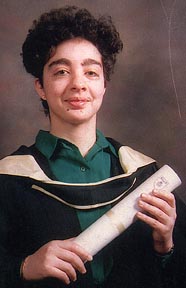
HAPPIER DAYS. Samar Alami on graduation (right), and Jawad Botmeh (below). Sentenced to 20 years on circumstantial evidence in December 1996.
Despite appeals and petitions they remain imprisoned, Despite being caught out lying, the security services continue suppressing evidence.


LAST week saw the tenth anniversary pass by of the imprisonment of two Palestinians on "conspiracy" charges arising from the bombing of the Israeli embassy in London on July 26, 1994 and of the Zionist Federation's Balfour House headquarters, in Finchley, north London, some twelve hours later.

Samar Alami and Jawad Botmeh have both denied involvment in either of the bombings, and in fact neither of them were caught near the targetted premises, nor did any forensic evidence link them with the explosions.
Hence the charge of "conspiracy" which supposes they were somehow involved with others in the bombings.
But these others -including whoever actually delivered the bombs -have not been found. Nor have the police apparently made any effort to trace a third person whom the two identified and described, a possible suspect by the name of Rida Mughrabi.
In fact, the British security services have been less than transparent throughout this case. They initially claimed that the embassy bombing took them by surprise, although MI5 defector David Shayler revealed they had been given advance warning. They appear to have ignored claims from an Iranian defector that London was next after bombings perpetrated in Buenos Aires. They have used secret hearings and Public Interest Immunity certificates to conceal large amounts of evidence, and they have gone out of their way to discourage witnesses from appearing with other evidence that might spoil or complicate their case.

ANYBODY who has been to, or near, the Israeli embassy in London will know that it is on Kensington Palace Green, a private road of embassies and exclusive residences with gates at each end, patrolled by armed police. Demonstrators are not even allowed near the gates, and traffic is monitored of course.

On the afternoon of 26 July 1994 a woman drove an Audi car into the road, and parked outside the Israeli embassy. She asked PC Duncan, the armed officer of the Diplomatic Protection Group, to let her leave it while she went for some cigarettes.

Soon after she had gone the car exploded. The explosion caused extensive damage, and injured fourteen people, but fortunately nobody was killed.

According to the Israeli embassy, their security cameras on either side of the building had no film that day, so there is no visual record of what happened or who was there. The only description of the woman driver is that she was middle aged, of Middle Eastern appearance, and carrying a Harrods shopping bag; and that she was not Samar Alami.

When Samar Alami was questioned a year later she could not remember off hand where she had been that afternoon, not having thought she would need an alibi. It was ascertained that she had been in the library at Imperial College, of which she is an M.Sc graduate, and had made a phone call from there to a relative which was recorded. Jawad Botmeh had been in Sussex, taking a younger family member to see a language school.

There were no witnesses to the bombing at Balfour House. However, the day before, a woman who lives nearby became concerned about some men whom she described as looking of Middle East origin, sitting in two cars outside the building. They were blocking her drive, so she asked them to move. They went away, but she reported the incident, and did so again after the explosion. The cars and these men were not traced. In fact, a police presence on Balfour House that day was removed, an hour before the explosion. Again, nobody was killed, but the building was damaged and six people were hurt.

Both of these bombs exploded without leaving any traces behind. Nothing is known about what explosive was used or how the explosions were triggered. As the judge said, "We do not know what the explosive was...There were no residues, and that indicated a high performance explosive. There was no trace of any timing or remote control device or of any detonator or other initiating process."

Letters claiming responsibility for the bombings, written in Arabic, were posted on the afternoon of 26 July to the London offices of two Arab newspapers, Al-Quds and Al-Hayat, and to the London offices of the PLO. These letters were signed by the 'Jaffa Unit' or 'Jaffa Team' of the 'Palestinian Resistance', an unknown organisation that has never been heard from before or since.

Both Samar Alami and Jawad Botmeh were known Palestinian political and social activists, and both hoped to use their training and skills to help their people back home. Samar, whose MSc was in water resource engineering, had worked as an environmental engineering consultant and part-time as a health adviser for the immigrant Arab community in Newham in east London. She was a prominent member of the Palestinian Women's Group and the General Union of Palestinian Women (GUPW) in the UK, and had lectured on Palestinian culture, helping with her sister Randa to organise an exhibition of Palestinian costume and embroidery at the Museum of Mankind.

Jawad, born in Bethlehem, where he and his family had directly expereienced the brutality of occupation, was on the national executive of the General Union of Palestinian Students, and organised conferences and seminars for the Palestine Solidarity Campaign. Jawad was also involved with the National Union of Students, having been vice-president of Leicester University's students union, and sometimes acted as 'peacemaker' when there was tension between Arab and Israeli students.

Like many people at the time, and even more with the benefit of hindsight since, Samar and Jawad were not happy with the Oslo agreements, feeling the PLO leaders, negotiating behind the backs of the people, had conceded too much to Israel, with too little to show in return. Leaning politically towards the left-wing Popular Front for the Liberation of Palestine, they hoped to work constructively -as indicated by Samar's specialising in water resources - but sensing this was not yet freedom, that people's armed resistance might still be needed, they tried some amateurish experiments with explosive devices that might be useful to the people back home.

They did not intend carrying out bombings in Britain, says Jawad, or they would not have devoted their time to open political work. They considered the London bombings detrimental to their cause.

No known Palestinian opposition group nor any Muslim organisation in Lebanon accepted responsibility for the London bombings. The language and ideas in the letter claiming them were not those of the defendants. Neither the letters nor the envelopes contained the defendants' fingerprints. As the judge summed up, "There is nothing in the type to link [the claim letters] to any of the defendants nor, indeed, in the paper or copying or anything."

Although the prosecution naturally used the defendents' contact with explosive materials to present them as violent people, it had to admit that they had not possessed the kind of sophisticated explosives used in the bombings, which were of a kind only governments and state-backed terrorist organisations would have been able to obtain. Yet the security services continued to dismiss suggestions that any such forces were behind the bombings.

As for the mysterious Rida Mughrabi, who had asked Samar to look after some boxes of chemicals for him a month before the attacks, and got Jawad to go with him to some car auctions - where the Audi was purchased that was used at the embassy - not only was he nowhere to be found; the police appeared to have no interest in finding him. We'll have a look at this character next.

For the full background on this case and efforts to obtain justice and free Samar and Jawad, see http://www.freesaj.org.uk/

Labels: , , , ,