Tuesday, October 21, 2014

Blood and Oil on the Tarmac


TWO WHO DIED  Christophe de Margerie (October 20, 2014) and (below right) Enrico Mattei (October 27, 1962)


A top European oil boss who rejected calls to restore Cold War barriers against trade with Russia has been killed in a crash at Moscow's Vnukovo airport, after attending a Russian government-hosted investors' conference in Gorki, and within hours of meeting Russian prime minister Dmitry Medvedev on Monday.

Christophe de Margerie's corporate jet was taxying to take off late on Monday night when it collided with the airport's snow plough and then burst into flames. Fire engines extinguished the blaze but all four people on board the plane were killed. 

Early reports said Russian investigators accused the snow plough driver of having been drunk. But the driver denied this, saying he did not drink, because he had a heart condition.  Airport authorities are investigating further, and the 'plane's black box has not yet been examined.
   
Christophe de Margerie, 63,  had been chief executive of the French Total oil company, third largest in Europe, since 2007.  A statement from the office of French President Francois Hollande said: "Christophe de Margerie dedicated his life to French industry and to building up the Total group. He made it into one of the very top global companies. It said President Hollande valued de Margerie's independence of character and devotion to  France.

Russian President Vladimir Putin sent his condolences. Tass quoted a Kremlin spokesman as saying: "The President highly appreciated de Margerie's business skills, his continued commitment to the development of not only bilateral Russian-French relations, but also on multi-faceted levels.".
http://www.bbc.co.uk/news/business-29699733


Among the first unofficial commentators on de Margerie's crash death was RT (Russia Today)'s highly unconventional business correspondent Max Keiser, who noted that the French oil chief had been one of the people who talked about "peak oil", meaning companies needed to harness all sources.  Keiser continued:
The last we heard from him, however, was from this July 5, 2014 Bloomberg story we covered:


“Nothing prevents anyone from paying for oil in euros,” de Margerie told journalists at the Cercle des Economistes conference in Aix-en-Provence, France. “The price of a barrel of oil is quoted in dollars. A refinery can take that price and using the euro-dollar exchange rate on any given day, agree to make the payment in euros.” The remarks from the head of France’s largest oil company are the latest in a debate sparked by an $8.97 billion fine slapped by the U.S. on French bank BNP Paribas SA (BNP) for transactions carried out in dollars in countries facing American sanctions. Read more at http://www.maxkeiser.com/2014/10/christophe-de-margerie-ceo-of-total-has-reportedly-died-in-small-plane-crash-in-russia/#WP4zstQqPavzBDQU.99

I’m sure it had nothing to do with his death, of course [insert nervous laugh], but here’s the second comment on that Bloomberg article:

Also someone take a life insurance policy on that guy I have a feeling Langley mercenaries will make someone rich
Read more at http://www.maxkeiser.com/2014/10/christophe-de-margerie-ceo-of-total-has-reportedly-died-in-small-plane-crash-in-russia/#8pL6IHYrTIrWxVmf.99

Langley, Virginia is the headquarters of the Central Intelligence Agency(CIA). In the United States, Forbes Business magazine did not rush into any speculation but had this to say:

Chatty and blunt, De Margerie didn’t hide his conviction that Peak Oil was a fast approaching reality, insisting at the time that the world’s producers would be hard pressed to ever grow past 95 milli on barrels per day. He may have revised that number upwards a bit in recent years, considering the booming development of tight oil in the United States, but his dogma remained the same as then: “There will be a lack of sufficient energy available,” he said. Because of this belief, De Margerie was tireless in grabbing new oil and gas opportunities for Total — while they were still available. De Margerie ventured out from Total’s headquarters in La Défense, the west Paris business district, to woo a who’s who of presidents, prime ministers, strongmen and dictators in places like Iraq, Iran, Uganda, Equatorial Guinea, Yemen, Angola and Burma. But none of De Margerie’s relationships have been more important than with Russian Prime Minister Vladimir Putin.

This year De Margerie negotiated a venture with Lukoil to drill for tight oil in Siberia. And with Russia’s Novatek and China’s CNPC, Total is developing a $27 billion natural gas megaproject on the Yamal Peninsula. As De Margerie told Reuters this year, ”Can we live without Russian gas in Europe? The answer is no. Are there any reasons to live without it? I think – and I’m not defending the interests of Total in Russia – it is a no.”

I asked him in 2010 whether it was simply the case that international oil companies have no choice but to make deals with despots. “Bloody right!” he exclaimed. “Because we have not oil or gas. [...] This is why the French companies are always looking for partnerships.”

Sometimes he may have even crossed the line. In March 2007, a month after taking over as CEO, De Margerie was hauled in by French authorities for 36 hours of interrogation over a $2 billion deal with Iran in 1997 to develop its massive Persian Gulf gas field. In a 2007 interview with Petroleum Intelligence, De Margerie confirmed that he authorized payments of $40 million (for consulting and lobbying efforts) to middlemen–allegedly associates of former Iranian president Ali Akbar Rafsanjani and his son. When Iran is someday welcomed back into the brotherhood of nations, you can bet Total will be ready to build it some LNG projects.

Because De Margerie was such a wildly effective dealmaker over the past decade, he leaves Total in an enviable position. The company has arguably the best portfolio of development projects among the super-majors, with particular emphasis on deepwater developments in Angola. Despite some delays completing error-prone megafields like Kazakhstan’s Kashagan, these new ventures are ready to goose Total’s output significantly. Total will likely add 500,000 bpd of production by the end of 2017, outstripping all the big European oil companies by a long shot and resulting in 2.8 million bpd of production by then. Free cash flow is expected to blossom from $3 billion last year to $8 billion in 2015 and $15 billion in 2017. Bernstein Research analyst Oswald Clint, in a research note last month, called Total his favorite stock pick among the European super-majors.
http://www.forbes.com/sites/christopherhelman/2014/10/21/totals-ceo-de-margerie-dies-in-plane-crash-moustachioed-dealmaker-predicted-peak-oil/
Although a BBC report suggested Total's Russian operations had been hit by sanctions, others indicate that De Margerie was determined to go ahead and resist such pressures. After quoting his success in in expanding African fields, a report in the Guardian said:


A staunch defender of Russia and its energy policies amid the conflict in Ukraine, De Margerie told Reuters in a July interview that Europe should stop thinking about cutting its dependence on Russian gas and focus instead on making those deliveries safer.

He said tensions between the west and Russia were pushing Moscow closer to China, as illustrated by a $400bn deal to supply Beijing with gas that was clinched in May.

“Are we going to build a new Berlin Wall?” he said. “Russia is a partner and we shouldn’t waste time protecting ourselves from a neighbour … What we are looking to do is not to be too dependent on any country, no matter which. Not from Russia, which has saved us on numerous occasions.” 

Total is one of the major oil companies most exposed to Russia, where its output will double to represent more than a tenth of its global portfolio by 2020.

Total is one of the top foreign investors in Russia but its future there grew cloudy after the 17 July downing of a Malaysian passenger airliner over Ukrainian territory held by pro-Russian rebels. The disaster worsened the oil-rich country’s relations with the west and raised the threat of deeper sanctions.

Total said in September that sanctions would not stop it working on the Yamal project, a $27bn joint venture investment to tap vast natural gas reserves in north-west Siberia that aims to double Russia’s stake in the fast-growing market for liquefied natural gas. De Margerie said then that Europe could not live without Russian gas, adding that there was no reason to do so.

http://www.theguardian.com/world/2014/oct/21/total-oil-ceo-christophe-de-margeriekilled-in-moscow-plane-crash-say-reports

Christophe de Margerie is not the first European oil company boss to die in a plane crash after stepping out of line with the other, particularly American, oil interests and Western policy, and pursuing national economic independence though trading with the Russians.

In Italy, Enrico Mattei,  who was put in charge of the state-owned AGIP corporation after the liberation decided that rather than break it up among private companies, he would expand and reorganise it to develop natural gas resources for Italian industry and reduce dependence on imported fuels. ENI, as it became,  Ente Nazionale Idrocarburi (ENI), went on to negotiate important oil concessions in the Middle East and a major trade agreement with the Soviet Union. Mattei also pioneered the policy that oil-producing countries should receive three quarters of the revenue.

Although his politics were Christian Democrat, Mattei openly set out to break the grip of the 'Seven Sisters', the major oil companies of the world. He angered NATO, the US government and its agents within the Italian state when he went to Moscow in 1959, ignoring the Cold War to broker a major oil deal with the Soviet Union. He further upset European colonial powers, particularly the French, ironically,  by showing sympathy for independence movements and offering more generous terms for oil extraction than the big companies usually did.


On October 27, 1962 on a flight from Catania (Sicily) to the Milan Linate Airport, Mattei's jetplane, a Morane-Saulnier MS.760 Paris, crashed in the surroundings of the small village of Bascapè in Lombardy. All three men on board were killed.

The authorities said it was an accident. Many people suspected otherwise, and there were reports that evidence had been destroyed.

Wikipedia tells us:
On October 25, 1995, the Italian public service broadcaster RAI reported the exhumation of the human remains of Mattei and Bertuzzi. Metal debris deformed by an explosion was found in the bones. There is speculation that the fuse of an explosive device was triggered by the mechanism of the landing gear. In 1994 the investigations were reopened and in 1997 a metal indicator and a ring were further analyzed by Professor Firrao of Politecnico di Torino and explosion tracks were found.[10] Based on this evidence the episode was reclassified by the judge as homicide, but with perpetrator(s) unknown.
 

Labels: , , , ,

Thursday, June 12, 2014

The Strange "Anti-Fascists" rallying to Donetsk

UNDER strange banners, with strange comrades in arms. Donetsk "People's Governor" is member of Russian National Unity, above.

A young friend in London has been excited to post a picture on Facebook of some Italians whom he says are going off to fight fascism in Ukraine. He naturally admires their bravery, and wonders if he could emulate it. In the discussion people evoke romantic memories of those from many countries who went to fight fascism in Spain.

Aside from the fact that the International Brigade fought on the side of the Spanish Republic against General Franco's right-wing Nationalists, whereas Ukraine has more than one right-wing nationalist side, and these Italians were rallying to the side of the Russians in Donetsk, my immediate thought was that it was a pity they felt they had to travel so far to fight against fascism, when Italy itself has some nasty violent fascists to be fought against.

My next was to feel sorry for these young militants. If they thought they were going to join genuine anti-fascists, democrats and comrades on the Left, they would find themselves under peculiar flags and with some strange comrades in arms.   We already know the antisemitic and anti-Roma Hungarian fascist party Jobbik supports the nationalist Russians, and besides the Polish group Falanja it seems the British National Party sympathises.

There have been genuine fears of Russian-speakers in the Ukraine, with bitter memories of World War II, seeing the rise of right-wing Ukrainian nationalists and fascists in Kiev. There is not unreasonable concern as to what the EU's promise of prosperity might really mean for the mining and steel industries of the Don Basin, with their Russian links, and for the public good. People have seen what was done to Greece.

The flames which murdered more than 40 people taking refuge in Odessa's house of trade unions, besieged by Ukrainian nationalists, on May 2, while police stood aside, must also have destroyed many people's hope for compromise, or faith in the protection they could expect from the 'moderate' Ukrainian state. 

But the thuggish Russian chauvinist Vladimir Zhirinovsky has been one of several  right-wing politicians out to exploit the conflict in Ukraine from the start.  The well-armed separatist militias look more like trained professionals than ordinary people defending their rights, and reportedly include mercenaries fetched from afar as well as Russian regulars unsure why they are there but having their orders. As for the supposed 'anti-fascists' who have sprung to prominence in Donetsk,
Western observers have found them at least as easy to point out as any fascists in Kiev.

Pavel Gubarev, the self-styled "people's governor" of Donetsk, was a member of the ultranationalist group Russian National Unity, whose symbol bears a disturbing resemblance to a swastika. 

The far-right paramilitary organization was founded in 1990 by nationalist leader Aleksandr Barkashov, and its members have been implicated in violent crimes against ethnic minorities and in the 2009 killings of human rights lawyer Stanislav Markelov and journalist Anastasia Baburova.

Aleksandr Borodai, a Russian citizen who is the "prime minister" of the self-proclaimed Donetsk People's Republic, was an editor and remains a contributor to the far-right -- and often anti-Semitic -- newspaper "Zavtra," founded by ultranationalist Aleksandr Prokhanov in the 1990s. The newspaper's website now serves as a recruiting platform for mercenaries fighting in eastern Ukraine.

Prokhanov, a fringe figure in the 1990s, has enjoyed a resurgence with the Ukrainian crisis, with his articles appearing regularly in the mass-circulation pro-Kremlin daily "Izvestia.'

The Donetsk People's Republic's self-styled "defense minister," Igor Girkin, aka "Strelkov," is also a contributor to "Zavtra"  Girkin, who Ukrainian authorities claim is an agent with the Russian Defense Ministry's Main Intelligence Directorate (GRU), also reportedly served as a mercenary in conflicts in Bosnia-Herzegovina, Transdniester, and Chechnya.

http://www.rferl.org/content/gangsters-and-fascists-and-separatists----oh-my/25411895.html 
I first came across the Russian journal Zavtra when researching the career of Israel Shamir, the Russian-born Israeli "dissident" who appears to have doubled as an antisemite called Joran Jermas in Sweden, but was also employed by the BBC Russian service before writing for Zavtra.  The British Holocaust revisionist David Irving says he turned down an offer of World War II documents from Shamir, acting for some Russian group, because he suspected they had been stolen. But Shamir has boasted former National Front leader Martin Webster as a friend.

Prokhanov of the Zavtra journal was responsible for inviting American white supremacist David Duke, a former Grand Wizard of the Ku Klux Klan, to visit Russia. There's a lovely bunch of friends and comrades in this game.

But then this might not come as much surprise to the Italian "anti-fascist" group Millenium, which is rallying to the cause of Donetsk. Because it seems they are not genuine anti-fascists themselves, even if they had some wishful thinking leftists elsewhere fooled.
http://anton-shekhovtsov.blogspot.co.uk/2014/06/italian-fascists-from-millennium-ally.html

Labels: , ,

Saturday, August 11, 2012

Lives Restored

http://www.inpressbooks.co.uk/media/catalog/product/cache/1/image/600x/9df78eab33525d08d6e5fb8d27136e95/f/i/five_leaves_-_from_revolution_to_repression.jpg

NEW BOOK from Five Leaves brings back lives cruelly ended,

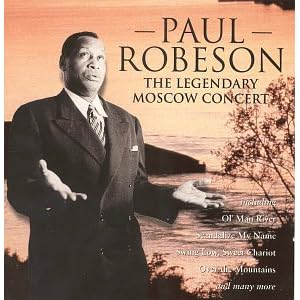
and a legendary concert is still remembered.


http://ecx.images-amazon.com/images/I/419F8BV63FL._SL500_AA300_.jpg

TOMORROW is the 60th anniversary of one of the most shameful episodes in the history of Soviet so-called socialism, the "Night of the Murdered Poets", on August 12, 1952, when thirteen prominent Russian Jews were executed after a mockery of a trial behind closed doors, and using confessions extracted by beatings and torture.

Not all were poets, but all had been involved in the Jewish Anti-Fascists Committee set up to mobilise solidarity with the Soviet Union in the war against Nazi Germany. The idea for this had originally come from two leaders of the Jewish socialist Bund in Poland, Henryk Ehrlich and Victor Alter, who had been captured and imprisoned in the USSR, then released after the Nazis invaded, only to be jailed again and executed as "Nazi spies". It is possible the Stalinist authorities were concerned that the two had sought the truth about the Katyn forest massacre or that they had been in touch with left-wing dissidents still imprisoned.

News of the killing of the two Bundists had caused international outcry, but the Soviet regime may have hoped this would be forgotten with the needs of the war, and by sending a high-profile Jewish delegation abroad to win support.

It was during a Jewish Anti-Fascist Committee event chaired by Albert Einstein in New York on July 8, 1943 that the singer Paul Robeson and his wife Eslanda met two of the Soviet visitors, playwright Shlomo Mikhoels and poet Itzik Feffer, at that time a colonel in the Red Army to which he was atached as a war correspondent.

After the war, the very international links which had been an asset of the Soviet Union began to be seen as suspect. The country had entered a nationalist phase which affected all aspects of culture. Whereas Lenin had spoken highly of the internationalist aspect of Jewish contributions to the movement, a campaign began in 1949 against "rootless cosmopolitans".


Although Stalin and the Stalinist parties -even, to their cost, those in the Middle East - had supported the creation of the State of Israel, it is said the Kremlin was rattled by the enthusiasm shown by Soviet Jews.


However, Shlomo Mikhoels had been murdered months before this, in what was contrived to look like a car crash, but was arranged on orders from the highest level. Itzik Feffer was then arrested and followed by others, though it would take time work out why they were being held, build up a case against them, and extract as many concessions as could be.

Meanwhile all the outside world knew were rumours.


So it must have caused some consternation to the authorities when Paul Robeson, not just an internationally reknowned singer, but a communist and unquestionable friend of the Soviet Union, arrived in Moscow in June 1949, as a star guest for celebrations of the 150th anniversary celebration of the birth of Russian poet Alexander Pushkin, but asked about another poet, his friend Itzik Feffer.

The officials told him that Feffer was holidaying in the Crimea, but would see him as soon as he got back. There now began a frantic effort with the help of doctors to plump up Feffer, who was emaciated after three years in prison, and make him look more like someone who had just come back from holiday. When the two men met, Feffer indicated that the room was bugged, and that he could not say much, but managed to convey to Robeson something of what was happening to him and others.


In his concert at Tchaikovsky Hall on June 14, 1949, which was broadcast around the country, Robeson asked the audience for silence, and spoke in tribute to his friends Feffer and Shlomo Mikhoels. He then began to sing, in Yiddish, the Vilna partisan song - Zag nit keynmol, az du geyst dem letstn veg, - Never Say That You Are Going on the Last Way.

Alas, back in the 'States, confronted by reporters asking questions about antisemitism in the Soviet Union, Robeson reluctant to concede anything which might be used for the Cold War, denied having seen anything of it. The US government launched its anti-communist witch hunt and took away Robeson's passport. Many others, some of whom had probably been at that Anti-Fascist rally in 1943, lost their livelihoods. Feffer and his co-defendents lost their lives, being executed on August 12, 1952 at the Lubyanka prison.

They were posthumously rehabilitated in 1955.


Paul Robeson's concert, including Zag nit keynmol, is available on record, and I'm reliably assured his Yiddish pronunciation is as good as his singing voice, but unfortunately his spoken words seem to have been lost. Also I notice that You Tube and various websites, including those of folksong publishers, describe the Vilna Partisan Song as the song of the Warsaw ghetto revolt. I suppose it is too much to expect American readers and listeners to remember the names of two east European capitals, and I am not going to raise outdated Litvak-Polak differences!

http://claude.torres1.perso.sfr.fr/GhettosCamps/Disques/Mitsui.html

Instead, I will sing the praises of Nottingham-based publishers Five Leaves, who last year rose to the occasion of the anniversary of the Battle of Cable Street with several titles, and this year have with superb timing got the anniversary of the Night of Murdered Poets to launch a new anthology of Soviet Jewish writing. Here is their announcement:

Sunday 12 August: 2.00-5.00pm

"From Revolution to Repression"


An international event held by Five Leaves and the Jewish Music Institute commemorating 60 years since Stalin executed the cream of Soviet Yiddish writers and others from the Jewish Anti-Fascist Committee.


Gennady Estraikh, Associate Professor at NYU will speak on "Why did Stalin murder Yiddish writers?", and Robert Chandler, translator of Life and Fate will speak about Vasily Grossman and Isaak Babel.


Music from the Soviet Jewish world: Polina and Merlin Shepherd.


School of Oriental and African Studies, lecture theatre G2, Thornhaugh Street, Russell Square, London WC1H 0XG
Admission free, light refreshments provided.


In the early years of the Russian Revolution previously forbidden literature flourished. Jews in the Soviet Union founded new magazines, publishing houses and literary movements. In the 1920s they produced brilliant avant-garde work, written in Yiddish, which sat alongside the best of European modernism. Later, Yiddish writers had to respond to the twists and turns of Stalin's rule in their struggle to be creative, to make a living and, when the purges started, to survive. Little of this work has been translated into English, despite writers like David Bergelson, Peretz Markish and David Hofshteyn having a large readership among Yiddish speakers internationally.


During World War Two the Jewish Anti-Fascist Committee (JAFC) was set up in the Soviet Union, bringing together scientists, writers, actors and other intellectuals. In 1948 the JAFC was closed down and many of its leading activists arrested. After a long period of imprisonment thirteen members of the JAFC were executed on 12 August 1952, including most of the writers represented in the book.


From Revolution to Repression includes translations of fiction and poetry, some modernist, some socialist realist, by several of the writers who were executed or died in prison. The book outlines the individual and collective history of the authors and gives an overview of Soviet Yiddish literature. It is published to commemorate the 60th anniversary of the executions.
The editor and main translator of From Revolution to Repression was the South African academic Joseph Sherman who taught at the Oxford Centre for Hebrew and Jewish Studies. He died before the book was completed. Gennady Estraikh (New York University) contributes a short memoir of Joseph Sherman.
Info: myra@fiveleaves.co.uk


http://www.fiveleaves.co.uk/events.html

Labels: , , , ,

Friday, December 10, 2010

View from Westminster, by way of Moscow

NOT CLEAR WHERE ALL THE PIECES FIT

CAME home last night from a pleasant evening discussing history, to see a stream of messages from those out in the cold making it. "Still kettled on Westminster bridge, why?" (this seems to have carried on beyond midnight).

Some pictures of Prince Charles and Lady Camilla in their paint-spattered car, a fortuitous encounter with their subjects which brought to mind the contemporary cartoons in history books, of the London mob in days gone by, before our much-loved modern monarchy was invented.

Less amusing video showing a student getting his head battered by a cop. Don't know if this is the same lad reported today needing a serious operation.

More than 30,000 students and supporters marched in London yesterday, opposing the trebling of fees and the cutting of the Educational Maintenance Allowance(EMA) which helps young people remain at school after 16. The latter is more obviously a particular blow against poorer families, as well as turning more youngsters out on to the job market when there is already record youth unemployment.

It may be my suspicious mind, but it has seemed to me that there has been deliberately less coverage of the EMA issue. Even when the TV new the other day showed a crowd of school students marching behind a banner saying "Hands off the EMA!", the commentary managed to avoid mentioning it.

Although I was not out there yesterday it seems that as usual the vast majority of the students marched peacefully, and along a pre-arranged route, their only preparation being extra warm clothes, bottled water and sandwiches. The "violence", such as it was, came later, and consisted of tearing down some temporary fencing, frightening the royals, and a spot of window breaking.

If I've been critical of the BBC and other British media coverage of the student demonstrations, it was put in perspective a little today when I turned for a change to the Russia Today TV channel. Their reporter said there was little sign of yesterday's trouble on her journey into work, but elsewhere the mess was still being cleared up, such as the fencing which the students had taken down in Parliament Square. The RT report went on to speak of students vandalising a phone box, breaking windows at the Treasury, attacking police "who were only doing their job" (honest!) and even attacking the Royals. "Anarchy in London" ran a streamer beneath the footage.

Admittedly the later bulletin went on to mention the tripling of fees, and gave a more optimistic estimate of 40,000 demonstrators. All the same...

I've been watching RT with increasing curiosity about its politics. Anyone nostalgic for the good old days of Radio Moscow and its satellites may be cheered to see that the Russian-based TV channel, with its RT America wing etc, has managed to broadcast some telling footage of capitalist reality today, from unemployment and homelessness in the United States to the way hoardings were put up in Delhi during the Commonwealth Games so visitors would not glimpse the shanty town slums behind them.

There's even a sort of fast-talking shock-jock commentator taking the mick out of Wall Street and its wily but unwinning ways, and this morning we saw an item on how insider-dealing has become a problem that needs tackling in Moscow, with smart guys snapping up shares in a Russian fruit juice firm ahead of its take-over by Pepsi Cola.

This does not amount to a Marxist critique of capitalism, however, but just an admission that it has problems, and that Russia is still getting the hang of it, but serious about making the system work. Cue for some light relief in the shape of experts and conspiracy theorists explaining that everything is due to the Euro, the Germans, the Bilderberg foundation, and so on, or revealing the "Truth" about the 9/11 conspiracy.

Like our media here, the RT news announcers are also learning to blandly state opinions as simple, incontrovertible "facts", such as that the British government is having to deal with an economic crisis caused by the generosity of our benefits system. I don't know whether that was meant to keep the plebs quiet home, or reflects the way Russians laundering their mysteriously-acquired millions through the City of London have also bought into the Tory philosophy.

Last week I was interested to see RT interviewing a far-Right Israeli politician called Aryeh Eldad, son of a former Stern group leader regarded as an outright fascist by former colleagues, and evidently keeping up his father's line. Eldad advocates taking away the citizenship of Palestinians within the Zionist state, annexing the occupied territories, and mass deportation of their people to Jordan.
He went on to say that Israel is standing in the West's front-line in the "Battle of Civilisations".

Forgetting the row we had here over the BBC providing airspace to the BNP's Nick Griffin, I suppose it was good that people see just what is nowadays considered acceptable politics by the Israeli Right. All the same, and even bearing in mind that Russia has had its own history of mass deportations, I do wish the interviewer could have been a bit more challenging, and seemed a bit less deferential, when letting this racist air his views.

Incidentally, within days of watching Eldad on RT, I heard from friends in Tel Aviv that they were organising a demonstration against visiting Dutch politician Geert Wilders. Facing prosecution in Holland for incitement of hatred, the Islamophobe Wilders was in Israel as the guest of Aryeh Eldad. Wilders too says that if Palestinians want a country it should be Jordan, and that Israel is standing in the West's front line. Will RT be featuring an interview with the Dutchman next?

To be fair, besides providing some interesting newsreels and documentaries, RT does give some good people a voice, even if it is a bit free with its favours. I wondered about their programme on Radovan Karadzic in his second career as a faith healer, but I see they also had a programme on Norman Finkelstein. I'm sorry I missed the debate on US Israel policy where Gideon Levy was able to take on the awful Zionist attorney Alan Dershowitz.

This morning I watched an item that seemed to be attributing all Ireland's economic problems to its joining the Euro. A man from the UK Referendum party -which I thought no longer existed - was saying how ridiculous it was that Britain was bailing out Ireland. A fellow from the Global justice movement tried to get a word in about how much Ireland owed to British banks, only to be drowned out by the Referendum man, plainly not used to being contradicted, saying "I agree with you, I agree with you, but..", continuing to have his say and making sure the other man could not develop his point.

With its economic news, international weather, and announcements about hotels where it can be received, RT seems particularly aimed at the business person resting in their hotel room and fiddling with the remote. But its audience is much wider.

According to Wikipedia, RT was launched as Russia Today by an autonomous non-profit organization in 2005, but much of the funding to this organization, ANO TV-Novosti, is injected from the Russian Federal Budget (2.4 Billion Rubles in 2007). In 2007, RT’s monthly audience share exceeded that of CNN and Bloomberg TV among NTV-PLUS satellite subscribers in Moscow. In 2008, RT’s average monthly reach in Russia indicated a growth rate of 82% within just six months. Over the same period, the channel’s average daily reach grew by 46%. In the same year, the monthly audience among those who have access to or are aware of RT’s broadcasts on Time Warner Cable in NYC exceeded that of BBC America by 11%. The daily audience of RT exceeds that of Deutsche Welle tenfold, within the same network.

Based in Moscow with bureaus in New York, Washington, London, Miami, Los Angeles, Paris, Tskhinval, Delhi and Tel Aviv, RT International is the flagship news channel of the RT network. RT International was launched in 2005 and covers international and regional headlines from a Russian perspective. Besides its English broadcasts, the corporation has Arabic and Spanish services.

It's not that clear at times what the "Russian perspective" is, unless dealing with issues like south Ossetia and Georgia, when RT's loyalty is little in doubt. But I'd guess the Russian station is less biased and distorted than say, Murdoch's Fox News, and though I find some of its views and interviews too unpalatable to rate as anything like a station of the Left, it offers at present an alternative to vary our diet in the West.

So I will carry on watching RT.

But I will also be watching it!

Labels: ,

Wednesday, July 15, 2009

The high price of telling the truth

Award-winning human rights campaigner murdered.

Natalia Estemirova found shot dead after being abducted
outside her home.

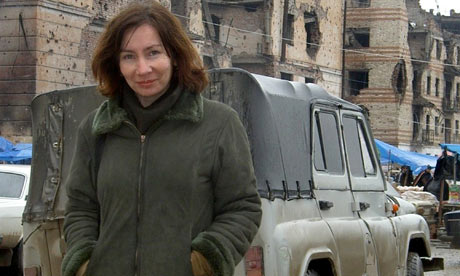
Natalya Estemirova

Natalia Estemirova in the Chechen capital, Grozny, in 2004.

IN some places there is a high price to be paid for trying to uncover and tell the truth, and standing up for human rights and justice. We can only marvel at the women and men who take that risk.

Natalia Estemirova was one of them, reporting on the kind of 'order' that reigns in Chechnya, since it was restored by Russian forces. .

This morning she was seized by four men as she left for work. Neighbours at her house in Grozny, Chechnya's capital, heard her shout: "I'm being kidnapped."

Her body was found near Gazi-Yurt village, in neighbouring Ingushetia. She had been shot twice in the head and chest, police said. Her corpse was dumped on the main road.

There was more than a similarity linking this to the murder of Anna Politkovskaya, the journalist shot dead outside her Moscow apartment in 2006. The two women had been close friends, and had worked together on investigations into human rights abuses in Chechnya. They were strong opponents of Chechnya's Russian-backed president, Ramzan Kadyrov..

Estemirova was the Chechnya-based head of Memorial, Russia's oldest human rights group. She recently collaborated on two reports into punitive house burnings and extra-judicial killings in Chechnya, allegedly carried out by government forces. They told how Kadyrov's troops shot 20-year-old Madina Yunusova and her husband near Grozny.

Chechen officials claimed her husband had been involved in a plot to kill Kadyrov. Yunosova died three days later in hospital under mysterious circumstances.

Estemirova made no attempt to hide her work. Her office near the newly renamed Putin avenue was well known.

Earlier this year Estemirova attended the trial in Moscow of four people – two of them Chechens – accused of involvement in Politkovskaya's murder.She later described the trial as a "farce".

Estemirova was also a close colleague of human rights lawyer Stanislav Markelov, who was murdered in Moscow in January. A masked assassin shot Markelov in the back of the head, not far from the Kremlin, along with Anastasia Baburova, a journalist with the Novaya Gazeta newspaper.

The Chechen people and their neighbours the Ingush were subject to brutal mass deportations during Stalin's reign. In more recent times the ruthless way in which Russian forces bombed and flattened Grozny, the Chechen capital, in order to crush insurgents, was a shock to the world. Ramzan Kadyrov - who denied any part in the Politkovskaya murder, saying he did "not kill women" - has been given charge of counter-insurgency both in Chechnya and Ingushetia. He is a close ally of Russian Prime Minister Vladimir Putin.

President Dmitry Medvedev has strongly condemned the murder of Natalia Estemirova. But it seems the brutality with which Russian leaders stamped down on insurgency in the north Caucasus has not only opened Chechnya to the outside jihadi influence which they now blame. It has created a poison which spills back into Russian society, ruining people's chances of enjoying real democracy.

Here in the West, which so many Russians naievely looked to as lands of freedom, and where so many Russian oligarchs and kleptocrats come to launder and spend their ill-gotten gains, we see so-called journalists fawning on leaders with power and wealth, filling the media with lies and trivia, and abusing their skills to pursue the lowest on the social ladder at the behest of their immensely wealthy proprieters.. We can only envy the people in Russia and neighbouring lands their courageous campaigners for justice and truth.

Labels: ,

Saturday, November 08, 2008

Georgians demand to know the reasons why

WHILE we were asking questions about the war in Georgia, and how much the British government knew, in this column yesterday, columns of Georgians were marching through their capital Tbilisi, demanding answers from their government.

As many as 20,000 people took part in the demonstration, according to today's Morning Star. They rallied outside parliament before marching to the presidential residence a mile away. Besides explanations for the war last Summer, they called for greater press freedom, and early parliamentary elections.

A report in the New York Times yesterday said independent monitors working for the OSCE had reported that
Georgian government forces started the escalation into all-out conflict in August , breaking a ceasefire with South Ossetian rebels by launching indiscriminate rocket fire on the South Ossetian's capital. Russian forces supporting the Ossetians responded with an invasion, easily pushing back the Georgian army in both Ossetia and Abkhazia, its other rebel province. Many civilians on both sides were killed or saw their homes destroyed, and refugees fled in both directions.

British ad US governments have praised Georgia's President Saskashvili as a democrat, and promised to bring Georgia into NATO. But it seems many Georgians are questioning their government's path.

Speaking for the United Opposition which organised yesterday's demonstration in Tbiisi, Eka Beselia said: "We are demanding early presidential and parliamentary elections in the Spring, election legislation reforms, media feredom and the freeing of political prisoners". (Morning Star, November 8, 2008).

Reluctant as I was to take the Star's report as last word, I checked what the Guardian and Independent had to say, but they don't seem to have covered the Georgian protest. However it was reported in the New York Times, which found some of the protesters not as patient as the opposition leaders:

'Some of the demonstrators were disappointed in calls to wait, saying they would like Mr. Saakashvili and his team to be removed from power immediately, lest they provoke renewed fighting with Russia.

“Saakashvili should go right now,” said Eka Jipashvili, a protester. “We need a new government that will be able to negotiate with Russia and will not worry us with ideas of new war.”

http://www.nytimes.com/2008/11/08/world/europe/08georgia.html

Hopefully as well as our politicians letting us in on what they know, we will hear more about this side of things, and what ordinary Georgians have to say, from our mainstream media. Or is that too much to expect?


Labels: , ,

Wednesday, August 20, 2008

Georgia: lives and homes destroyed, for economic power and political ambitions

SHEVARNADZE, former Georgian president, ducks camera when arriving at Chatham House for British Foreign Office-sponsored talks, February 10 1995.

WHATEVER historical and legal claim Georgia has to South Ossetia, the Georgian government destroyed its moral claim on the night of August 7, by launching a military offensive with little or no regard for the lives of civilians whom it claims as its own citizens.

The fighting began not long after it had concluded a truce with the South Ossetian separatist leadership to end local street fighting that had broken out earlier that week.

Multiple rocket-launchers, like those used in World War II to break up advancing tank formations, opened up from forest cover, firing rapid salvoes into built-up, populated areas. Evidently the Georgian government thought it could get away with this, letting them be shown on TV.

South Ossetians alleged that Georgian attack planes had bombed civilian targets. Then the tanks moved in.

Georgia's President Mikheil Saakashvili went on television to boast about what he was doing, declaring that Georgia was re-taking its rightful territory. “Most of South Ossetian territory has been liberated and is under Georgian control,” he said.

Note that he talks about "liberating" territory, not people. While South Ossetian militias fought on with grenade launchers against his tanks, the people were fleeing in thousands from their blitzed towns, heading north. This is what the US president and Western media keep telling us is an elected leader defending "democracy".

The stimulation of a refugee flight may have been deliberate, not just for long term aims of ethnic cleansing but the more immediate purpose of clogging roads and the border tunnel with people and cars that would be in the path of a Russian advance. Saakashvili - who incidentally, promised to "normalise relations with Russia" when he was elected - . must have known the Russians were bound to intervene on the side of the Ossetians, whose separatist movement they encouraged. (North Ossetia, across the mountains, is within the Russian Federation, so the border cuts the people in two). Indeed he may have counted on Russian involvement to bring the United States and its allies out on Georgia's side. Russia has alleged that Georgian forces launched a surprise attack on Russian 'peacekeepers' before the Russian army proper decided to move in.

Georgia was already in receipt of massive US military aid before. It is of strategic value as a NATO applicant on Russia's southern flank, and as the pipeline route for Caspian oil that bypasses both Russia and Iran. Since the break up of the Soviet Union, Western oil companies have not just moved back into Baku but invested heavily in developing offshore oilfields. Already when ex-Communist Party president Shevarnadze was running Georgia he was backed against the separatists, before America switched to the privatising Saakashvili as its man. With 70 per cent of Georgia's budget going on defence spending, and opportunities for arms suppliers and private military contractors, it is patriotism with a dividend, the kind of "democracy" in which they like to invest.

With the United States in economic crisis, and an election year, George W.Bush and his backers may not be averse to a war crisis to bolster their position, and Britain's Brown and Milliband as usual are behind the US.
As for Tory leader David Cameron, his rush to Tbilisi, and promise to be like Margaret Thatcher (remember the Falklands/Malvinas) show that our politicians see beating the war drums as a boost tom their careers.
NATO is in a quandary however. If it wants to sell protection it must show willingness to protect. But taking on Russia is not the same as bombing Serbia, or invading Iraq (which itself has proved a quagmire). Besides, Georgia was supposed to settle its disputes and ethnic conflict to qualify for membership, not to make them worse. France and Germany are questioning US wisdom, other states may wonder whether joining NATO brings more danger rather than less.

We have seen Georgians angry at what they see as adventurism and stupidity by their own government. We may yet see the British public showing unrest - and who knows, finding MPs willing to question what Brown and Cameron might be dragging us into.

Not that Russian behaviour, or that of the South Ossetian separatists, merits oir support. Russian planes and tanks also appear to have hit civilian targets, and taken the opportunity to do as much damage to Georgia as they could. Georgian refugees have fled the Russian offensive, and have been attacked by Ossetians pursuing their own ethnic terror or simply out for loot.

As always, it is the innocent, ordinary people on both sides who suffer, and have nothing to gain from this war. That is something people here can recognise, and it is important that we don't lose sight of human sympathies even as we apportion blame on governments and challenge our own rulers most of all. The other night there was a public meeting in London called by the Stop the War Coalition, with Kate Hudson from CND, John Rees of Stop the War and SWP, Oxford academic Mark Almond, and Russian socialist Boris Kagarlitzky. I didn't go, but I have been listening to the last two speakers recorded on video,. and they made some good points.

Yet somehow in the Oxford man's cynicism and the Russian's giggles I sensed a lack of seriousness, a lack of concern, beyond swapping figures, for those who have lost loved ones, and homes, and been turned into refugees. Was there some kind of insulation as defence-mechanism? The amount of background laughter and humour flowing between audience and speakers was greater than I've heard on Saturday nights at comedy clubs. It sounds like a good time was had by all, and maybe that was deliberate. But I found it shocking when I thought of those weeping people by the roadsides, who have lost everything, and didn't know where to go. If the anti-war movement wants to regain a hearing among the mass of people, beyond the 'usual suspects' (some highly suspect) it needs to clean up its act. And we do need an effective anti-war movement.


http://www.iwpr.net/?p=crs&s=f&o=346186&apc_state=henpcrs


http://www.stopwar.org.uk/index.php? option=com_content&task=view&id=705&Itemid=1

Labels: , ,

Sunday, August 10, 2008

As we go marching through Georgia? A WAR TOO FAR

"SO who would you support in this lot?", asked the man in the pub, a couple of days ago, excited at the sound of katyushas being fired in Georgia. I confessed I didn't know. Maybe I should have asked which side he favoured so I could take the opposite. I'd already gathered his views were reactionary on most subjects, and that he wasn't used to being contradicted.

On the other hand, judging from the glee on his face he might not have cared who was winning so long as there was killing. It reminded me of the time I saw a National Front supporter over the moon about news from Lebanon, having heard before I did of the massacres at Sabra and Shatila.

What had happened in Georgia and South Ossetia was not so clear, in terms of taking sides, though a friend and fellow-trade unionist was arguing yesterday that Georgia was a sovereign state defending its territory against Russian aggression. On the other hand I was not clear how his defence of the right of small nations to self-determination might apply to south Ossetia. Nor was I attracted last night by an invitation to join a Facebook group called "Europeans for Georgia

What did become clear yesterday was that the Russians decided to attack after Georgia had sent its tanks into the breakaway region, and that in bombing what might have been military targets they had managed to kill large numbers of innocent civilians. What also got mentioned was that, as I thought, a strategic oil and gas pipeline runs south through this region, avoiding Russian territory; and Georgia has applied to join NATO.

President George W.Bush denounced the Russians for bombing a sovereign state and killing civilians. Quite right. Who do they think they are, Americans?

On TV news a Georgian woman whose home had been bombed said her government had been stupid to provoke the Russians. It was reported that Georgia was having to bring troops home from Iraq, and today we heard they were withdrawing from South Ossetia. So who encouraged them to go in so recklessly?

With US and Israeli politicians and generals training their sights on Iran, and US forces already bogged down in Iraq and Afghanistan, you'd think they had enough on their plate, without getting involved in the Caucasus. But controversial Swiss-based Israeli journalist Shraga Elam thinks different.

"There is an obvious Israeli involvement in the present conflict between Georgia and Russia.," he says. "There are hundreds of Israeli military advisers in Georgia ..." We need not take his word alone. He quotes sources like military expert Yossi Melman in the daily Ha'aretz:

"Melman wrote on 25.6.2008 that Georgia became a real El Dorado for Israeli arms dealers and numerous representatives of the army and intelligence services. Some former generals like Israel Ziv and Gal Hirsh (with his company Defensive Shield) are very active there.

"Gal Hirsh and Israel Ziv are mainly training and consulting Georgian arm units. They are using the 'chain' method common among Israeli arm dealers: a main contractor wins a tender and employs then sub-contractors, in this case Israeli officers and former Shin Beth employees," wrote Melman.

According to him there was a project to sell Merkava tanks to Georgia, but allegedly the Israeli foreign ministry prevented the deal and a policy was outlined that only defensive weapons are allowed to be sold.

Just the same Russia protested agains the Israeli military support to Georgia after an Israeli produced UAV was shot down. On August 5 Israel reiterated its official policy that it allegedly sells only defensive and not offensive weapon systems to Georgia.

The daily Ma¹ariv points out that the Georgian defense
minister, David Kezerashvili, lived for a while in Israel and speaks Hebrew. It estimates military exports to Georgia as worth at least USD 300 million. An Israeli marketing expert told MaŒariv: "To every Israeli agent representing an Israeli defense company is attached a cousin of the defense minister, who opens the doors for him."

An Israeli website called News First Class (NFC) confirms the massive presence of Israeli advisers in Georgia and writes: "The Israeli military industries upgraded in recent years the Georgian air force, sold unmanned aerial vehicles (UAV), advanced artillery systems and trained infantry units." (9.8)

Israel may have to consider whether arming Georgia is good or bad for it as it tries to persuade the Russians not to sell their advanced anti-aircraft missile system S-300 to Iran and Syria.

The Israeli website DebkaFile, which is inclined to sensational and conspiracy theory estimates that up to 1,000 Israeli advisers are active in planning and implementing the present Georgian military action That is more than giving "advice". But we remember how "advisers" began US involvment in Vietnam. Nowadays, in Georgia they may be called "consultants", and as in Iraq, be classed as "civilians".

Sharaga Elam notes that according to Pentagon spokesman Bryan Whitman, there are 127 U.S. military trainers there, of whom about 35 are civilian contractors.

"In addition to the trainers, 1,000 soldiers from the Vicenza, Italy-based Southern European Task Force (Airborne) and the Kaiserslautern-based 21st Theater Sustainment Command, along with Marine reservists with the 3rd Battalion, 25th Marines out of Ohio, and the state of Georgia¹s Army National Guard¹s 1st Battalion, 121st Infantry participated in 'Immediate Response 2008'."

"Operation Immediate Response 2008 was held from July 15-July 30, with U.S. personnel training about 600 troops at a former Soviet base near Tbilisi, the largest city and capital of Georgia. The goal of this operation was allegedly teaching combat skills for missions in Iraq.
The Marines left the country already, but not the airmen.

Shraga Elam wites that "It is obvious that there are numerous Israeli and U.S. interests in Georgia and it is highly likely that they are behind the dangerous Georgian move".

I'm not so sure it is obvious why the Israelis should want to get involved in a war so far from their occupation frontline, or risk taking on Russia on top of spearheading a war on Iran. But it is obvious that some interests may be doing well for themselves from the Caucasus conflict, and they could have more influence on the present Israeli regime than the kind of reasonable Israelis that we know.

Especially if the rich uncle in Washington has given a wink of encouragement, along with the promise of benefits from that trans-Caucusu pipeline.

Meanwhile, "military intelligence" being as some say, a "contradiction in terms", it seems some US generals finding their forces in a mess are looking to dig further in, judging from two items spotted by the Information Clearing House(ICH):

Manufacturing Consent For An Attack On Pakistan:
Afghanistan accusing Pakistan of aiding insurgents


US commander in Afghanistan Thursday publicly accused Pakistan's Inter-Services Intelligence Directorate of "some complicity" over time with militant groups fomenting violence in Afghanistan.
http://geo.tv/8-8-2008/22163.htm


U.S. weighs pursuing militants into Pakistan:

Top Bush administration officials are urging the president to direct U.S. troops in Afghanistan to be more aggressive in pursuing militants into Pakistan on foot as part of a proposed radical shift in its regional counterterrorism strategy, The Associated Press has learned.
http://tinyurl.com/62q9ah

Having so long regarded Pakistan as a useful base and ally, used it as hinterland for mojahiddin fighting the Russians in Afghanistan, encouraged the Saudi-funded Taliban as a weight against Iran, and assisted the Pakistan military to acquire nuclear weapons, is the US about to turn on Pakistan?

One of the bombings was of an Indian consulate, and in the past Pakistan intelligence has been implicated in bombings in India. Now that US government no longer regards India as unfriendly, could it use such provocations to draw South Asia's other nuclear power into a horrific war?

It sounds mad. But with US economy, as well as foreign policy, in desperate straits, I would not put anything beyond the neo-cons and Bush's circle.

Like Munch's "Cry" painted before the First World War, that weeping Georgian woman whose neighbours had been killed by the madness of politicians may come to be a symbol of the warnings we should have heard.

Labels: , , , ,

Thursday, August 09, 2007

From Russia with Hatred

THERE's been an interesting response to Labour's appointment of David Miliband as Foreign Secretary, from the conspiracy theorists of the far Right, and the revisionist historian David Irving, through to a Russian commentator said to be close to Putin -not that this is such a wide traverse these days, it seems.

Some people are suggesting Miliband's ethnic background as a Jew, or "Zionist" (the categories are abused as interchangeable) should make him unacceptable to Arabs. I'd say it is the policies of the British government, like invading Iraq, and backing Israel's war in Lebanon, which are unacceptable regardless of who represents them. Given a choice, Palestinians and their allies might have felt more confident talking to the Jew Gerald Kaufman (who was Labour's shadow Foreign Secretary when in opposition) rather than trying to talk to Jack Straw or Margaret Beckett. But some Western commentators can't help projecting their own ignorance and prejudices on to those they consider inferior peoples.

Miliband's politics are another matter. It is often said that father Ralph Miliband (author of Parliamentary Socialism and other works) spent his life arguing that the Labour Party had nothing to do with socialism, and his two sons Dave and Ed have loyally helped to prove the old man right. Another version of the jibe is quoted by Dave Osler in his blog:
http://www.davidosler.com/2007/08/the_miliband_family_and_antiso.html

The occasion for this discussion was provided by a Russian commentator reported in, of all places, the Daily Mail :
… Russian political analyst Gleb Pavlovsky, who is close to the Russian President, has claimed Mr Miliband inherited anti-Russian sentiments from his family.
The comments were last night being viewed as a sign of Moscow's bitterness towards Britain over the Litvinenko affair and the UK Government's refusal to extradite tycoon Boris Berezovsky to Moscow.
The attack came in Russian nationalist newspaper Tvoi Den. Mr Pavlovsky said: "David Miliband's hatred for Russia was inherited from his grandfather."
The newspaper said that in the Twenties the Foreign Secretary's grandfather, Samuel, then Shimon, Miliband, a native of the Jewish ghetto in Warsaw, had fought under the command of Trotsky 'eliminating' white Russians opposed to Communism.
He later came to England with his son Ralph, who became a Marxist academic, and whose sons David and Ed now serve in the Cabinet.
"David absorbed anti-Sovietism, as the saying goes, with his mother's milk," said Mr Pavlovsky".


I'm hesitant to trust anything that appears in the Mail, a Tory paper that once backed Oswald Mosley's fascists, and in recent years has been notorious for attacking minorities and immigrants. This is the paper, that hosts columnists Melanie Philips (the neo-con admiring latter-day Zionist and preacher of her own narrow-minded and uncharitable morality, "Mad Mel" as she is known to many of my friends), and Richard Littlejohn, who took time recently from abusing Muslims, Gypsies and other minorities to produce a Channel Four TV programme blaming the Left for antisemitism.

But unless the Mail has invented its story and attributed things which Gleb Pavlovsky never said, then the Russian's rant is worth dissecting. Yes, it is apparently true that old Sam Miliband came from Warsaw (whether one can accurately describe that city's Jewish quarters as a "ghetto" before the Nazis set one up is another question), and that he joined forces under the overall command of Leon Trotsky in 1920. They were called the Red Army! Trotsky was Soviet Commissar for War at the time. So it seems peculiar to say the least for Pavlovsky to describe such a background as evidence of "anti-Sovietism".
Polish reactionaries attacked the Jews as pro-Soviet and "Bolshevists".

But then if Pavlovsky was writing in a Russian nationalist newspaper, it's not surprising that he should write this way. We have seen demonstrators bearing Stalin's portrait take to the streets of Moscow and St.Petersburg along with admirers of Hitler and the Czar, and what better way is there to cement such a bizarre and obnoxious alliance than with antisemitism and denunciation of Trotsky? Didn't "the Jews" (such as Yacov Sverdlov) kill the Czar and family? (for a view from the far Right see http://library.flawlesslogic.com/tsar_1.htm). Didn't some Nazi observers interpret the Stalin purges as Russia liberating itself from the Jews?
(Though Hitler quietly expressed appreciation of the good turn done him in more practical ways by Stalin decimating the Red Army command).

The Pavlovsky interpretation of history sounds not dissimilar, incidentally, to some of the things we've read from the notorious Israel Shamir, one-time BBC Russian service contributor and writer for the Russian nationalist press, who tried to act as go-between offering a collection of Nazi documents from Russian associates to David Irving. Shamir, who doubles as a Swedish antisemite under a different name, has also rewritten Russian history when attacking some Jewish left-wing anti-Zionists.

Ralph Miliband, born in Brussels but brought to England as a refugee when young, was never "anti-Soviet". He did consider joining the Communist Party when young, but disagreed with the Soviet Union's treatment of Yugoslavia. His decision to join the Labour Party has been attributed to the influence of Harold Laski, who taught him at LSE, but may also have owed something to Konni Zilliacus and other left-wing Labour MPs. Zilliacus, who sympathised with Tito, managed to be denounced as an "imperialist agent" by the Stalinists(during the Prague trials) and denied the Labour whip because of his opposition to Labour's Cold War policies. Perhaps this is the kind of "anti-Sovietism" that Pavlovsky had in mind.

I never met Ralph Miliband (such was the sectarianism in my corner of the Left that we were not even encouraged to read his books, though I did get his Parliamentary Socialism from the library while I was a Young Socialist, and it is certainly not New Labourite!). But some time in 1982-3 I was helping to steward a big public meeting in County Hall against the Lebanon war, and someone told me after that Miliband had been there with Marcel Liebman, from Belgium. Liebman, the author of Leninism under Lenin, was a member of the Union des Progressistes Juifs de Belgique(UPJB) and a founder with Naim Khader of the Association Belgo-Palestiniennes. That about takes care of the "Zionism" slur.

I met Ralph Miliband's widow briefly during a gathering in Brussels a few years ago of the European Jews for Just Peace, hosted by UPJB, the Belgian affiliate. We discussed her late husband's books, and neither of us thought to mention Ed or David somehow.

Politics is not passed on genetically nor "imbibed with the mother's milk" as Pavlovsky suggests. (Sometimes even a good socialist upringing fails to do the trick, unfortunately). We choose what to inherit, according to inclination and circumstance, and if a Russian writer reported to be close to Putin prefers the inheritance of the Black Hundred reactionaries to that of Lenin's Bolsheviks, that is part of his country's decline, though it is not surprising if the Daily Mail should recognise and welcome it.

Labels: ,

Tuesday, June 12, 2007

Waterfront Warzones; Puerto Quetzal to Kaliningrad

GUATEMALAN trade union leader Pedro Zamora Alvarez was killed in the town of Puerto Quetzal, earlier this year, and several of his colleagues received telephoned death threats to themand their families. Pedro Zamora Alvarez was Secretary General of the Sindicato de Trabajadores de la Empresa Portuaria Quetzal (STEPQ, Quetzal Dockers' Union).

He was killed at around 7.50pm on 15 January, as he returned home from the local clinic with his two small children in his pick-up truck. Approximately 50 meters from his home, a car with five occupants was waiting for him. The hit squad fired about 100 bullets at Pedro Zamora's car, around 20 of which hit him. Badly wounded, he crashed his car into a wall. One of the attackers came up close and fired a final shot to his head. One of his children was also wounded in the attack.

The four remaining members of STEPQ's Executive Committee received death threats two days later.

Pedro Zamora, who was elected to the post of Secretary General in December 2005, had regularly been tailed by various vehicles in the weeks before his assassination. Unknown individuals also visited his family home on a number of occasions asking about his whereabouts.

In June last year another docks trade unionist, Max Alberto Estrada Linares, was shot and seriously wounded. On 10 January 2007 the Union's Executive Committee participated in a meeting at the Congress of the Republic in Guatemala City. The Union was informed at this meeting that nine dockers allegedly unfairly dismissed by the port of Quetzal in October 2006 would be reinstated, allegedly against the wishes of the port authorities. A dark-colored Toyota Yercel allegedly followed the Union members as they drove away from the meeting. From that date until his death, Pedro Zamora told his colleagues that he was followed every day.

The STEPQ, affiliated to the International Transport Workers' Federation, campaigns for better wages and conditions, and for welfare provisions to families. It opposed plans to build a new container terminal at the port, fearing this could lead to future privatization and job losses. The STEPQ has also campaigned for the reinstatement of the nine workers who were unfairly dismissed on 9 October 2006 during a peaceful demonstration against the construction project.
(info. from Amnesty International, see:
http://www.americas.org/item_30580
http://web.amnesty.org/library/Index/ENGAMR340022007?open&of=ENG-394

NOW from Central America to the Baltic port of Kaliningrad (that was once was Koenigsburg) and another report of violence against dockers' leaders, recieved today via Labourstart, together with a call for messages of solidarity.

RUSSIAN DOCKERS' LEADER BEATEN AND STABBED - AN URGENT APPEAL FOR HELP

Four days ago, on 7 June, Mikhail Chesalin, the chairman of the local Dockers Union in Kaliningrad, Russia, was savagely stabbed and beaten outside the union office. An unknown number of assailants attacked Chesalin when he got out of his car, stabbing him numerous times in the spine, and beating him severely about the head. He was left lying face-down, unconscious, in a pool of blood. Chesalin's colleagues believe that the attack was orchestrated by Vladimir Kalinichenko, the General Director of the Sea Commercial Port where the dockworkers' union is currently running an organizing campaign.

When we talk about "urgent action appeals" this is exactly the sort of thing that we mean. It is our responsibility as trade unionists to rally to the support of our brothers and sisters in Kaliningrad and to demand that attacks on trade unionists cease and workers' rights berespected. Please send your message of protest today:
http://www.labourstart.org/cgi-bin/solidarityforever/show_campaign.cgi?c=265


And most important -- pass this message on, mobilize members of you runions, let's send thousands of messages to Russia today.
http://www.labourstart.org/cgi-bin/solidarityforever/show_campaign.cgi?c=265

Labels: , ,

Wednesday, May 30, 2007

Moscow cops take sides with Nazis

MOSCOW riot police arrested about 30 demonstrators commemorating the 14th anniversary of homosexuality being decriminalised in Russia at the weekend. British gay rights activist and Green Party member Peter Tatchell and Right Said Fred singer Richard Fairbrass were among about 100 protesters calling for the right to hold a Gay Pride parade in the Russian capital. They were attacked by a right-wing gang, who apparently enjoy impunity from police interference with their thuggery.

German MP Volker Beck and Italian MEP Marco Capatto were also arrested after being attacked.

The Independent reported: 'Nationalists chanted "death to homosexuals" while throwing kicks, punches and eggs at the protesters, who were trying to present a petition signed by 40 MEPs to Mayor Yuri Luzhkov asking him to lift the ban on the parade. The mayor has made openly homophobic remarks in the past, calling such marches "satanic".

'About 31 demonstrators were detained by police, although most were released by last night. Mr Fairbrass was left with a deep gash under his left eye and blood pouring down his face after receiving several blows to the head, while trying to speak to journalists. Peter Tatchell, co-founder of the direct-action gay rights group Outrage! and member of the Green Party, was also badly beaten before being arrested by riot police'.
http://news.independent.co.uk/europe/article2588923.ece

Peter Tatchell used less mealy-mouthed words than "nationalists" to describe the black-shirted attackers: "We arrived at City Hall and were immediately surrounded by neo-Nazis, who began to crowd and infiltrate our group. The Moscow police and riot squad gave them a free hand to attack people. I was punched in the eye, pushed to the ground, and kicked all over my body by six people. The riot police then moved in and arrested me, allowing my attackers to go free."

Tatchell was in no doubt about the relationship he'd winessed between police and the street thugs: "There seemed to be a connivance between them. They only began arresting the neo-Nazis when it was clear that journalists had footage of the attacks."

Although the foreign demonstrators were later released without charge, three Russian gay activists appeared in court. Peter Tatchell, still recovering, said the Moscow police had "stood and watched" while far-right skinheads kicked him to the ground and punched him. "Even today I'm woozy. My eyesight is pretty poor. It's difficult to see clearly. " Comparing his experience with the beating he recieved from Robert Mugabe's thugs in 2001 he said he had registered a complaint with the police.
http://www.guardian.co.uk/g2/story/0,,2089964,00.html

It's possible to have doubts and misgivings sometimes about Peter Tatchell's choice of targets, tactics and timing, even when he is right in principle. Being inadequately aware of the wider political context he can find himself receiving "support" from people who, as he must know, really hated everything he stood for. The British government and media may currently have dubious motives of their own for highlighting anything that reflects badly on civil rights and enlightenment in Putin's Russia.

That said, Peter Tatchell and his fellow-protesters deserve credit for bravely standing up to reactionary forces in Russia to raise a genuine issue, and in doing so, exposing a related and at least equally serious concern. As a matter of fact, although Tatchell's presence ensured the media publicity he wanted for this Moscow protest, British political reaction so far has been muted, if not entirely silent.

In an unrelated incident a British diplomat has been beaten up by unknown assailants in Chita, Siberia, where he had been lecturing. This is the home of Mikhail Khordorkovsky, who was jailed for eight years for tax evasion and fraud, though some alleged this was really punishment for his role in funding opposition parties ahead of 2003 Duma elections. British embassy officials yesterday said there was no link between Mr Gould-Davies's trip and Khordorkovsky.

London's mayor Ken Livingstone wrote to Moscow's mayor, Yuri Luzhkov, urging him to lift the ban on gay parades in the city that prompted Sunday's protest. He also called for all charges against the gay rights demonstrators to be dropped. "I am writing to convey my deep concern at the reported physical violence against and arrest of Peter Tatchell," Mr Livingstone wrote, adding that gay parades were now "the practice in most cities around the world".
http://www.guardian.co.uk/gayrights/story/0,,2090153,00.html

Right now the British government is in a poor position to go lecturing anybody about the arrest of peaceful demonstrators. Some friends of mine were arrested last year and charged under the "Serious Organised Crime" Act, for having demonstrated in Whitehall without adequate notice to police, over the Israeli raid on Jericho in which there was British connivance.

But the police conniving with fascist thuggery is another matter, and though in this case they may have been acting in accord with Moscow's mayor, the issue is wider than homophobia, bad as that is.

Eight people were murdered and over two dozen injured in fascist and racist attacks in Russian cities in April. Karen Abramyan, an Armenian, was stabbed to death in Moscow, on April 16, and the same day the body of a 26-year old Tadjik was found elsewhere in the city, with 35 stab wounds. Add them to the 20 million Soviet citizens who lost their lives to Nazi barbarism in World War II. But on the weekend of April 21-22, far Right groups were allowed to celebrate Hitler's birthday.

The Party for the Defence of the Russian Constitution invited members of the National Socialist Soviety and the Nazi combat group Format 18 to join it in a 250-strong demonstration in Moscow's Slavyanskaya Square, near Putin's offices, where police stood by as racist speeches were made. At another nationalist and racist rally on Pushkiskaya Square demonstrators raised fascist salutes, and called for a Moscow street to be renamed after the "Pskov Commandos" , who fought in Chechnya.
(Russia: Nazis celebrate Hitler's birth with violence and rallies, from Maria Rozalskaya for Antifa-Net in Moscow, Searchlight, June 2007)

The police detained one of the leaders at the second rally; after he had made an obscenity-filled speech attacking the police, reports Maria Rozalskaya.

If this is the best the police can do, when ethnic minorities and people standing up for their democratic rights are being attacked, it would not suprise me if left-wing and anti-fascist Russians set up their own defence squads to deal with the fascists.

Labels: , ,