Thursday, May 21, 2015

Searching for Justice for Jeremiah Duggan

JEREMIAH DUGGAN.  Unlikely 'suicide'.  Normally cheerful student 'phoned home in terror before meeting his death at Wiesbaden.


A LONDON family's long search for truth and justice for the death of their son in Germany reached Barnet Coroner's Court this week, and reports of the case have brought to public notice the sinister international cult headed by Lyndon LaRouche, little known in Britain, but long notorious in the United States, where it began, before extending its activity to continental Europe.

Jeremiah Duggan was just 22, and studying at the Sorbonne in Paris in 2003 when, worried over the prospect of war on Iraq, he bought a paper called Nouvelle Solidarite, and was invited by the seller to attend a youth anti-war conference being organised in Wiesbaden, Germany, by the Schiller Institute. 
What he was not to know was that Nouvelle Solidarite is produced by Lyndon LaRouche's supporters  in France, and the cultural-sounding Institute (Friedrich Schiller was an 18th century philosopher and poet) was founded by LaRouche's German wife, Helga Zepp LaRouche.

At the conference, Jeremiah apparently disagreed with some of the things he heard, - some of the speakers seemed to blame Jews for the war - and he said so. But he agreed to attend a cadre school to continue discussion. He was not to make it.  His body was found by the side of an autobahn on the outskirts of town. German police accepted that he had run out into the road, and been struck by two vehicles, and recorded it as "a suicide by means of a traffic accident".

The Duggan family and friends have never accepted this explanation. For one thing they say Jeremiah was a cheerful, healthy young man, happy with his studies and his girlfriend, and had no reason to end his life in the horrible way described. For another, his mother Erica Duggan received a 'phone call from Jeremiah on the night that he died, saying he was in serious trouble and sounding terrified. In May 2010 the High Court ordered a fresh UK inquest after judges said evidence of possible foul play must be investigated.

At the new inquest in Barnet, as well as hearing Erica Duggan retell that 'phone call, the court heard from Paul Canning, a forensic photographic expert Paul Canning who said that after examining pictures from the scene, "the only possible conclusion is that it must have been a set-up".

Mr Canning, who has over a decade of experience working with the Metropolitan Police, said there was no evidence of contact between Mr Duggan and two vehicles - a Peugeot 406 and a Volkswagen Golf - which the German investigation found had been involved in his death.

He said: "After making a lengthy examination of the photographs I conclude that, based on my experience of attending hundreds of fatal and very serious road traffic accidents, that in examining the scene of the accident, the road, Jeremiah's body and both vehicles involved, I could find no traces of blood, hair, tissue or clothing on the vehicles or road, except round the immediate vicinity of Jeremiah's body."

He added that both vehicles and Mr Duggan appeared to have traces of a wet sandy substance which was not present at the scene and therefore placed them elsewhere before the alleged accident - perhaps a builders yard or quarry. .

He said the damage to the Peugeot, which is claimed to have hit Mr Duggan, appeared to have been caused by a "heavy metallic instrument" or possibly another car rather than a person. He described damage on the Volkswagen, which is said to have run Mr Duggan over after he jumped out and hit the Peugeot, as "inconsistent".

Coroner for north London Andrew Walker asked: "Are you saying the damage to the vehicles is unlikely to have been caused by an impact with a person?"

"Yes sir, in my opinion," Mr Canning replied.

"Is it likely that damage to the vehicle has been placed there?"

"After looking at the photographs the only possible conclusion I could find was that it was placed there and further, that it looks like pre-existing damage that was undertaken prior to this incident."

"Are you saying this was a constructed road traffic collision?"

"It certainly looks that way, sir."

Written evidence from forensic pathologists said Mr Duggan’s body had not suffered from drag marks or head injuries consistent with being run over by a car, the inquest heard.

After Mr Duggan’s death on March 27, 2003, a witness told the family of the chaotic scenes at the LaRouche conference, the court heard. Jeremiah's father Hugh Duggan said: “All their members, 40 to 50 of them, were gathered into a room and addressed by Helga LaRouche, the wife of LaRouche, at this stage she said, ‘Jeremiah Duggan is dead. We believe he was a spy sent to harm the organisation and now we want you to pack up and go home right away. Don’t talk among yourselves about this and don’t talk to others.”

That summer Hugh Duggan arranged a meeting with the German ambassador in London to discuss his concerns over the far-right group’s involvement in the lead up to his son’s death, the inquest heard. Mr Duggan told the court: “The first thing he (the German ambassador) said was, ‘We know all about LaRouche. We have been after him for years’.”

http://www.standard.co.uk/news/world/death-of-british-student-jeremiah-duggan-killed-after-attending-farright-cult-must-have-been-a-set-up-10261696.html

If the authorities in Germany knew all about LaRouche they, and particularly the police in the State of Hesse where the Wiesbaden institute is situated,  seem to have been quick to accept the "suicide" story which the LaRouchites proffered. British police have been slow to follow up the call for a new investigation, saying they were awaiting evidence from Germany. Most if not all the efforts to investigate what happened have been pursued by the Duggan family themselves.

I regret to say I never met young Jeremiah Duggan, nor knew the family, but as it happens I did know his grandfather Hans Freund, who died in 2007. Having left Germany as a refugee from the Nazis, Hans joined up to fight them in World War II, taking part in the campaigns in north Africa and in a daring prisoner of war escape. Later he was involved as a Communist Party member in the underground struggle against the Apartheid regime in South Africa, a cause he continued to support after coming to Britain. Best-known and loved in London as a hearty Jewish choral singer, Hans also joined the Jewish Socialists' Group, which was how I came to know him.  A good-humoured, even jovial man, modest about his own role and background, but a source of strength and encouragement. 
http://www.sacsobu.org/memoriam09.html#3
http://www.ajr.org.uk/journalpdf/1990_april.pdf

I'm sure Jerry Duggan must have taken courage, intelligence and good humour from both the Jewish and Irish sides of his family.

Like Jeremiah Duggan, and I suppose many other people, I started my acquaintance and active involvement in politics through buying a paper off someone in the street, though thankfully it was not Nouvelle Solidarite but Newsletter, the paper of the Socialist Labour League, when I was 17, and though neither still exist I'm alive to tell the tale.


From 1976-8 I was employed as a poorly-paid hack on the daily News Line.  One morning my colleague the late Jack Gale took a 'phone call, and hand over the mouthpiece, turned to ask me whether the reformist party in Sweden was called the Social Democrats? Which I confirmed.
Jack had taken a call from someone saying they spoke for the "Swedish Labour Party", asking for information about a former British soldier who had turned up in Sweden. This was a man who had testified about torture used by British forces on prisoners in South Yemen. But I also recognised the name "Swedish Labour Party" as one used by an organisation which Lyndon LaRouche had established in Sweden. We did not ring them back with any information.

Lyndon LaRouche, often using the name "Lyn Marcus", had been among a group of left-wing dissidents around the US Socialist Workers Party, America's original Trotskyist organisation, who opposed its leadership and made contact with the Socialist Labour League, led by Gerry Healy in Britain.  Unable to remain long in any group that he was not leading, LaRouche/Marcus (Tim Wohlforth recalls his "gargantuan ego") soon broke with the rest and set off on his own direction.  

Still posing as some kind of left-wing revolutionary, setting up the National Caucus of Labor Committees, while concentrating on recruiting students, LaRouche began to systematically inculcate violent hostility to other groups among his followers, going well beyond ordinary sectarianism. They turned to organised violence and thuggery.  

Armed with chains, bats, and martial-art nunchuk sticks, NCLC members assaulted Communist Party, SWP, and Progressive Labor Party members and Black Power activists, on the streets and during meetings. At least 60 assaults were reported. The operation ended when police arrested several of LaRouche's followers; there were no convictions, and LaRouche maintained they had acted in self-defense. Journalist and LaRouche expert Dennis King writes that the FBI may have tried to aggravate the strife, using measures such as anonymous mailings, to keep the groups at each other's throats.[45][46


http://www.lyndonlarouche.org/newamericanfascism.htm

Opponents doubted whether LaRouche's organisation could operate in the way it did without some complicity from state forces. Although he did serve a prison sentence for fraud, LaRouche seems to have led a charmed life, and his organisation and publications have had no shortage of funds or prestigious contacts as they expanded their activities to Europe. Former members describe the organisation as functioning like a cult, while the LaRouchite Executive Intelligence Review, circulating among business and political circles, combines often well-informed analysis with bold conspiracy theory.

Among other things the LaRouche movement has claimed the British Royal Family heads a global drug smuggling racket, the Tavistock Institute in London is a British intelligence front for brainwashing subjects, and that Jessica Duggan's quest for truth about her son's death is part of a conspiracy orchestrated by the British Foreign Office.  

Back in 1977, when we got that 'phone call from the LaRouchites to News Line, little or nothing had been published about them in Britain. But there had been plenty in the left-wing press in the United States, including The Bulletin published by our co-thinkers in the US Workers League. They were also starting to get attention in Germany. Thinking we ought to publish something about this organisation and its expansion to Europe, I gathered what material we had and wrote an article.


To my surprise, our editor Alex Mitchell, who was away much of the time working on a project and series of articles called Security and the Fourth International, assisted by Dave North of the Workers League (nowadays Socialist Equality Party), came into the office looking worried, after a meeting with Gerry Healy, and said there was no way we could publish anything about Lyndon LaRouche and his organisation. By way of an explanation, he remarked that the last thing we wanted was some "LaRouchite nutter throwing a bomb into the printshop".

That made me feel I'd been irresponsible, instead of conscientious, and I did not argue. All the same, and though it was not the only time I was told something could not go in the paper, there was something odd about this. Much of what I had written had come straight from our US comrades. What's more, as part of the Security and the Fourth International campaign we had not only accused the Socialist Workers Party in the United States of harbouring FBI agents, which it did, but implied that it had a hand in the murder of Trotskyists, including Tom Henehan in the United States and even a Sri Lankan comrade. If all this was true - and I never questioned it - we were being brave and bold in publishing it, but apparently could not do the same with what we knew about the LaRouchite movement.

Anyway, my article never saw the light of day, and within a year -albeit for other reasons - I was exiled from the News Line office, ostensibly to cover the firefighters' strike in the West Midlands, and then sacked by Gerry Healy.  Thus ended my brief career as a professional journalist.

In the Autumn of 1985, Gerry Healy exited the Clapham centre in somewhat greater haste than I had, and public disgrace over his treatment of party members, particularly young women comrades. According to Alex Mitchell, and others who went with Healy, he was still a great revolutionary and the victim of an MI5 conspiracy. Former London mayor Ken Livingstone endorsed this line. Alex Mitchell returned to his native Australia to resume his journalistic career, and in a memoir published in 2012 he recalls hearing that Healy had denounced him too as an intelligence agent; but this does not seem to have inspired him to re-examine his own previous accusations.

In 1986, the Swedish prime minister Olaf Palme was assassinated, and a former member of the LaRouche organisation in Sweden, renamed European Workers Party, was arrested though later discharged as a suspect. The LaRouchites denounced efforts to throw suspicion their way, but their Swedish organisation seems to have undergone a crisis after this.
http://en.wikipedia.org/wiki/European_Workers_Party

In recent years, despite its increasingly right-wing image and reputation for extremism, the LaRouche organisation seems to have continued acquiring wealthy and influential friends, including some in Russia and eastwards. Perhaps the investigation of Jeremiah Duggan's death will threaten to uncover a real and bigger conspiracy.

   
Who's your friend?
American fascist Lyndon LaRouche, his wife and colleague Helga-Zepp LaRouche and current Putin's aide Sergey Glazyev, then Russian parliament chairman of the Economic Affairs Committee, June 2001

Labels: , , , , ,

Wednesday, May 13, 2015

Why can't Turkish government be honest about the past?


FORCED MARCH.  Armenians being deported under armed guard, 1915. People were punished if they tried to help the victims. 

RELATIONS between the Turkish government and Germany could be seriously strained by a row over a massive crime committed a century ago, when the two countries were military allies.  This seems all the more ironic now, when Turkey and Germany are not only NATO allies again but Turkey needs German approval if it is to be accepted into the European Union (EU).

Despite reports that President Tayyip Erdogan was turning away from the long-stalled EU bid, the Turkish leader insisted in January that it was still under way, and said it would be Islamophobic of Europe to refuse Turkish entry.
http://www.todayszaman.com/anasayfa_erdogan-to-deem-eu-islamophobic-if-turkeys-bid-rejected_370724.html

Negotiations have been going on since 2005. In June 2013 it was reported that Germany, Austria and Holland were blocking the Turkish application because of the Turkish government's repression of protest demonstrations.  And last month when a British journalist was arrested in a clampdown on an armed group in Turkey, Turkish papers claimed he was an agent of the German Federal Intelligence Service, BND.

But the latest row appears focussed on events a century ago, when Germany and the Ottoman Empire were allies in the First World War, the government in Istanbul dominated by German agents, and much of the Turkish armed forces came under German command.

Blaming Armenians allied to Russia for their reverses in the Caucasus, the Ottoman rulers began an organised onslaught on the Armenian minority. On 24 April 1915, they began by rounding up 250 Armenian intellectuals and community leaders in Istanbul for deportation. This was followed up by  drafting Armenian army conscripts into forced labour units under brutally harsh conditions, massacres of Armenians in several places, and mass deportations of Armenian women, children and elderly people on forced marches into the Syrian desert.

Any Turkish soldiers or officers reluctant to commit atrocities, or civilians who tried to help those on the forced marches with food or water, could be punished.

Reports by neutral observers described what was happening.  Some German officers and missionaries sent reports back to Berlin, as did engineers working on the Baghdad Railway, though the information was censored and suppressed by the Kaiser's government.  

Estimates vary, but it seems around a million Armenians died in this Holocaust (a term first given its modern meaning with reference to the Armenian victims, some of whom were burned in pits).

The regime responsible for this slaughter has long gone. The main perpetrators met rough justice at the hands of Armenian avengers after the First World War. Yet to this day, while Armenians around the world commemorate the events, Turkish governments have refused to acknowledge what happened as genocide, and governments anxious to maintain good relations with Turkey have bowed to this insistence on denial.

Hence the significance of Germany stepping out of line: 

German  Parliament speaker: killings of Armenians genocide

By Associated Press

Published: 21:49, 24 April 2015 | Updated: 21:49, 24 April 2015

BERLIN (AP) — Germany's parliamentary speaker said Friday that the slaughter of Armenians by Ottoman Turks 100 years ago was genocide, and that Germany's own Nazi past makes it important to speak out.

"We Germans cannot lecture anyone about dealing with their past, but we can through our own experiences encourage others to confront their history, even when it hurts," Norbert Lammert told Parliament.

The comments came as Parliament began debate on a non-binding motion saying the Armenians' fate is "exemplary for the history of mass destruction, ethnic cleansing, expulsions and genocides by which the 20th century is marked."

It stresses Germany's awareness of the "uniqueness" of the Nazi Holocaust, to which Lammert also alluded.

"What happed under the Ottoman Empire ... was a genocide," he said. "It did not remain the last in the 20th century."

Parliament was expected to vote to approve the motion before its summer break.

Historians estimate that up to 1.5 million Armenians were killed by Ottoman Turks around the time of World War I, but Turkey denies the deaths constituted genocide, saying the toll has been inflated, and that those killed were victims of civil war and unrest.

The German government hasn't used the term genocide, but had faced increasing pressure to do so.

On Thursday, German President Joachim Gauck labeled the killings genocide in a speech to a memorial service in Berlin.

Turkey's Foreign Ministry said in a statement late Friday that Gauck doesn't have "the right to attribute on the Turkish people a crime which they have not committed."

It said that the "Turkish nation will not forget and forgive President Gauck's statements." Germany has a large Turkish minority.

In his speech, Gauck also noted that Germany, Ottoman Turkey's ally a century ago, must consider what responsibility it shares for the killings.

German soldiers were involved in planning and carrying out deportations, he said, adding that "tips from German observers and diplomats who recognized the will to destroy in the action against the Armenians were ignored."

http://www.dailymail.co.uk/wires/ap/article-3053889/German-Parliament-speaker-killings-Armenians-genocide.html#ixzz3ZtZYqcWm 


I've added emphasis to those two last pars. The German president deserves credit for this admission of complicity in what happened.

And the Turkish Foreign Ministry deserves condemnation, not only for denial, but for pretending that it is "the Turkish people" to whom blame is being attributed.  We have met this dirty tactic before, and elsewhere, of political leaders trying to drag an entire people to their side when rejecting accusations.

But what is peculiar about this example is that the Turkish government is, for whatever reasons, still defending a long departed regime over a century old crime. In doing so it insults the Armenian people, and takes a share of the crime upon itself.


Further reading:   http://www.jewishsocialist.org.uk/features/item/armenian-holocaust


LONDON meeting.  Thursday, May 14,  7.30pm at the  Indian YMCA, 41 Fitzroy Street, W1T 6AQ,  'On being Armenian in Turkey'. 
Milena Buyum Jackson  is a prominent anti-racist and human rights activist who grew up in a left wing Armenian family in Turkey. She was in Turkey very recently for events marking the 100th anniversary of the genocide and will be combining descriptions of the history with her personal testimony as an activist of Armenian heritage .  
Organised by the Jewish Socialists' Group. 
ALL WELCOME

Labels: , , ,

Monday, May 11, 2015

Turkish Entanglement


DIFFERENT REPORTING.  Mail didn't have name or photograph. Turkish papers, evidently better briefed, had both, and claimed to know whom arrested Brit had been working for.


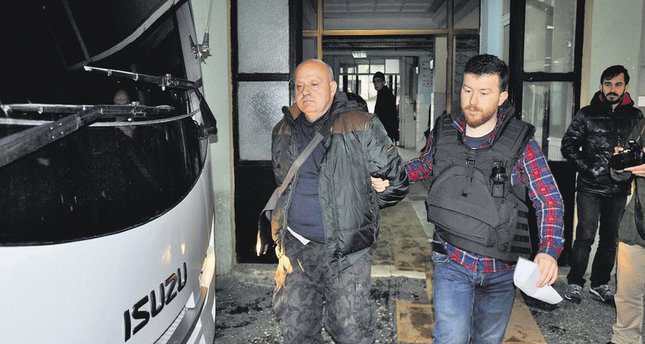
What is the score with Steve Kaszynski, the British journalist arrested in Turkey over a month ago, and accused of links to a banned terrorist organisation?  His arrest was reported somewhat inadequately in the British press at the time, and one or two people who knew him commented, though not saying much.

With so much attention focused on the election in the past six weeks, and on the plight of refugees on the Med, as well as on police violence in the United States, I'm not complaining that the case of one man apparently caught up in Turkish conspiracies and state machinations has not been in the spotlight.

But an online search brought up next to nothing in the British press, and no one has replied to an enquiry on Facebook I made. 


One website, taking its name though I suspect not its politics from the late peace campaigner Brian Haw, notes that the Daily Mail reported a British man had been arrested, but without managing to give either a name or a photograph.


Turkish reports were supplied with both, and with the accusation that the arrested man had been no mere innocent astray, nor even a misguided revolutionist, but was a British agent, albeit working for the Bundesnachrichtendienst (BND), German intelligence service.
http://rt.com/uk/247385-british-national-arrested-turkey/ 

From this the Haw site has woven a plot to divert attention from Turkey's involvement with Western powers and Israel in waging war on Syria, and a Gladio-style strategy of tension inside the country.  I'm a bit dubious about neat conspiracy theories in which disparate pieces are made to fit, and more than dubious about this one.
 

But I'm willing to think something 'funny' is going on.  


http://brianhaw.tv/index.php/index/3132-daily-mail-claim-they-do-not-know-name-of-invisible-brit-called-steve-kaczynski-arrested-in-turkish-dhkp-c-gladio-operation-06-04-2015


  http://www.aa.com.tr/en/turkey/490109--turkey-briton-linked-to-hostage-takers-to-appeal-arrest 

Incidentally one voice that was raised in defence of Steve Kaczynsky and those arrested with him was that of the hardline Republican Sinn Fein in Ireland, who reject the accomodation reached by the Provisionals with the British government. In a statement calling for the "release of arrested comrades in Turkey" the RSF said that in particular "Cihan Keskek and political activist Steve Kaczynski ... are close friends of the Republican Movement in Ireland. Steve is a regular reader of the republican monthly SAOIRSE. Only some weeks ago, Cihan and Steve met with a representative of Republican Sinn Féin."
https://rsfnational.wordpress.com/2015/04/03/r-s-f-demand-release-of-arrested-comrades-in-turkey/

This makes it seem extra strange that the British and indeed Irish media have so far had little to say
about the case.  An item in the Times on April 7 did say Steve Kaczynski had worked for the BBC for some time, since which he had contributed to left-wing publications. http://www.thetimes.co.uk/tto/news/uk/article4403794.ece

I have come across some of his contributions in left-wing publications, e.g. http://weeklyworker.co.uk/worker/365/political-prisoners-in-turkey/ and on websites. I would not have thought this branch of journalism, however good the work, pays very well.  Not at all, in my experience.

Anyway, here are how the arrest was reported in Turkey:


Briton detained in raids against terrorist organization

MEHMET SOLMAZ
ISTANBUL
Published April 3, 2015 Turkish police detained Stephan Shak Kacynski, a British national of Polish origin, in operations against the terrorist organization DHKP-C in Istanbul on Thursday. He is accused of having close ties with the organization.

Among the suspects detained at the Turkish National Police's dawn raids at several locations in Istanbul on Thursday against the Revolutionary People's Liberation Party-Front (DHKP-C) was Stephan Shak Kacynski, a British national of Polish origin.

The 52-year-old freelance journalist is accused of having links to the terrorist organization that killed a prosecutor on Tuesday and attacked a police headquarters on Wednesday.

He was reportedly at the offices of İdil Culture Center associated with the group when he was detained by police.

Speaking to Daily Sabah, officials from the British Embassy in Ankara stated that they "closely working with Turkish partners to tackle DHKP-C." However, no comments were made on the claims that the detained British national is allegedly a spy working for British intelligence. "We condemn group's acts of terrorism in Istanbul this week. Condolences to the family of the prosecutor Mehmet Selim Kiraz. We are aware of the detained British national and we are offering consular assistance to him," the statement added.

Kacysnki, who occasionally writes articles on the terrorist organization on various websites, is a frequent traveler to Turkey. According to media outlets, he is a former member of the Communist Party of Great Britain, a Marxist-Leninist movement and he monitored the trial of an Austrian national accused of joining a DHKP-C rally for the Scottish Socialist Party. He was present as an observer on trials of DHKP-C members in the 1990s and early 2000s. Turkish media outlets, quoting intelligence sources, reported that Kacysnki was involved in the "activities" of the terrorist organization in Germany and Greece and often visited Istanbul and had contacts with various groups affiliated with the DHKP-C.

Turkish police had rounded up dozens of supporters of terrorist organizations in operations against the group in Istanbul and several other cities. Apart from Kacyznski, six senior figures of DHKP-C and members of a band known for its support of the terrorist organization, were detained in operations in Okmeydanı, a working-class neighborhood on Istanbul's European side. Okmeydanı is known as one of the strongholds of the DHKP-C and it is often the scene of violent riots by the organization's supporters. Along with suspects, police seized several weapons, ammunition and jammer devices. Turkish media reported that the raided places had tight security and police had to remove a set of 11 steel doors in one location to enter inside before the suspected militants burned or destroyed evidence that might link them to the organization.

The terrorist organization is known for having support from abroad, especially from far-left organizations in Europe. The support from abroad for the DHKP-C is not confined to individuals. Greece and Syria, two neighbors of Turkey, is known for harboring members of terrorist organizations. Greece houses Lavrion, a refugee camp where the militants, treated as asylum seekers, are trained by senior leaders of the organization. Syria, where the terrorist group was founded in 1994, is also known for openly harboring militants, especially at a time of strained relations between Turkey and its southern neighbor. According to reports in the Turkish media, the DHKP-C has a "base" in Syria's coastal city of Latakia and supported by al-Mukhaberat, formidable intelligence service of the al-Assad regime. An article in the Yeni Şafak newspaper quoting intelligence sources says 52 DHKP-C members are trained at the base and Turkish intelligence suspects they may carry out attacks in Turkey. The article also points out that Mihraç Ural, a Turkey-born militant who heads a splinter group of a movement that the DHKP-C fell out with, now coordinates training of DHKP-C members in Syria.
http://www.dailysabah.com/nation/2015/04/03/briton-detained-in-raids-against-terrorist-organization

But while this report links the armed organisation to what might be called traditional enemies, a subsequent article points in a different direction:

British citizen detained in DHKP-C terror probe works for German spy agency BND

DAILY SABAH
Published April 4, 2015
AA Photo
 
The investigation into Stephan Shak Kacynski, a British national of Polish origin, has revealed that the suspect who was recently detained under the scope of the DHKP-C probe is a spy working for Germany's Federal Intelligence Service Bundesnachrichtendienst (BND).

Kacynski and several others were arrested under the scope of the DHKP-C operation on Saturday.

According to reports, Kacynski was not only responsible for giving instructions to the terrorist organization and providing communications between the DHKP-C and BND, but was also responsible for providing funding from Europe. It was reported that he occasionally participated in protests organized by the terrorist organization and frequently contacted the organization in Istanbul.

Stephan Shak Kacynski was among the suspects detained at the Turkish National Police's dawn raids at several locations in Istanbul on Thursday against the Revolutionary People's Liberation Party-Front (DHKP-C).

The 52-year-old freelance journalist is accused of having links to the terrorist organization that killed a prosecutor on Tuesday and attacked a police headquarters on Wednesday.

Kacysnki, who occasionally writes articles on the terrorist organization on various websites, is a frequent traveler to Turkey. According to media outlets, he is a former member of the Communist Party of Great Britain, a Marxist-Leninist movement and he monitored the trial of an Austrian national accused of joining a DHKP-C rally for the Scottish Socialist Party. He was present as an observer on trials of DHKP-C members in the 1990s and early 2000s. Turkish media outlets, quoting intelligence sources, reported that Kacysnki was involved in the "activities" of the terrorist organization in Germany and Greece and often visited Istanbul and had contacts with various groups affiliated with the DHKP-C.


This is not the first time that the finger of allegations has been pointed at one of Turkey's NATO allies. It was claimed that a Canadian intelligence agent was involved in helping British nationals cross into Syria to join ISIS.
http://www.dailymail.co.uk/news/article-2991628/Man-held-Turkish-authorities-helping-three-
British-girls-cross-Syria-join-ISIS.html  

Whatever the truth of such allegations, or the Turkish government's motives for making them, it looks as though what is really happening in Turkey is more complicated than any conspiracy theory.

Meanwhile, it is not just the established media that is being strangely quiet about this case. Hopefully as soon as parliament is back in business there will be questions asked. But also maybe friends on the Left, some of whom say they have met Steve Kaczynski and that he is a nice guy, will be raising calls for his release - and perhaps considering their own investigation?

Labels: , , , ,

Sunday, June 22, 2014

Taking fight for Truth to the Top


ERICA AND HUGH DUGGAN fighting for truth and justice for their son.

ERICA Duggan, whose son Jeremiah was found dead by the autobahn outside Wiesbaden in Germany after he attended a supposed peace conference in that city, in March 2003, has released a video of herself speaking outside the German embassy, where she had gone to accuse Chancellor Angela Merkel of complicity in a cover-up over Jeremiah's death. 

Earlier in the day on May 28, Mrs.Duggan had given evidence at a pre-inquest review in Barnet, accusing German police of institutional racism in their refusal to investigate fully the circumstances of Jeremiah's death, including the likelihood that he was murdered.

Jeremiah, aged 22, had been studying at the Sorbonne, in Paris. In 2003, worried about the world situation and the build-up to war on Iraq, he bought a copy of the paper Nouvelle Solidarite from a regular seller, and they discussed the imminent US-led assault. Jeremiah agreed to attend an anti-war conference hosted by the Schiller Institute in Germany.

What he probably did not know was that both Nouvelle Solidarite and the Schiller Institute were fronts for the political cult led by Lyndon LaRouche, a one-time American leftist who veered sharply to the Right. After acquiring a name for organising violent attacks on genuine left-wing groups in the States, and serving a prison sentence for fraud, La Rouche seems also to have acquired influential friends and considerable funds.

Former members of the cult allege it used brainwashing techniques. But supporters' loyalty is reinforced by belief that their leader survives in defiance of conspiracies against him, which have at times involved the Queen and Raisa Gorbachev, familiar agencies like the CIA, MI6. and Mossad, and the Tavistock Institute for psychiatry, in London.

At the Wiesbaden conference, Jerry Duggan was reportedly perturbed by speakers blaming the threat of war and nuclear holocaust on the British and the Jews. "But I am a Jew!", he reportedly protested. He was still interested in attending a cadre school scheduled to follow the conference. But before that, something happened to make him 'phone home, and his girlfriend, telling her and his mother that he was "in big trouble" and desperately wanted out.
http://www.bbc.co.uk/radio4/womanshour/2004_48_mon_01.shtml

Within an hour of his terrified call to his mother, Jeremiah Duggan was dead. According to the version of events accepted by the German police, Jerry must have run three miles from where he had been staying, to the outskirts of Wiesbaden, then decided to take his own life by rushing out into the traffic. This was about 6am on March 27, 2003. An investigator hired by the Duggan family discovered the police had not even questioned the drivers of the two vehicles that were supposed to have hit the young man, nor made proper forensic examination of the vehicles or Jeremiah's clothes. He suggests Jerry was beaten up somewhere else, then taken to the autobahn where his body was found.

Rather than be eager for a full investigation, the La Rouchites have claimed Jeremiah was an unstable young man who committed suicide, and accused his mother of being party to a plot against them by the British Foreign Office and Tony Blair.

In fact, Erica Duggan has had little help from any authorities in her search for truth and justice for her son. After his phone call, mentioning Nouvel Solidarite, she called the police, who put her on to Scotland Yard, but they said they had never heard of it.  At an inquest in London in 2003 the court heard that a London Metropolitan Police memo described the LaRouche movement as "a political cult with sinister and dangerous connections." The coroner, Dr. William Dolman, accepted that Jeremiah had received fatal head injuries when he ran into the road and was hit by two cars, but added: "I really must add that he had earlier been in a state of terror. It is a word not commonly used in a Coroner's court but no other word would reflect his state of mind at the time."

Having obtained evidence that put the official explanation in further doubt, Erica Duggan and her family petitioned the Attorney General to let them approach the Higher Court for a second inquest. This was convened in June 2010. The court heard that Jeremiah may have been killed elsewhere, then the road accident staged to conceal this. It was also said that members of the LaRouche organisation might have decided Jeremiah was some kind of spy. The case was adjourned to let the Metropolitan Police make further inquiries. But their investigation does not appear to got very far.

Following the pre-inquest hearing on May 28, a full three day inquest has now been promised at North London Coroner's Court in February. But evidently Erica Duggan is not leaving it at that. By going to the German embassy and accusing Angela Merkel she is not only going for full publicity, but dragging out the whole question of the LaRouche organisation's real relations with the secret state.

https://www.youtube.com/watch?v=YY4E8vXKROc#t=10

Racism Today?

Among interesting points emerging from Erica Duggan's statement is that although the place where Jeremiah Duggan's  body was found is some distance from the apartment where he had been staying with a LaRouchite couple in Wiesbaden, it is not so far from the offices of Executive Intelligence Review, the magazine published by the LaRouche organisation.

That brings me to another strange, if as yet tenuous, connection.

It's some time since I stopped bothering with the RT (Russia Today) television channel, partly because the brash novelty had worn off, but also because I got sick of UKIP leader Nigel Farage being introduced as the reasonable voice on events in Britain. Couldn't they persuade anyone else to come on?  This was before Farage became a regular feature on the BBC's Question Time.

In the current issue of Searchlight, the anti-fascist magazine, editor Gerry Gable remarks about some other guests of the RT channel. One is Paul Weston, leader of a UKIP breakaway called Liberty GB, who has also been linked with the anti-Islamic English Defence League(EDL). Another is Manuel Ochsenreiter, editor of Zuerst! , a right-wing German magazine.

  (Shortly after Zuerst! began publication in 2010,  workers for its distributor, Bauer Media, threatened to strike, refusing to handle a pro-Nazi magazine.After more inforation about Zuert! was exposed , Bauer decided to drop the publication).

"To cap it all", says Searchlight, "a leading LaRouchite appeared again, presented as an expert from the Executive Intelligence Review, which is Lyndon LaRouche's weeekly international news briefing".


Labels: , ,

Sunday, November 10, 2013

Posse in pursuit of Brian Klug: It's the Thought Police!

 AMONG the signatories gathered for that Kristallnacht anniversary declaration,  warning against rising racism and scapegoating of minorities and immigrants, is Dr.Brian Klug. (above) Brian is senior  research fellow and tutor in philosophy at St Benet’s Hall, Oxford and member of the Faculty of Philosophy at Oxford University.  He has held posts in Australia and the United States, as well as being an honorary fellow of the Parkes Institute for study of Jewish/non-Jewish relations at the University of Southampton, and co-editor of the respected journal Patterns of Prejudice.  His books include Offence: The Jewish Case (2009) and Being Jewish and Doing Justice: Bringing Argument to Life. (2011).

This week Brian Klug was the guest of the Jewish Museum of Berlin, speaking at a conference they hosted on Antisemitism. The event was timed to coincide with the 75th anniversary of Kristallnacht. So it should please anyone concerned lest the lessons of history were not being learned or that antisemitism was not being treated seriously, along with other forms of racialism.

Instead the invitation to Brian Klug has aroused a furore from a pack of Israeli and American academics and "experts" assembled like yapping hounds by the Zionist huntmaster and unleashed in the pages of Israeli English-language media.

Is Brian Klug Doing Justice? International Scholars criticize an event at the Jewish Museum Berlin, Nov 8/9, 2013
 (Times of Israel)

 "Inclusion of anti-Israel speaker at Berlin conference on ways to tackle anti-Semitism sparks uproar",(Jerusalem Post).

Jewish Museum to host British professor who wrote that Zionism does not allow for a normal life. Dr. Brian Klug.

By Benjamin Weinthal, JPost
November 06, 2013

BERLIN – The Jewish Museum – and a British professor accused of rejecting Zionism – faced withering criticism for their role in a slated event to mark the 75th remembrance of Kristallnacht later this week.

A who’s who of academic and human rights critics on Tuesday blasted Berlin’s Jewish Museum for hosting a conference with Oxford philosophy professor Brian Klug because he contends that Zionism, the founding philosophy of Israel, “prevents Jews from having a normal conception of their own life.”

Klug is the keynote speaker at a two-day conference scheduled for Friday and Saturday titled “Anti-Semitism in Europe Today: the Phenomena, the Conflicts.” The second day of the conference will mark 75 years since the pogrom referred to as “Kristallnacht,” in which the Nazis and ordinary Germans burned synagogues, murdered Jews and sent German Jews to concentration camps.

Note that expression in the JPost headline "anti-Israel speaker".  Brian Klug was not invited to Berlin to speak about Israel, for or against, and nor does he dedicate his time, as a serious academic, to going around making propaganda speeches about the Zionist state. But in the way of thinking that guides headlines like these the world is divided into 100 per cent pro or anti Israel camps, and anyone, especially any Jewish person, who dares to differ or dissociate their self from anything Israel does is with "the enemy".  

The headline and the witch-hunt proclaimed against Brian Klug might put you in mind of the House Un-American Activities Committee in the heyday of Senator Joseph McCarthy, or the Daily Mail's
recent diatribes against Ed Miliband's left-wing academic father Ralph as the "Man who hated Britain".

Brian Klug is one of the editors of A Time to Speak Out, Independent Jewish Voices on Israel, Zionism and Jewish Identity, published by Verso in 2008.  He attended a counter-demonstration the following year to the Board of Deputies' rally proclaiming British Jews identification with Israel in its war on Gaza.

And that's far from all.

According to the "dossier" of charges drawn up against Dr.Klug,
"He denies that there is a new antisemitism and he affirms anti-Israel positions. He rejects Israel’s right to exist and collaborates with German anti-Israel agitators and activists (like participants on the Mavi Marmara). For Klug, antisemitism does not exist in our mainstream world. For him, antisemitism only exists in marginal neo-Nazi groups or among people who promote obvious antisemitic conspiracy myths. Brian Klug is particularly eager to use his “Jewishness” to fight the Jewish state of Israel".

German political scientist Dr. Clemens Heni told The Jerusalem Post, “Brian Klug is a bad choice as a keynote speaker at a conference on anti-Semitism because he denies that there is a new anti-Semitism. In his view this is a ‘myth,’ as he wrote in [New York-based magazine] The Nation.”*

Brian Klug has challenged the distortion of his views, and offered to send his critics a transcript of his talk at the Berlin museum.

Brian Klug has never belittled nor apologised for antisemitism. What he has disputed is the notion that the old antisemitism associated with the far right has been replaced by a supposed "new antisemitism" that expresses itself in, and explains, opposition to Israel, and is becoming a real frightening threat to Jews. In his essay  The Myth of the New Anti-Semitism published in 2004, he acknowledges that condemnation of the Israeli state can sometimes stray into hostility towards Jews, and that supposed attacks on "Zionists" have sometimes been a cover, or coded signal, for attacks on Jews. (he recalls the campaign against "Zionism" in Poland in 1957).

But Brian rejects the idea that Zionism was simply the movement for "self-determination" of an existing nation, the Jews, and points out that historically the movement to settle Jews in Palestine was seen by many Jews as jeapordising their rights in the countries where they lived, and not without reason. Balfour, of the famous declaration for a Jewish "national home", had previously brought in the Aliens Act restricting Jews fleeing Czarist tyranny from coming into Britain.

As for the Arabs, their frequent evocation of the Crusader kingdoms indicated that their opposition was to a European state being established in their midst and displacing Palestinians, and did not hinge on the new state being Jewish.
      

Turning to the creation of the State of Israel, in 1948, Brian pointed out that many Jews, and non-Jewish governments too, had supported it not from a conversion to Zionist ideology, but in the feeling after the Holocaust that Jews were entitled to a safe haven, which they could freely enter, and be free of persecution. If today it was not the safest place for Jews, one did not have to be an "antisemite", he argued, to envisage its future peace and security coming with ceasing to be an exclusively Jewish state, or forming part of a binational Arab and Jewish federal state.

Whereas blurring the distinction between Jews and the State of Israel, and confusing the issues of anti-Zionism and antisemitism, was neither good for the peace of Israel nor the fight against antisemitism, he concluded.  


This kind of argument will in no way satisfy the Thought Police  who are not interested in discussing what Brian Klug has to say but just want to shut him up, and stop anyone else from listening to him.

Dr. Mordechai Kedar, a historian and Islamic studies professor from the Begin-Sadat Center for Strategic Studies, said that the “participation of Brian Klug in a conference on anti-Semitism” is highly problematic.  But Dr. Kedar, who before donning his academic robes served 25 years in the khaki of the Israeli military, as an Intelligence officer specialising in Islamic groups and Arabic media, also thinks the idea of Arab-Israeli peace is problematic.

Citing the supposed place of Jews in Islam, and the way Mohammed made a temporary peace with the city of Mecca before his army was large enough to take it, and slaughter or convert the inhabitants. This was the sort of peace with non-believers sanctioned by the Koran, he said, quoted by Rabbi Aharon Raskin. ‘The implication is clear,’ concluded the rabbi. ‘Israel’s continuing a farce of a treacherous peace can never work… Someone asked the real question later in the day: If this is the sort of peace that Muslims have in mind, how can it be that Israel continues to make treaties and give away land?’

Another of those joining the fray, Efraim Karsh,  professor of Middle East and Mediterranean Studies at King’s College London, said it was outrageous that a German-Jewish institution would provide a platform for a voice that “demonizes Israel” on the 75-year remembrance of Kristallnacht.


Karsh's objectivity may be judged from a 2011 op ed he wrote in Haaretz, articulating his belief that “the tragedy befalling the Palestinian Arabs in 1948 was exclusively of their own making”.’ He has attacked those Israeli historians who take a different view, and in turn been attacked by Israeli historians for the quality of his history. Howard Sachar says Karsh is the "preeminent scholar-spokesman of the Revisionist (politically-rightist) Movement in Zionism.  This year Dr.Karsh too joined the Beigin-Sadat School for Strategic Studies.

Among the luminaries making up the rest of the pack, we find "Dr.Denis McShane", whom  I take it is former Labour MP Denis MacShane, who chaired the All Party Parliamentary Group Against Antisemitism, one of those bodies infected with the so-called EU "definition" of antisemitism which was notoriously the US Zionist lobby-inspired definiation, identifying it with opposition to Zionism.

I've criticised MacShane before for his unfounded accusations against his old union, the NUJ, but I underestimated his activities. In 2009 he helped set up a meeting between Tory Defence Secretary Liam Fox, accompanied by his friend Adam Werrity, and a Mossad officer, to discuss plans for Iran.
Obviously Israel's strategic aims require operations on more than one front, though MacShane's role and useful status may have been reduced due to misuse of his creative talents on expenses claims. He had to resign from the Privy Concil at the beginning of the year, and on July 11 the Crown Prosecution Service said he would be charged under the Theft Act.    

Another authority quoted is Rabbi Abraham Cooper, associate dean of the Simon Wiesenthal Center, described by JPost as "a Jewish human rights group in Los Angeles". Quoting the author of a book on " Demonizing Israel and the Jews", he claims that some 150 million Europeans harbor extreme anti-Israel and/or anti-Jewish attitudes.” and says “A quarter of European Jews fear being seen manifesting their Jewish identity in public. ” He says “According to media reports, Klug has said that ‘Zionism prevents Jews from having a normal conception of their life.’ ", and suggests - quite erroneously, that Brian would say the same about the Jews in the 1920s and 1930s.

 So it seems the good Rabbi not only regards anti-Israel and anti-Jewish sentiments as interchangable, and makes no distinction between different historical periods, but he is prepared to make judgments about a genuine Jewish scholar on the basis of "media reports" about what he wrote, rather than having read Brian Klug for himself.  Perhaps that "according to media reports" was meant as a caution, but this is a poor example of rabbinical wisdom and justice.
In an email to the Post, Klug wrote, “The dossier compiled by [the Berlin International Center for the Study of Anti-Semitism] is a classic example of a kangaroo court. It distorts my work, misrepresents my views and maligns my character.

Reading it, I felt a little like Socrates at his trial: he opened his defense by saying that listening to his accusers he almost forgot who he was.”

Klug added, “Rabbi Cooper refers to a comment I made about Zionism. The quote is completely out of context. If he is interested, I would gladly send him the text of the lecture I have written for Berlin (but after the event, of course) and then he can make up his own mind about whether I am an appropriate speaker. I extend the same offer to you and to your readers.”
One of my first jobs for Brent Trades Union Council, at the behest of the late Ben Rickman (a fellow member of Unite the union, but also a member of Wembley synagogue) was to write a letter to the Simon Wiesenthal Centre in response to an international campaign they had initiated branding London mayor Ken Livingston an antisemite, and blaming him for both real and imagined instances of antisemitism. They never did reply. But then nor did they reply to two letters from the Jewish community in Oslo complaining that they had circulated a quite fictitious allegation concerning antisemitism in Norway. If we poor Jews in Europe "fear" to speak up for ourselves, then Rich Uncle in the USA will look after us - whatever we say.

  Last year, Berlin’s Jewish Museum came under fire for hosting Judith Butler, a professor in the rhetoric and comparative literature departments at the University of California, Berkeley. She told a sold-out audience of 700 at the museum that she accepts a “version of a boycott” against Israel, and stressed that the Boycott, Sanctions and Divestment movement is “non-violent resistance” against Israel. Neither Professor Butler nor the museum have been forgiven.

Dr. Shimon Samuels, who heads the European office of the Wiesenthal Center, wrote an appeal on Tuesday to German Chancellor Angela Merkel on the website of the European Jewish Press. “Was the Berlin Jewish Museum created, at the cost of Germany’s taxpayers and international donations, to demonize Israel, serve as a fig leaf for anti- Semitism and to commit memoricide – the murder of the memory of those murdered?” Samuels asked.

He added, “Our center thus urges your chancellery to condemn the museum’s distortion of its role, launch an inquiry into its behavior and suspend public funding until a new management is appointed.”

The Simon Wiesenthal Centre has misappropriated the name of a famous Nazi hunter and now its spokesman misuses the blood of murdered Nazi victims to smear democratic institutions and demand the German authorities depose officials and shut up Jewish speakers who refuse to toe the right-wing Zionist party line. "Human rights"? You must be joking. After hearing so often that would be boycotters breached acadenic freedom we are seeing a posse of "experts", hacks and right-wing academics acting for the Thought Police!

http://www.jpost.com/Jewish-World/Jewish-News/Inclusion-of-anti-Israel-speaker-at-Berlin-conference-on-ways-to-tackle-anti-Semitism-sparks-uproar-330733

http://blogs.timesofisrael.com/is-brian-klug-doing-justice-international-scholars-cricize-an-event-at-the-jewish-museum-berlin-nov-89-2013/

Thanks to Jews for Justice for Palestinians for bringing this affair to my attention, and also for providing an online excerpt of what Brian Klug really said about "the new antisemitism".
http://jfjfp.com/?p=51428

Labels: , , ,

Saturday, August 03, 2013

How the Bank of England helped Hitler loot Czech gold

REFUGEES from Czechoslovakia, like this Jewish couple detained at Croydon airport on March 31, 1939, were not warmly welcomed.
But Nazis were welcome to help themselves to Czech wealth, thanks to Bank of England.


SEVERAL newspapers this week carried the story this week of how the Bank of England assisted Nazi Germany to lay its hands on the Czechoslovak gold deposit, sent abroad for safe keeping. This was a valuable asset to the Nazis wageing war.
  
Though this story is not new, it is confirmed now in the Bank's own official report, released for the first time.  As Adam Lebor writes in the Daily Telegraph, (Jyly 31) "The documents reveal a shocking story: just six months before Britain went to war with Nazi Germany, the Bank of England willingly handed over 5.6 million pounds worth of gold to Hitler - and it belonged to another country.

"The official history of the bank, written in 1950 but posted online for the first time on Tuesday, reveals how we betrayed Czechoslovakia - not just with the infamous Munich agreement of September 1938, which allowed the Nazis to annex the Sudetenland, but also in London, where Montagu Norman, the eccentric but ruthless governor of the Bank of England agreed to surrender gold owned by the National Bank of Czechoslovakia.

"The Czechoslovak gold was held in London in a sub-account in the name of the Bank for International Settlements, the Basel-based bank for central banks. When the Nazis marched into Prague in March 1939 they immediately sent armed soldiers to the offices of the National Bank.

"The Czech directors were ordered, on pain of death, to send two transfer requests. The first instructed the BIS to transfer 23.1 metric tonnes of gold from the Czechoslovak BIS account, held at the Bank of England, to the Reichsbank BIS account, also held at Threadneedle Street.

"The second order instructed the Bank of England to transfer almost 27 metric tonnes of gold held in the National Bank of Czechoslovakia’s own name to the BIS’s gold account at the Bank of England.

..... "The Czechoslovak bank officials believed that as the orders had obviously been carried out under duress neither would be allowed to go through.

"But they had not reckoned on the bureaucrats running the BIS and the determination of Montagu Norman to see that procedures were followed, even as his country prepared for war with Nazi Germany. His decision caused uproar, both in the press and in Parliament".

Indeed, the financial journalist Paul Einzig had got hold of the Czech gold story and contacted George Strauss, the Labour MP for North Lambeth, who asked Prime Minister Neville Chamberlain on May 15, 1939: "Is it true, sir, that the national treasure of Czechoslovakia is being given to Germany?".

Chamberlain - a major shareholder in ICI, which had links with IG Farben in Germany and was a corporate member of the Anglo-German Fellowship -denied it.  Chamberlain's Chancellor of the Exchequer, Sir John Simon, denied knowing anything about it. But the row had just started.

As Adam Lebor writes:
"George Strauss, a Labour MP, spoke for many when he thundered in Parliament: 'The Bank for International Settlements is the bank which sanctions the most notorious outrage of this generation - the rape of Czechoslovakia.’

"Winston Churchill demanded to know how the government could ask its citizens to enlist in the military when it was ‘so butter-fingered that pounds 6 million worth of gold can be transferred to the Nazi government’.

"It was a good question. Thanks to Norman and the BIS, Nazi Germany had just looted 23.1 tonnes of gold without a shot being fired. The second transfer order, for the gold held in the National Bank of Czechoslovakia’s own name, did not go through. Sir John Simon, the Chancellor of the Exchequer, had instructed banks to block all Czechoslovak assets."

Others have explained that the gold did not have to be shipped from London. The Bank of England authorised its partner in the Bank of International Settlement (BIS) in Basle to deduct $40 million from the Bank of England's holding there, and then replaced it from the Czech National Bank holding in London. 


 The BIS was set up under the Young Plan, which provided for US loans to Germany to help it meet World War I reparations. The German banker Hjalmar Schacht publically denounced the Young Plan, and took charge of  big business fundraising for the Nazi party, but according to Adam Lebor:

"The BIS was founded in 1930, in effect by Montagu Norman and his close friend Hjalmar Schacht, the former president of the Reichsbank, known as the father of the Nazi economic miracle. Schacht even referred to the BIS as ‘my’ bank. The BIS is a unique hybrid: a commercial bank protected by international treaty. Its assets can never be seized, even in times of war. It pays no taxes on profits."

"The Bank of England’s historian argued that to refuse the transfer order would have been a breach of Britain’s treaty obligations with regard to the BIS. In fact there was a powerful counter-argument that the Nazi invasion of Czechoslovakia had rendered any such obligations null and void as the country no longer existed".
(Indeed Hitler had declared triumphantly "Czechoslovakia has ceased to exist").

"A key sentence in the Bank of England documents is found on page 1,295. It reads: ‘‘The general attitude of the Bank of England directors of the BIS during the war was governed by their anxiety to keep the BIS to play its part in the solution of post-war problems’’.

"And here the secret history of the BIS and its strong relationship with the Bank of England becomes ever more murky. During the war the BIS proclaimed that it was neutral, a view supported by the Bank of England. In fact the BIS was so entwined with the Nazi economy that it helped keep the Third Reich in business. It carried out foreign exchange deals for the Reichsbank; it accepted looted Nazi gold; it recognised the puppet regimes installed in occupied countries, which, together with the Third Reich, soon controlled the majority of the bank’s shares.

"Indeed, the BIS was so useful for the Nazis that Emil Puhl, the vice-president of the Reichsbank and BIS director, referred to the BIS as the Reichsbank’s only 'foreign branch’. The BIS’s reach and connections were vital for Germany. So much so, that all through the war, the Reichsbank continued paying interest on the monies lent by the BIS. This interest was used by the BIS to pay dividends to shareholders - which included the Bank of England.

"Thus, through the BIS, the Reichsbank was funding the British war economy. After the war, five BIS directors were tried for war crimes, including Schacht. ‘They don’t hang bankers,’ Schacht supposedly said, and he was right - he was acquitted."

Indeed, by the 1960s, Schacht was back in business, turning up in countries like Iraq and Indonesia after CIA-backed coups had led to massacres of commumists and trade unionists, making these places safe and profitable for Western big business. 

Lebor continues:
"Buried among the typewritten pages of the Bank of England’s history is a name of whom few have ever heard, a man for whom, like Montagu Norman, the primacy of international finance reigned over mere national considerations.

"Thomas McKittrick, an American banker, was president of the BIS. When the United States entered the war in December 1941, McKittrick’s position, the history notes, ‘became difficult’. But McKittrick managed to keep the bank in business, thanks in part to his friend Allen Dulles, the US spymaster based in Berne.

"McKittrick was an asset of Dulles, known as Codename 644, and frequently passed him information that he had garnered from Emil Puhl, who was a frequent visitor to Basel and often met McKittrick.

"Declassified documents in the American intelligence archives reveal an even more disturbing story. Under an intelligence operation known as the ‘Harvard Plan’, McKittrick was in contact with Nazi industrialists, working towards what the US documents, dated February 1945, describe as a ‘‘close cooperation between the Allied and German business world’’.

"Thus while Allied soldiers were fighting through Europe, McKittrick was cutting deals to keep the Germany economy strong. This was happening with what the US documents describe as ‘the full assistance’ of the State Department.

"The Bank of England history also makes disparaging reference to Harry Dexter White, an official in the Treasury Department, who was a close ally of Henry Morgenthau, the Treasury Secretary. Morgenthau and White were the BIS’s most powerful enemies and lobbied hard at Bretton Woods in July 1944, where the Allies met to plan the post-war financial system, for the BIS to be closed.

White, the Bank history notes rather sneeringly, had said of the BIS: ‘‘There is an American president doing business with the Germans while our boys are fighting the Germans.’’

"Aided by its powerful friends, such as Montagu Norman, Allen Dulles and much of Wall Street, the BIS survived the attempts by Morgenthau and White to close it down. The bank’s allies used precisely the argument detailed on page 1,295 of the Bank of England’s history: the BIS was needed to plan the post-war European economy".

With his brother John Foster Dulles as US Secretary of State, Allan Dulles as head of the CIA was a powerful figure in US global hegemony and the Cold War. Harking back to the IG Farben connection, pro-Soviet and Czech propaganda pointed to the Dulles' brothers links via Standard Oil, but oddly failed to get on to the Bank of International Settlement.

It is interesting that the Bank of England report was drawn up in 1950 and yet has only just been published. Perhaps 1950 was too close to the Second World War, and too far into the Cold War. Two years before the Communists had seized power in Prague and the Western powers set up NATO. In 1950 the Korean war began, and West German rearmament was beginning.

The next question is why, apart from the bad name which bankers have gained,  the story is suddenly newsworthy. Maybe there's a clue in what Adam Lebor goes on to say.

"From the 1950s to the 1990s the BIS hosted much of the planning and technical preparation for the introduction of the euro. Without the BIS the euro would probably not exist. In 1994, Alexander Lamfalussy, the former BIS manager, set up the European Monetary Institute, now known as the European Central Bank.

"The BIS remains very profitable. It has only about 140 customers (it refuses to say how many) but made a tax-free profit of about 900 million pounds last year. Every other month it hosts the Global Economy Meetings, where 60 of the most powerful central bankers, including Mark Carney, Governor of the Bank of England, meet.

"The BIS also hosts the Basel Committee on Banking Supervision, which regulates commercial banks, and the new Financial Stability Board, which coordinates national regulatory authorities."

Adam LeBor is the author of ’Tower of Basel: The Shadowy History of the Secret Bank That Runs the World’, published by PublicAffairs.

http://www.telegraph.co.uk/finance/bank-of-england/10213988/Never-mind-the-Czech-gold-the-Nazis-stole....html

http://www.theguardian.com/business/2013/jul/31/bank-of-england-and-nazis-stolen-gold?INTCMP=SRCH

See also:
http://historicalpassages.blogspot.co.uk/search?q=Class+of+39 

http://www.thirdworldtraveler.com/Fascism/Trading_Enemy_Higham.html 

The economic background to appeasement, and the search for Anglo-German detente before and during World War II. 
http://www.8bitmode.com/rogerdog/lobster/lobster20.pdf

Books: 

Charles Higham, Trading With the Enemy.

Adam Lebor, Hitler's Secret Bankers

John Weitz , Hitler's Banker


Labels: , , ,

Monday, June 10, 2013

Clara and the Comintern

BACK in March we did not let International Women's Day (March 8) pass without writing something about Clara Zetkin, the woman who did so much to make it a day in the socialist calendar, and not as a once a year token gesture towards feminism while leaving the women to make the tea at our meetings for the rest of the year, but as an assertion of the importance of the doubly oppressed women workers in struggle.

Though the idea was inspired particularly by the battles fought by women workers in the United States, like those at the Lawrence mills, who came up with the historic slogan "We want bread -and roses too!", it was the women of Petrograd, Russia who gave it powerful meaning when their demonstrations on Women's day, March 1917 (late February in the old Russian calendar) began the first round of the Russian Revolution,  bringing down Tsar Nicholas II.

Clara herself was born in a village in Saxony, however, in 1857, and first gained prominence as a member of the German Social Democratic Party, later becoming a founder of the Communist Party of Germany. The stamp above was issued in her honour by the GDR (East German) post office in 1987.     
On Wednesday night there's a book launch at Housman's bookshop in London for the book on Clara Zetkin that has been produced as an Occasional Paper by the Socialist History Society, and two of the writers, Marilyn J. Boxer and John S.Partington will be speaking.

Earlier this year the Australian-based journal Links International  published an article based on a talk given in 2010 in Toronto by John Riddell.  

Describing how Clara Zetkin began her speeches " Genossinnen und Genossen!"  - German for “women comrades and men comrades”. an unusual greeting at a time when few women were at socialist meetings, Riddel says Zetkin had been a friend of Fredrick Engels and joined the Social Democratic "in its earky heroic days". She formed a close alliance with Rosa Luxemburg to defend the party's revolutionary heritage against opportunist leaders.

At a time when women still had not even got the vote, let alone wide recognition in the movement
 " Zetkin and Luxemburg were the first women to fight their way into the central leadership of socialist parties." Clara Zetkin led the Socialist (or Second) International’s work among women, and it was in this capacity that she not only promoted women's rights and struggles, and International Women's Day, but called the first international socialist conference in opposition to the World War I

.However, John Riddell draws attention to another aspect of Clara Zetkin's importance.

In 1917 and 1918 the First World War was ended by revolutions in Russia and Germany. In 1919 Clara Zetkin was one of the founders of the German Communist Party. The war's end had not brought peace, as the Allied powers waged wars of intervention against the emergent Soviet Union, and in Germany right-wing militarists waged terror against the revolutionaries. Rosa Luxemburg and Karl Liebknecht were murdered. Right-wing social democrats, anxious to preserve capitalist rule under the new republic, were implicated with the officers.

 Nevertheless, though the new Communist Party was strong and determined, the Social Democrats retained the support of the majority of workers. In March 1920, when extreme rightists attempted a military takeover (the Kapp Putsch) the Social Democrats played a major role in the massive general strike that defeated the coup.

Later that year an assembly of metalworkers in Stuttgart, where Clara Zetkin was based, adopted a resolution calling on the trade unions for a joint campaign on five demands “shared by all workers”:

    Reduced prices for food and essentials of life.

    Opening of the capitalists’ financial records and higher jobless benefits.

    Lower taxes on workers and higher taxes on the rich.

    Workers’ control of raw material and food production and distribution.

    Disarming of reactionary gangs and arming of the workers.

John Riddell says this was "an early example of the communist concept of transitional demands, which are rooted in immediate needs but point toward workers’ rule."

The following month, in January 1921, the German Communist Party central bureau made a more comprehensive appeal to all workers’ organisations, including the Social Democrats, for united action. Clara Zetkin was a leading member of this body, but the appeal’s main author was party co-chairperson Paul Levi. Known as the “Open Letter”, this call included the Stuttgart five points, in more detailed form, plus demands for the release of political prisoners and resumption of Germany’s trade and diplomatic relations with the Russian Soviet republic.


Riddell says the Communist (or Third) International (Comintern) adopted the united front policy in 1921.  Zetkin, at 64, older than any other of its main leaders, became an influential figure not only in the German Communist Party, but in the International. The call for an alignment with the Soviet Union took on added importance in Germany, as the Allied victors were demanding reparations from the near-bankrupt German state and threatening occupation. .

Clara Zetkin, hoping to channel national resentment in Germany away from the right, called in the Reichstag for an alliance with Soviet Russia, as “the only way to achieve a revision of the Versailles Treaty and ultimately to tear it up”. The establishment of workers’ power, she said, will be “the hour when the German nation will be born, the birth of a unified German people, no longer divided into lords and servants”.
Many German Communists were not happy with what they saw as a turn from revolutionary aims towards appeasing the Social Democrats (whose leaders had in fact rejected the Open Letter), and were even less comfortable with what seemed like invocation of nationalism. There was also oppositon in the Comintern. "A current led by Hungarian communists such as Béla Kun called on communists to sharpen their slogans and initiate minority actions that could sweep the hesitant workers into action – the so-called 'theory of the offensive'. Although criticised by Lenin, this concept found some support in the Moscow-based Executive Committee of the Communist International (ECCI), including from Nikolai Bukharin and Gregory Zinoviev."

The ECCI initially criticised the Open Letter. Lenin supported it, however, and the matter was referred to the next world congress.

Worsening poverty in Germany had produced a contradictory situation. The Communist Party had more than 400,000 members, and many were impatient for action, whereas the bigger section of workers remained with the Social Democrats and union leaders, clinging desperately to their jobs if they could, pessimistic and passive. In Clara Zetkin’s words, the workers were “almost desperate” yet “unwilling to struggle”.

"Zetkin and her colleagues urged efforts to unite workers in a defensive struggle, in which they could regain the confidence needed for a renewed and concerted offensive for workers’ power. However, her left-wing opponents within the party urged minority action to provoke a crisis. As one of them later commented, “A stagnant swamp was everywhere. A wall of passivity was rising. We had to break through it at any cost.”


Unfortunately events outside Germany, relayed through the Comintern's envoys, led to Zetkin and Levi being ousted from the leadership, and the Party took an adventurist turn, with the "March Action", in 1921, an abortive armed revolt that ended in defeat.  Paul Levi was expelled after labelling it a putsch.   

That left Clara Zetkin, who at the central committee in April criticised those who had abandoned the Open Letter and the alliance with Soviet Russia, and taken the party on a confrontation course that excluded the masses. “Party campaigns can prepare the road for mass action, can provide goals and leadership for them, but cannot replace them”, her proposed resolution stated.

"When the Comintern met in congress in Moscow, in June, Zetkin found support. Lenin and Leon Trotsky launched a campaign to overturn the ultraleft 'theory of the offensive' and won the Communist International to a course similar to what Zetkin had advocated."

The Comintern adopted the United Front policy. This "enabled Zetkin to carry out two years of fruitful work as the Communist International’s best-known non-Russian leader. As the head of the Communist International’s work among women, Zetkin sought to imbue it with united front concepts.

 This work was never a high priority for party leaders, and women made up at best 10 per cent of the total membership. Still, the Communist Women’s International had its own publications and conferences both internationally and nationally, which reached far beyond the party membership. Zetkin “wanted to win not only women [industrial] workers, but women who were office employees, peasants, civil servants, intellectuals”, writes biographer Gilbert Badia. “She favoured appealing to Social Democratic women, setting aside invective in order to win a hearing.”

"In the mid-1920s, as the Comintern was bureaucratised under Joseph Stalin, the Communist Women’s International was among the first victims. In 1925, Zetkin’s international women’s magazine was shut down as 'too costly'; the next year, over strenuous objections by Zetkin and her colleagues, the women’s secretariat was dissolved and formation of further women’s organisations prohibited, amid warnings regarding “feminism” and “Social Democratic methods”.

Zetkin also was among the leaders of  International Workers Aid, which provided humanitarian relief, and International Red Aid, which defended victims of political persecution. Established to help counter the famine in Russia in 1921, Workers’ Aid soon had 200,000 people fully under its care; it then provided funds for industrial development equal to half what the Soviet government summoned up from its own resources.

"This promising beginning was undone ... when the Communist International and its KPD reverted to a more extreme version of the ultraleftism of the “theory of the offensive” period. Social Democracy was now seen as a “wing of German fascism”, or, in Stalin’s word, its “twin”. The term “united front” was still used, but it was now to be a “united front from below”, that is, no appeals to leaders of other political currents; instead, attempts to win rank-and-file workers to Communist-led movements.

"This reversal was dictated by the tactical needs of a bureaucratic faction that ruled in Moscow, in the first stage of a process that quickly led to the Communist International’s degeneration.Except for a partial respite in 1926-27, Zetkin now became an oppositionist, expressing her most deeply held views only in private letters, closed meetings and confidential memos.

"The then-dominant left faction of the KPD was aligned with Comintern president Gregory Zinoviev, and in 1926 they followed him into the United Opposition, led by Zinoviev and Trotsky. Zetkin allowed her animosity to the German ultralefts to colour her assessment of this new opposition. She lined up with Nikolai Bukharin, then allied with Stalin, in a combination that was promoting bureaucratisation of the Communist International. Tragically, in 1927 she vocally supported measures to expel the United Opposition’s supporters.

"Only two years later, Zetkin supported the current led by Bukharin, the so-called “Right Opposition”, in its rebellion against an ultraleft turn in Stalin’s policies. Bukharin’s tendency was defeated, and its supporters expelled or forced to recant. Zetkin alone remained at her post, never recanting her views, and proclaiming them when she could in letters, memos and personal discussions. She made no secret of her scorn for Stalin, once writing of him, in the chauvinist idiom of the era, as “a schizophrenic woman wearing men’s pants”.

During these tormented years, her health, never good, gave way. Circulatory problems increasingly impeded her walking. She suffered the after effects of malaria, and in her last years she was almost blind.

She held to the hope that the Communist International could be reformed – as did Bukharin, Trotsky and almost all Communist oppositionists at that time. She did not quit the official Communist movement. But she could not prevent Stalin from utilising her enormous prestige for his own purposes.

On one occasion she managed to assert in print that she disagreed with the Comintern’s line. Two of her closely argued critiques of Stalinist policy somehow reached independent socialist periodicals, which published them.

Zetkin’s greatest concern was the rise of German fascism. Faced with this threat, the Communist International retreated into sectarianism, branding the Social Democrats as fascist, rejecting a broad alliance against Hitlerism, and making no attempt to prepare concerted resistance. Zetkin favoured a united front response, a position similar to that championed by Trotsky and the Left Opposition.

When the German parliament reconvened in 1932, it was Zetkin’s right, as its oldest member, to officially open the session. When she heard this, she exclaimed, “I’ll do it, dead or alive.” The Nazis vowed to kill her if she appeared. Now near death, she was carried in a chair to the speaker’s platform, to face an arrogant throng of uniformed Nazi deputies. Her voice, weak at first, grew in volume and passion, expressing both her defiance and her insight into how the fascist menace could be defeated: ...

Nonetheless, the German workers’ movement went down without making a stand. In the early months of 1933, the Nazis took power and crushed the Communist Party and the workers’ movement.

Clara Zetkin died in July that year. It was a time of defeat and demoralisation. Had she lived five years longer, she would have witnessed the Communist International turn sharply to the right, embracing alliances with bourgeois forces in defence of capitalism, while Stalin organised the murder of almost all her friends and colleagues then living in the Soviet Union".
John Riddell , Socialist Voice (Canada), April 19, 2010

 Links International, January -February 2013

In the SHS book on Clara Zetkin, Florence Herve notes that while she was treated as a heroine in the postwar GDR, idealised in stamps and sculpture and with parks named after her, nothing was said about her differences with Stalin or the leaders of the KPD.
In drawing attention to John Riddell's lecture and quoting extracts I hope this will help fill the gap, which is not coverd in the otherwise excellent SHS book,  .    

SHS Book launch at Housman's, Wednesday, June 12. 7pm  Admission £3 redeemable against any publication in the bookshop. http://www.housmans.com/

Labels: , , ,

Wednesday, March 27, 2013

Jeremiah Duggan. Ten Years On, the Fight Continues


JEREMIAH DUGGAN. Family still fighting for truth and justice over his death. 

TEN years ago the body of London-born student Jeremiah Duggan was found by the side of a motorway outside Wiesbaden in Germany. The police said Jerry had been hit by a vehicle travelling at 60 miles per hour. The official verdict was that the young man had committed suicode by running into the path of traffic.


Jeremiah Duggan's family and friends have never accepted this verdict.

Jeremiah Duggan had been studying at the Sorbonne in Paris. Concerned like many of us at the war on Iraq, he had bought a paper called Nouvelle Solidarite, and accepted an invitation to attend what purported to be an anti-war conference in Wiesbaden.

In the early hours of  Thursday, March 27, 2003 he 'phoned his girlfriend Maya, to whom he sounded highly agitated, and then his mother. to whom he sounded terrified. "Mum, ..I'm in big trouble", he told her.

Nouvelle Solidarite in France and the Schiller Institute in Germany whose conference and cadre school Jeremiah had agreed to attend are both offshoots of the notorious US-based Lyndon LaRouche organisation. LaRouche, a one-time leftist who acquired a reputation for inciting violence against genuine left wing organisations in the United States, and also served a fraud sentence. His organisations, including the Executive Intelligence Review, appear to be well-funded. They are reknowned for conspiracy theories including the British royal family and Israel.

As to Jeremiah Duggan, LaRouche's followers insist the young man was disturbed and committed suicide. They accuse the Duggan family of serving a conspiracy involving the British Foreign Office and the Tavistock Institute.

A British coroner threw out the earlier "suicide" verdict, and the Duggan family went to the High Court to obtain a further inquest and investigation. While the police in both Britain and Germany dragged their heels, the family pursued their own investigation with the help of experts, casting doubt on both the place and cause of Jeremiah's death as accepted by German authorities.
Was Jeremiah Duggan beaten up and body taken to motorway?

Jeremiah Duggan's family and friends have never given up. Their campaign for truth and justice continues to win wide support. Today they issued this statement:
TEN YEARS ON AND WILL GERMANY HONOUR THEIR PENAL CODE AND GRANT A FULL INVESTIGATION?
:
Jeremiah made a terrified phone call to his mother in the early hours of the morning, naming the people from the LaRouche political cult as putting his life in danger and begging for his mother to rescue him. Despite this information the Wiesbaden police decided on the spot, without any investigation, that it was suicide and they had no need to investigate the circumstances that may have caused his death.
Germany now stands accused of a violation of article 2 in the Court of Human Rights. 
This is the first time Germany has been accused of such a crime, for the failure to properly investigate a sudden death.
New information was presented by witnesses to include a State Official Mrs Caberta, at the time Religous Sects Advisor of the City of Hamburg ,that Jeremiah was alleged to have been subjected to harm prior to his sudden death yet The Prosecutor in Wiesbaden failed to open enquiries and refused to read the files or see the Duggan lawyers.  
As a result a legal complaint was lodged in September 2011 against the Prosecutor’s office for failing to do their job.

“If there is nothing to hide – then why leave so many questions unanswered – like why did the Manageress of the LaRouche Organization have my son’s passport?” said Jeremiah’s mother.

Ten years on we continue to ask for a full and fearless investigation.  Germany is proud of its Penal Code and so we will never give up hope that good people will come forward and not cover up the truth about Jeremiah’s death and will help us  get a proper investigation  contact:
Justiceforjeremiah.com or justiceforjeremiah@gmail.com.
Serdar Kaya, Christian Noll: on 049 30 627 29 662a.


Background briefing on case of Jeremiah Duggan 

Labels: , ,