Facelift Operation Burma can't hide the desperate flight of refugees
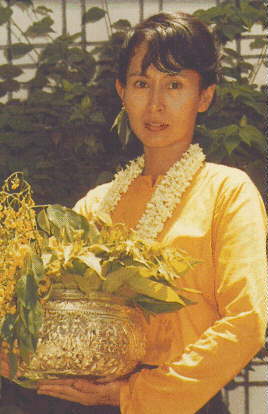
BURMESE opposition leader Aung-San- Suu-Kyi's visit to Britain and other countries last month was welcomed as a sign that both her and her people were gaining freedom at last.
Suu-Kyi, elected with her party to the Burmese parliament after spending over 15 years under house arrest, called on her return home for the freeing of all remaining political prisoners in Burma(Myanmar), of which they reckon there are 330.
But though David Cameron called for the suspension of sanctions on Burma when he visited the country in April, the military have not given up power there, and holding political prisoners is not their only crime against human rights. Cameron, the first British prime minister to visit Burma since it became independent in 1948, was following up on visits by US Secretary of State Hillary Clinton in December, and British Foreign Secretary William Hague in January.
But is this rush to take the Road to Mandalay really about Burmese freedom or something else?
http://www.bbc.co.uk/news/uk-politics-17698526
http://www.guardian.co.uk/world/2012/jul/03/aung-san-suu-kyi-burma-prisoners
One sign of any country's claim to democracy or even civilised behaviour is its treatment of minorities. The Guardian and some other papers have reported recently how Rohingya Muslims have been fleeing Burma, seeking asylum in Bangladesh or other neighbouring countries. The Bangladesh government has been forcing people to go back. But these are hardly people seeking a better life in poor Bangladesh. These are refugees fleeing for their lives.
Any of us who remember the epsode of the Vietnamese boat people might note the comparative lack of attention given these people taking to boats to try and reach Bangladesh.
Although Burma's Muslim population increased hugely with immigration during British rule, the Rohingya Muslims can claim an older pedigree, going back centuries and producing a Muslim kingdom in the 15th century in part of Arakan. Following the Burmese conquest of Arakan in 1785, as many as 35,000 Arakanese people fled to the neighbouring Chittagong region of British Bengal 1799 to avoid Burmese persecution. The Burmese rulers executed thousands of Arakanese men and deported a considerable portion of the Arakanese population to central Burma.
During World War II the Arakan Muslims were once again targetted for persecution by Japanese and Burmese forces. Then in independent Burma Rohingya were deprived of citizenship. More recently under military rule many were conscripted as forced labour. Not surprisingly some of the Rohingya resistance has taken a far from moderate form.
During Cameron's visit in April human rights organisations here noted that despite reforms, Burma was still a country with one of the worst human rights records in the world, and where the military had control.
Kelland Stevenson, Save the Children’s country director, said:
"More than a million children under five in Myanmar are suffering from chronic malnutrition brought on by poverty and inadequate spending on health care. Chronic malnutrition has severe long term effects on children’s health as they grow. Malnutrition limits their physical growth, weakens their immune system and significantly hampers mental development. The government and the donor community should prioritise reforms that help reduce child hunger".
Sanctions probably didn't help. But was reducing child hunger uppermost in Western leaders' minds? Notwithstanding their supposed pariah status, the Burmese military have been keen to attract foreign investment, as well as ensuring their own share of the wealth.
One journalist who interested in the Rohingya story is Palestine Chronicle editor Ramzy Baroud, writing in Arab News
Democracy and killings in Burma: Gold rush overrides human rights
The widespread killings of Rohingya Muslims in Burma — or Myanmar — have received only passing and dispassionate coverage in most media. What they actually warrant is widespread outrage and decisive efforts to bring further human rights abuses to an immediate halt.
“Burmese helicopter set fire to three boats carrying nearly 50 Muslim Rohingyas fleeing sectarian violence in western Burma in an attack that is believed to have killed everyone on board,” reported Radio Free Europe on July 12.Why would anyone take such fatal risks? Refugees are attempting to escape imminent death, torture or arrest at the hands of the Ethnic Buddhist Rakhine majority, which has the full support of the Burmese government.
The relatively little media interest in Burma’s "ethnic clashes" is by no means an indication of the significance of the story. The recent flaring of violence followed the raping and killing of a Rhakine woman on May 28, allegedly by three Rohingya men. The incident ushered a rare movement of unity between many sectors of Burmese society, including the government, security forces and so-called pro-democracy activists and groups. The first order of business was the beating to death of ten innocent Muslims. The victims, who were dragged out of a bus and attacked by a mob of 300 strong Buddhist Rhakine, were not even Rohingyas, according to the Bangkok Post (June 22). Not all Muslims in Burma are from the Rohingya ethnic group. Some are descendants of Indian immigrants, some have Chinese ancestry, and some even have early Arab and Persian origins. Burma is a country with a population of an estimated 60 million, only 4 percent of whom are Muslim.
Regardless of numbers, the abuses are widespread and rioters are facing little or no repercussions for their actions. “The Rohingyas…face some of the worst discrimination in the world,” reported Reuters on July 4, citing rights groups. UK-based Equal Rights Trust indicated that the recent violence is not merely due to ethnic clashes, but actually involves active government participation. “From June 16 onward, the military became more actively involved in committing acts of violence and other human rights abuses against the Rohingya including killings and mass-scale arrests of Rohingya men and boys in North Rakhine State.”
“The gold rush for Burma has begun,” wrote Alex Spillius in The Telegraph. It was ushered in by US President Barak Obama’s recent lifting of the ban on American investment in the country. Britain immediately followed suit, as a UK trade office was hurriedly opened in Rangoon on July 11. “Its aim is to forge links with one of the last unexploited markets in Asia, a country blessed by ample resources of hydro-carbons, minerals, gems and timber, not to mention a cheap labor force, which thanks to years of isolation and sanctions is near virgin territory for foreign investors.” Since US Secretary of State Hillary Clinton made her "historic" visit to Burma in December 2011, a recurring media theme has been ‘Burma riches’ and the ‘race for Burma’. Little else is being discussed, and certainly not minority rights.
Recently, Clinton held a meeting with Burma’s President Thein Sein, who is now being branded as another success story for US diplomacy. On the agenda are US concerns regarding the “lack of transparency in Burma's investment environment and the military's role in the economy” (CNN, July 12). Thein Sein, however, is guilty of much greater sins, for he is providing a dangerous political discourse that could possibly lead to more killings, or even genocide. The ‘reformist’ president told the UN that “refugee camps or deportation is the solution for nearly a million Rohingya Muslims,” according to ABC Australia. He offered to send the Rohingyas away “if any third country would accept them.”
That reminds me of some of the things Adolf Hitler said when he was being relatively reasonable about the Jews. We all know where such reasonableness led. But though Hitler had his allies, he was not dependent like the Burmese government on Western investment and aid. The Burmese regime is being given a facelift, but this can't hide the blemish of persecution and the flight of refugees.
http://www.arabnews.com/democracy-and-killings-burma-gold-rush-overrides-human-rights
http://www.guardian.co.uk/global-development/2012/jun/29/burma-rohingya-refugees-bangladesh
Labels: Burma, Far East, South Asia
posted by Unknown @ 4:48 PM
1 comments