Wednesday, May 31, 2006

Call for international solidarity aid to Palestinians

TA'AYUSH CONVOY heading into South Hebron hills to relieve blockaded Palestinian community, January 2002.
See:-
http://taayush.tripod.com/new/south-hebron-blankets.html

ISRAELI peace and human rights groups are joining in a call for international solidarity to break the governmental boycott of Palestine, defend people's rights, and bring practical aid to the people in the occupied territories who are suffering since funds and supplies were cut off to punish them because a majority voted for Hamas.

In an international call this week Gush Shalom, the peace bloc urges "Please join us with simultaneous protests against boycott of elected Palestinian Authority."

Former Knesset Member Uri Avnery, a leading member of Gush Shalom, has met with Sheikh Muhammad Abu-Tir, Hamas Member of the Palestinian Legislative council from Jerusalem at his home in East Jerusalem's Zur Baher neighbourhood. Avnery expressed total opposition to the intention of the Olmert Government to expel Abu-Tir and three other elected parliamentarians from their homes. The four were summoned to the Jerusalem police headquarters on Monday and presented with an ultimatum - to resign from their parliamentary positions or be deprived of their Jerusalem residency status.

Avnery told Abu-Tir that Gush Shalom calls for the immediate opening of negotiations between the Israeli and Palestinian governments, with no preconditions and on the basis of stopping all violent acts on both sides.
Avnery stated further: "I was a Knesset member at the time when East Jerusalem was annexed to Israel. I can testify that no intention was expressed at the time to reduce the inhabitants of East Jerusalem to the status of 'permanent residents', as if they were newly-arrived immigrants asking for an Israeli residence permit which can be revoked at will. Since Palestinians have lived in Jerusalem for fifty generations at least, this is both ridiculous and a grave injustice".

Avnery added: "No less ridiculous is the attempt to boycott the elected, Hamas-headed Palestinian government, which was democratically elected by the Palestinian people".

Adam Keller, Gush Shalom spokesperson, is expecting that a large delegation from Israeli peace movements will meet with the Hamas leadership soon. He mentioned that Avnery had been the first Israeli to meet with Yasser Arafat, and said: "We have played that role then, and it seems we have to do it again."

Keller recalled that Shimon Peres undertook on behalf of the Government of Israel when signing the Oslo Agreements, that it would not interfere with Palestinian institutes in East Jerusalem and with the right of Palestinian Jerusalemites to elect and be elected to the Palestinian legislature. "How can we demand of the Palestinian Government to respect signed agreements, and at the same time ourselves tread them underfoot?" Keller asked.

On Saturday evening June 3 at 7.00pm, Gush Shalom and other groups and movements will hold a protest march and rally in Tel-Aviv. "We will protest against the boycott of the Palestinian elected authority, against the siege and starvation of the Palestinian people, for negotiations without preconditions - to sum it up: against the occupation". Former Minister Shulamit Aloni will be among the speakers, and there will be a simultaneous demonstration in Ramallah, where Palestinian political movements will express solidarity with the Tel-Aviv demonstration.

This is to be the beginning of a week of solidarity action that will be both political and practical. In response to a call from Palestinians the campaigners are launching a convoy to carry badly-needed food and medicines into the West Bank, heading for the city of Nablus, where they will join local people in a demonstration on June 10.

"But, you could do more," say Gush Shalom in their call for support.


Does your government also boycott
the elected Palestinian Authority?

Then, why not somewhere in the week between June
3-10, simultaneously organize a protest calling upon your government to respect the result of the Palestinian elections, and not put sanctions on the new Palestinian Authority before it even got the chance to do something
wrong.

Please, inform us of what you can put together at such short notice and we will include it in further
reporting.


Israeli organizing groups:
coalition of
women for peace, gush shalom,
ta'ayush, hadash, balad, icahd,
aic,
coalition of students, artists without walls,
bat shalom , banki,
yesh gvul


(My Notes: Ta'ayush is an initiative begun by Palestinians of Israeli nationality which has sent convoys before to areas under military closure; hadash in the Communist Party-led Democratic front in the Knesset; Balad is a Palestinian group within Israel, ICAHD is the Israel Committee against House Demolitions; AIC - Alternative Information Centre; Bat Shalom. a women's group; Banki - the Young Communist League; Yesh Gvul - Army reservists who refuse to serve in the Occupation).

The peace campaigners and Israeli Physicians for Human Rights are inviting supporters not only to pass resolutions and hold protests but to put our money where our mouth is.

Here are their appeals for support:

Help Israeli coalition of peace groups
bring aide to the Palestinians
-besieged, boycotted, occupied-

At the urgent call of our Palestinian contacts Israel peace groups got together. Something must be done against the collective punishment of the Palestinian people for how they voted in their democratically held elections.

We begin our protest June 3, in Tel-Aviv, in the week that the occupation enters it's 40th year. A week later, June 10, we will go with a convoy of food and medicines in the direction of besieged Nablus. On that same day Physicians for Human Rights will get medicines to Palestinian hospitals elsewhere.

You can help us by taking part in the effort financially.

In the U.S., Canada, U.K., Holland and Germany tax-exempted donations can be made to Gush Shalom - reply to this mail for the details and don't forget to, earmark it for 'Coalition Campaign Medicines and Food for Palestinians'. Or make your earmarked donation through Physicians for Human Rights-Israel - see attachment - but please, inform us that you did it. Donations to PHR-I are enjoying tax-exemption in Israel and abroad.

. w w w w , g u s h - s h a l o m - o r g


In the UK donations earmarked for Gush Shalom can be sent to Amos Trust attn Sue Plater, Associate Director All Hallows on the Wall 83 London Wall London ec2m 5nd Phone: 020 7588 8064 www.amostrust.org

Donors via Amos Trust can make a 'gift aid declaration' following which the trust can claim tax back on the gift and pass that on NB: Please, advise them by email that you send them a check for Gush Shalom "for the June 10 food & medicins convoy" and let us know how much you send (so we can already forward the sum).and... thanks again.

Beate Zilversmidt, Gush Shalom

***Urgent Appeal to our Members, Friends and Supporters***

Call for Donations to Aid Palestinian Hospitals

The financial crisis affecting the Palestinian Authority (PA) due to the stoppage of international aid and the freezing of the tax revenue by the state of Israel, has had a grave impact on the Palestinian population in the occupied territories and has led to an acute shortage of basic needs, such as medicines and food.

A number of Palestinian hospitals in the West Bank and Gaza Strip have asked us at Physicians for Human Rights-Israel to assist them in acquiring a number of medicines and medical equipment needed for the daily functions of the hospitals. During visits we have conducted to several hospitals we witnessed the harsh reality of a scarcity of life saving medicines and medical equipment to be used in the operating rooms.

Physicians for Human Rights-Israel, together with several Israeli peace and human rights groups, began a campaign to raise funds in order to aid the Palestinian areas that were hardest hit as a result of the financial crisis, and to provide, as best we can, some of the urgent medical needs of the Palestinian hospitals, with whom we have been in contact for many years.

Additionally, we are handling individual cases of patients from the occupied territories who have not received permits needed to enter Israel for urgent treatment, or patients that the PA is not paying for their treatment, due to the financial crisis. This activity also involves legal costs.

Physicians for Human Rights-Israel feels obligated to support our colleagues working in the Palestinian health system, who in this difficult time are doing all they can in order to grant the best medical service to the Palestinian population, and to aid patients and medical teams who are carrying the burden of this difficult crisis.

We turn to you with this urgent appeal asking that you donate to this activity according to your ability. In light of the urgency of the matter, we ask that those who are able to donate contact us as soon as possible, so that we can begin to transfer the aid immediately. Physicians for Human Rights-Israel plans on organizing shipments within the upcoming days.

We kindly request that you pass this message on to others, with the hope that they will answer our request and join us in this aid mission.

More information about the crisis is available on our website: http://www.phr.org.il/

How to donate:


All of Physicians for Human Rights-Israel’s activities are supported by donations from individuals and organizations. Inside Israel, donations to the organization are recognized as tax deductible. From outside Israel, tax deductible donations can be made through the New Israel Fund. For more information regarding donations please contact: Daniel Hasson, +972-3-687-3718

mail@phr.org.il
http://www.phr.org.il/

In Britain, Jews for Justice for Palestinians have added their support and are advising that the British Shalom Salaam Trust will consolidate donations to reduce bank charges. Please give generously and send donations to BSST, P.O.Box 46081, London W9 2ZF.
Full details of the appeals and how to donate.


http://www.jfjfp.org/indexfiles/appeal%20for%20aid_may06.htm

Labels:

Tuesday, May 30, 2006

A Boycott that's Academic

GET YOUR TANKS OFF OUR LAWN!
BIR ZEIT students protest Israeli military preventing them getting to college.

SO. The about -to-disappear college lecturers' union NATFHE (National Association of Teachers in Further and Higher Education) has passed its resolution supporting the boycott of Israeli academic institutions.
Here it is:

Conference notes continuing Israeli apartheid policies,
including construction of the exclusion wall, and
discriminatory educational practices.
It recalls its motion of solidarity last year for the
AUT resolution to exercise moral and professional
responsibility.

Conference instructs the NEC to
facilitate meetings in each university and college,
and to circulate information to Branches,
offering to fund the speakers' travel costs.

Conference invites members to consider
their own responsibility for ensuring equity
and non-discrimination in contacts with Israeli
educational institutions or individuals and
to consider the appropriateness of a boycott
of those that do not publicly dissociate
themselves from such policies.

The first two paragraphs were passed overwhelmingly. The last paragraph was passed with 106 votes in favour, 71 votes against and 21 abstentions.

Leaving aside that NATFHE will disappear as a union tomorrow when it is merged with the Association of University Teachers(AUT), this resolution has been hailed as a great victory by supporters of the Palestian cause; and brought a great wailing and gnashing of teeth from Zionists and their stooges. Engage, the home for former apparatchniks of the Zionist-run and financed Union of Jewish Students(UJS) has denounced it as "antisemitism", but these hacks have cried wolf so often and predictably they have almost got "antisemitism" a good name.

As a gesture of solidarity with the steadfast but suffering Palestinian people this NATFHE resolution is fine. As a gesture of defiance for the Zionists and reactionaries (and let's face it, some academic institutions here would turn down nothing if there;s free trips and money attached) it is to be commended.
But let's be honest. As a guide to useful solidarity action, it is worse than useless.

If anything it demonstrates that college lecturers aren't always the brightest knives in the drawer, and this lot have not learnt much. The academic boycott idea was raised four year ago as a call for a Europe-wide break in academic and scientific research links as one way to apply pressure on the Israeli government. to end its occupation policies and enter into serious peace negotiations.
http://euroisrael.huji.ac.il/original.htm
Israeli and Jewish academics, notably the biologist Professor Stephen Rose, were prominent among the originators, though of course the continuing call for boycott is backed by Palestinian academics and students who are under siege and desperately need some kind of solidarity.

The boycott received some bad publicity when a lecturer at Manchester University, Mona Baker, tried to apply it removing the names of two Israeli academics from a specialist linguistics journal she edits. It was no more than a symbolic gesture, as the two only had honorary places on the journal; albeit an unfortunate one, since the individuals in question happened to have good records of defending civil rights and opposing their government's policies.
Professor Baker insisted her gesture was aimed at the Israeli state and the Israeli academic institutions which had appeared after the two people's names, not against them as individuals or on account of their nationality.

Nevertheless that was how it was widely reported, and even now you can read that she "sacked" the two Israelis. (As the story crossed the Atlantic it grew, so if you ventured into American Zionist chat lists you were likely to read that a full-scale purge of Jews was under way at Manchester). Neither Mona Baker nor Manchester employed the two, who remained in their posts in Israel. The only sacking threat came with the Zionist witch-hunt and hate campaign against Professor Baker.

Having criticised her misguided gesture in a letter to the Guardian (July 9, 2002), http://www.guardian.co.uk/Archive/Article/0,4273,4457592,00.html
I wrote to the university authorities later urging them to resist the pressure for action against her (tactical errors are not sackable offences).
Fortunately I wasn't alone, and though our gobshite prime minister Tony Blair added his voice to those howling for Mona's blood, it seems they did resist. Professor Baker is still in post, and has gone on to produce a useful website discussing the boycott and background issues. http://www.monabaker.com/ Among the articles is one by Tanya Reinhart, an Israeli professor, supporting the academic boycott.

Professor Moshe Machover, one of the original signatories to the boycott call, has emphasised that it should not be aimed against individuals on account of nationality. Nor can we have tests to ascertain whether someone is entitled to excemption. If said individuals are known to have committed war crimes or even propagated racism they ought to be ostracised regardless of nationality. Moshe also goes into what might be legitimate and justified actions, such as opposing institutional links and EU research grants for Israel, and boycotting academic conferences sponsored by Israeli authorities. (Hitting the Right Target, Jewish Socialist, Spring 2006).

Last year's AUT resolution had the advantage of focussing on specific Israeli institutions and the way they were implicated in the occupation and land-grabbing in Palestine. Veteran Israeli peacenik Uri Avnery, not generally a boycott supporter, observed that Bar Ilan University had only itelf to blame for being targetted, since it had a centre on West Bank land running courses for settlers and army officers. Sue Blackwell, the mover of the AUT motion, took trouble to correspond with faculty members at Haifa University, with differing views of the boycott, to get a better picture of the situation there.

Of course her conscientious effort did not stop the Zionist distortions and calumnies against her (balanced incidentally by a continuing hate campaign against her from Israel Shamir, whom she helped expose as either a right-wing antisemite or a provocateur). It did not prevent the AUT resolution being reversed, after an unprecedented effort by its opponents. But it did make for a better resolution, which raised awareness, and could have been built upon.

Unfortunately the framers of the NATFHE resolution haven't done so. They seem to have learned nothing. I'm not one to place too much trust in union leaders, but I can understand why NATFHE general secretary, Paul Mackney, with whom I shared a platform last year when he expressed sympathy for the AUT boycott, spoke against his own union's motion: "Most of us are very angry about the occupation of Palestine," he said, "but this isn't the motion and this isn't the way. Any motion to boycott requires the highest level of legitimacy. As far as I can see no more than a couple of branches have discussed this motion. You cannot build a boycott on conference rhetoric."


Instead of dealing with the brutal reality of Israel's 39-year occupation the NATFHE resolution talks vaguely and inaccurately about "Israel's Apartheid policies", a lazy way of appealing to people's nostalgia for the good old days of student protests and anti-Apartheid boycotts (far less effective than people pretend) rather than analysing the specific character of Zionist oppression, and how we can fight it.

Hence referring to the "exclusion Wall", - when it is an anexation wall - and the lame talk of "equity and non-discrimination", effectively shrinking the Palestinian national freedom struggle into one of individual civil rights in Israel. The latter are important, but not the central issue. (Presumably though the placing of the parts are confusing, the policies which Israeli institutions and individuals are asked to oppose are the "Apartheid policies" mentioned in the first paragraph, and not the "equity and non-discrimination" mentioned in the last).

By coupling individuals with institutions for boycott, the NATFHE motion lays its supporters wide open to accusations that they are the ones doing the discriminating. It ennables the supporters of Israeli policies to hide behind fears that others will be unjustly treated, simply because they are Israelis. Indeed, since it only "invites members to consider their responsibility", it would leave Dr.De'ath from Porton Down free to moonlight at some Israeli institution with grisly military contracts, saying he saw no obvious signs of discrimination; whereas some seasoned campaigner whom the Israeli government would love to silence could find himself having to satisfy some half-baked vetting committee before he was allowed to honour an invitation to speak to a meeting here. (Sad to say something of this sort did happen during the anti-Apartheid struggle. A South African lecturer actively involved in helping black trade unionists was banned because someone in an office in London hadn't given the go ahead).

In reality, I doubt whether the NATFHE resolution will be interpreted so stupidly. The resolution does only ask invite members to consider their responsibilities, it does not propose setting up any committee to advise them(maybe it should) let alone question anybody. Besides, like I say NATFHE is about to disappear. You might even say this "boycott" is purely academic.

The vote is only a declaration of position, and given that the daily injustice, collective punishment and humiliation of Palestinians is far worse than anything anyone is likely to suffer from the union resolution, we have to declare ourselves on the side of the movers of this resolution, against those raving about "antisemitism" and even threatening legal action.

Nevertheless, we are entitled - indeed obliged - to criticise, and wish that it had been a better resolution. I don't know about marks for "effort". I'd put
"Could do better" on this one.

Labels: , ,

Saturday, May 27, 2006

Martyrs in Metroland


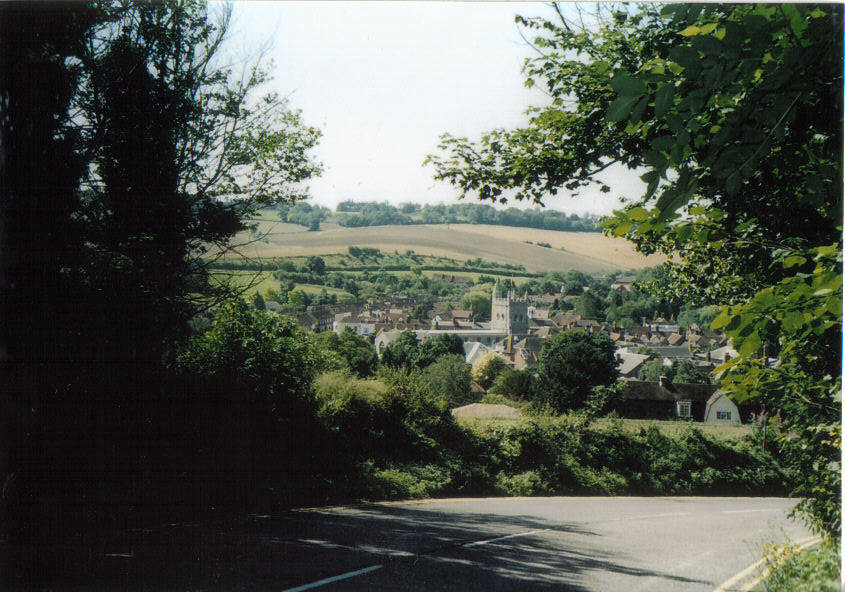
OLD AMERSHAM from Rectory Hill

MEMORIAL TO "MERRY ENGLAND"
WHEN BISHOPS HAD THEIR WAY WITH DISSENT


Now in cōparyng the Turke with the Pope, if a question bee asked whether of them is the truer or greater Antichrist, it were easye to see and iudge, that the Turke is the more open and manifest enemie agaynst Christ and his Churche. But if it be asked, whether of them two hath bene the more bloudy and pernitious aduersary to Christe and his mēbers, or whether of them hath consumed and spilt more Christian bloud, he with sword, or this with fire and sword together, neither is it a light matter to discerne, neither is it my part here to discusse, whiche do but onely write the hystorie, and the Actes of them both.

John Foxe, Book of Martyrs

THIS Spring Bank Holiday weekend's not looking very bright, but if you're in London, and fancy getting out without going far afield, let me recommend a trip to Amersham, in Buckinghamshire. You can get there on the Metropolitan Line (and if you're like me a Golden Oldie, get your money's worth on your Freedom Pass), and beside some countryside and olde world pubs, there's a bit of history to be had.

But it's not for the squeamish, or those wishing only for rosy-tinted views. The only rosy glow in our picture of the past is from blood and the smouldering fires on which they burned the Amersham martyrs. It was 500 years ago. when Henry VII reigned, and England was still a Catholic country. The Bishops held great sway. Amersham came under the diocese of Lincoln, whose Bishop was William Smith.

But something had been stirring in the minds of Englishmen and come to that, English women. Already in the 14th century a man called John Wycliffe had started criticising the Church, and he had translated the Bible into English. His followers, dubbed Lollards, possibly from a word referring to them mumbling their prayers, were driven underground, and seen as a threat to Church and State alike.

If people could read the Holy Word, and pray, in their own language, where was the authority of the priest? Who would act if these but common folk formed erroneous opinions about right and wrong? The Lollards had begun to question the Church's authority, saying that what counted was true belief, and even that Christians should be helping the poor rather than amassing great wealth and building sumptuous churches, cathedrals and palaces.

Despite sermons and suppression, this subversive clandestine tendency continued to grow. Among several adherants in Amersham was William Tylseley. John Foxe, in the introductory passage to his account of what happened to Tylseley, quoted above, asked whether the "Turks", i.e. Muslims, or the Church of Rome was the greater or crueller enemy of Christ, saying that he will only write the history.

Foxe was writing while the bitter events were still in living memory.

in the towne of Amersham, be yet alyue both men and wemen, whiche can and do beare wytnes of this that I shall declare. Also there is of the sayd companye one named William Page, an aged father and yet alyue, witnes to the
same. Also an other named Agnes Wetherley wydowe, beyng about the age of an hundreth yeares, yet lyuing and wytnes hereof: That in the dayes of kyng Henry vij. an. 1506. in the dioces of Lyncolne in Bukynghams shyre (William Smith beyng Byshop of the same dioces) one William Tylseley was burned in Amersham, in a close called Standley, about 60. yeares agoe. The daughter cōpelled to set fyre to her
father.

At which time one Ioane Clerke, being a maryed womā, which was þe onely daughter of þe said W. Tylseley and a faithfull woman, was compelled with her own hādes to set fire to her deare father.

http://www.hrionline.ac.uk/foxe/single/book6/6_1570_0917.html

THOSE who were not burned themselves were sent about to do penance, or tortured to recant. The persecution continued for some years, with more burnings in 1521. Here's a historian's account:

BETWEEN 1414 and 1532, more than a dozen people from, or connected with, Amersham were executed as Lollards dissenters in one way or another from the Catholic church.
John Wycliffe, a priest and academic at Oxford, was the man who created this movement. Despite initial renown for his work, in about 1379, he undertook a translation of the Bible into the English language, which brought the wrath of the church hierarchy upon him.
Wycliffe died peacefully in 1384, but his followers were to be subject to much persecution which would eventually result in the Reformation of the church.

The word Lollard' was a contemptuous term for a follower of Wycliffe's teachings. The Lollards referred to themselves as the Justfast Men' or Known Men', because of their steadfast allegiance to God. They had many opinions on the way the church should be run but the main objection was that it was forbidden to read or possess the Bible in an English translation.


When Henry IV usurped the throne in 1399 he passed a statute which gave authority to the Bishops. If people were found guilty of heresy, they would be condemned to be burned at the stake.
Amongst those subsequently sentenced we find four men from Amersham. William Turnour, Walter Yonge and John Hazelwoode were all executed. Richard Spotford, a carpenter, was pardoned.
John Fynche of Missenden was also put to death.
After these executions, things became quiet. Although there were some milder sentences passed, much of Wycliffe support was underground.

However, in 1506, Bishop Smith of Lincoln initiated an inquiry into religious dissent in Amersham. Among those charged and tried was William Tylsworth. He refused to recant, and was sentenced to be burned to death. His daughter Joan was sentenced to light the fire herself. The persecution of the Amersham Lollards continued with their surviving leader, Thomas Chase. He was tortured in an attempt to force him to recant but it eventually killed him.

The last local man to suffer martyrdom for the Lollard cause was Thomas Harding. He was executed after his third trial of heresy at Botley Dell, North Chesham.

(From Michael Andrews-Reading's book, ' The Amersham Martyrs').

http://www.bucksfreepress.co.uk/nostalgia/bygonebucks /

In 1931, a monument to the martyrs was erected on the hillside above old Amersham, by a Protestant organisation, which claimed them as Protestant martyrs . Whatever its particular motives may have been, it has performed a service in providing a reminder that here in "Merry England" too, people were cruelly persecuted in the name of religion; and that the rights we hold today to read and form our own ideas were not gained without courageous defiance of authority and those with power, nor won without martyrs.

There's more on the Amersham martyrs in the town museum, http://www.amersham.org.uk/museum/ and they have been remembered in recent years by a community play, http://www.metroland.nildram.co.uk/amersham/martyrs/ , and walks. You can get to the monument by turning left out of Amersham station, left again and walking down Station Road, then cross the road to enter Parsonage Wood, walking the footpath till you see a view of old Amersham below you, across the sloping field. Taking the path to the left-hand side of this field, you find the memorial behind a hedge.

It can also be reached by taking a path from behind the church diagonally across the same field.

http://www.amersham.org.uk/tour/martyrs.htm

And it's all on the Metropolitan railway.

Labels: ,

Thursday, May 25, 2006

Libyans held: Has MI5 arrested former MI6 assets?

YESTERDAY'S TARGET,
now America's ally? Gaddafi, a man to do business with.

TEN Libyans have been detained in an "anti-terrorism" operation in Britain which involved some 500 police officers and was under MI5 direction. Eye-witnesses told of men in black smashing doors down in the early hours of the morning. The ten are supposedly being held over claims they channeled funds to insurgents in Iraq.

But the organisation with which they are being linked was allegedly involved in backing anti-Gaddafi forces in Libya which Britain's Secret Intelligence Service MI6 had supported.

Police raids led by Greater Manchester Police took place in London, Manchester, Birmingham, Bolton, Liverpool and Middlesborough. Among the 19 addresses across England which were raided were the offices of an Islamic charity called Sanabel. Three people were last night being held under the Terrorism Act, and five people were arrested under immigration powers and face deportation because they allegedly threaten national security. Two people were arrested and then released without charge.

.
In February the US Treasury department froze Sanabel's assets, alleging that it had raised money for the Libyan Islamic Fighting Group, which it accused of connections with al-Qaida. One of those arrested yesterday under immigration powers was Tahir Nasuf, 44, who is listed by the Charity Commission as a trustee of Sanabel.

Sanabel offices in Birmingham and Manchester and its personnel were reportedly under surveillance for some time before yesterday's raid. Last night computers and financial documentation were being examined by officers for possible links to terrorism - links the charity says do not exist.
In February, after the US published allegations against the charity, Mr Nasuf said: "It is wrong what they said. I am just a volunteer worker. There is no relationship, nothing at all. I have done nothing. Sanabel is nothing to do with the other group. I am angry."

Yesterday, outside Mr Nasuf's Manchester home, his sister-in-law said the raid had terrorised the family. "My sister told me that before fajr [early morning prayer] policemen came to the house dressed in black. She was very scared, she has four children, and didn't know what was going on.

"There was lots of shouting. They took her husband away, she doesn't know why. He's been arrested before and he had done nothing wrong then."
Charity Commission records show that in the financial year ending in 2004 Sanabel spent around £44,000 on work it described as providing clean water and education to children in the developing world. (The Guardian)

The security services are evidently feeding the press with the line that the raids have to do with Iraqi insurgency. 'A counter-terrorism source said that investigations into fund raising are finding that time after time money is going to Iraq, which the source described as a "hotspot for us". The source said: "People involved in jihad need to have money to live and travel. Money is also needed for bombs and other jihad activity."

Michael Todd, chief constable of Greater Manchester police, said the raids were not connected to any threat to the UK. "We are talking about the facilitation of terrorism overseas. That could include funding, and providing support and encouragement to terrorists.

A leading British Libyan dissident has claimed Britain was being duped by the Libyan regime into arresting its opponents. Ali Zew, from the the National Conference of the Libyan Opposition, said: "The regime can feed false information to Britain, and the regime has done so in the past. Libyan dissidents in the UK have no connection to terrorism, they are just against the regime."

Tunworth's Terrorists?

The Libyan Islamic Fighting Group(LIFG) which US authorities have accused Sanabel of assisting is the same group that former MI5 agent David Shayler claimed was paid by the British intelligence services to make an attempt on the life of Libyan leader Colonel Muamar Gaddafi.

Formed by Libyans who had returned from the Western-backed war in Afghanistan, LIFG aimed to set up an Islamic state in Libya. After its first few operations it launched a bomb attempt on Gaddafi on February 17, 1996 that left the Libyan leader unhurt but killed several of his guards, and watching civilians. This was financed by British intelligence to the tune of $160,000, according to ex-M15 officer David Shayler.

Shayler, who was prosecuted under the Official Secrets Act, said an MI6 officer codenamed "Tunworth" handed £100,000 to an Arab agent to mastermind the assassination. Tunworth's MI6 handler--PT16B--met Shayler while he was in MI5 section G9, responsible for monitoring Libyan activities. Shayler's girlfriend and former MI5 colleague Annie Machon, says he "headed up" the section for two years from August 7, 1994. PT16B told Shayler that a bomb exploded under the wrong car, Gaddafi was unhurt and several civilians were killed or injured. He said that authorisation for the operation, "went all the way to the top."

The late Foreign Secretary Robin Cook tried to dismiss Shayler's allegation as "fantasy", but Annie Machon handed Special Branch a sheaf of documents relating to the Libyan operation.

Since then Gaddafi has handed over a Libyan -some say a scapegoat - for the Lockerbie plane outrage, and patched up relations with the United States and Britain. US oil companies are sending their men out to Libya, and British trade with Libya, no longer "under the counter", is increasing. If former demon Gaddafi has joined the "good guys" of anti-terrorism, dissident Libyans, including the kind of people MI6 once backed, must be seen as a nuisance by the state that was once prepared to support some of them.

David Shayler's account:

In summer 1995, I was head of MI5’s Libyan sub-section. One afternoon, David Watson, codename: PT16/B, my counterpart in MI6, asked to meet to discuss an unusual case which he could not mention over the phone. At the subsequent meeting in MI5’s Thames House HQ, PT16/B told David that:
A senior member of the Libyan military intelligence service had walked into the British embassy in Tunis and asked to meet the resident MI6 officer.
The Libyan ‘walk-in’ had asked for funds to lead a group of Islamic extremists in an attempted coup, which would involve the assassination of Colonel Gaddafi, the head of the Libyan state.


In exchange for MI6’s support, the Libyan – later codenamed Tunworth by MI6 -- offered to hand over the two Lockerbie suspects after the coup. Getting them to the UK for trial had at the time been one of MI6’s objectives for about three years but there is no guarantee that the coup plotters could have done this.
In December 1995, James Worthing3, R/ME/C at MI6, circulated CX95/ 534524 report to Whitehall and other addressees, warning of a potential coup in Libya, confirming that the MI6 agent was involved in, rather than simply reporting on the plot:

“In late November 1995 [Tunworth’s identity removed]5 described plans, in which he was involved, to overthrow Colonel Gaddafi. […]”:
“The coup is scheduled to start at around the time of the next General People’s Congress on February 14, 1996. Coup will start with unrest in Tripoli, Misratah and Benghazi.” […]
“Plotters would have cars similar to those in Gaddafi’s security entourage with fake security number plates. They would infiltrate themselves into the entourage in order to kill or arrest Gaddafi…
“One group of military personnel were being trained in the desert area near Kufra for the role of attacking Gaddafi and his entourage. The aim was to attack Gaddafi after the GPC [General People’s Congress], but before he had returned to Sirte. One officer and 20 men were being trained for this attack.”6
Around the same time, Christmas 1995, Watson told me that he had met Tunworth, in Geneva and paid him $40,000. Jackie Barker, an MI5 transcriber on secondment to the Libyan sub-section, confided to me that Watson had told her the same information. Watson then met Tunworth on two further occasions early in 1996 in Geneva mentioning to me that he had paid ‘similar sums’ to Tunworth on each occasion. Although PT16/B never specifically mentioned it, it was tacitly understood that Watson was working with the approval of his direct line manager, PT16, Richard Bartlett.
At some point — I can’t be sure when exactly — Watson mentioned that the submission7 was going to go “all the way to the top”. In about January 1996, Watson told me that the submission had been successful, indicating that the Foreign Secretary himself had signed the document permitting the operation.8 But I knew we only had Watson’s word for this. Despite my efforts with MI5 management, no one there had the courage to ask ministers whether MI6 had in fact been given legal immunity for these crimes abroad. After I blew the whistle the Foreign Secretary of the day, Malcom Rifkind, denied giving permission for the operation.

Around February/March 1996, at least two intelligence reports quoting independent sources — the Egyptian and Moroccan intelligence services -- confirmed that an attack had been made on Colonel Gaddafi in Sirte, Libya. Two of the reports indicated that the attackers had tried to assassinate Gaddafi when he was part of a motorcade but had failed as they had targeted the wrong car. As a result of the explosion and the ensuing chaos in which shots were fired, civilians and security police were maimed and killed.

At a meeting shortly after, Watson ventured to me in a note of triumph that Tunworth had been responsible for the attack. “Yes that was our man. We did it” was how he put it. He regarded it, curiously, as a triumph even though the objective of the operation – the assassination of Colonel Gaddafi had not been met -- and there had been civilian casualties

Labels:

Wednesday, May 24, 2006

Knife attack on Merseyside trade unionist

A leading Merseyside trades unionist and anti-racist campaigner has been attacked at his home by a knifeman. Alex McFadden was almost blinded in the attack.
A local reporter takes up the story:

Union boss slashed in face
May 19 2006
EXCLUSIVE by Neil Hodgson, Liverpool Echo

A LEADING trade unionist was slashed in a knife attack in front of his two young daughters in their Merseyside home. Anti-racist campaigner and left wing activist Alec McFadden was almost blinded in the attack, and was cut in his head, arms and wrists as he tried to fend off the knifeman.
His daughters, aged nine and 13, watched in horror as he was slashed with a craft knife, spraying blood on the door and hall of his Wirral home.
The 59-year-old believes racists are behind the attack, as he has received death threats before.
He said: "He missed my eye by half an inch. The doctors say I am lucky."

He was attacked at 9.30pm after hearing banging on his door.
He said: "I saw a man slumped on the garden wall. I thought he was hurt and opened the door.

"He tried to force his way in and slashed me. I shouted to my kids to call the police, and I think when he heard my daughter on the phone saying, 'I want the police now,' it distracted him.

"I got the strength from somewhere and managed to force the door closed."

Earlier, he had been celebrating news his nephew, Everton player James McFadden, had made the Scotland national squad. He said: "I was so elated that I forgot to check my car mirrors and this person must have followed me."
Police were today carrying out forensic testing.


The knifeman was white, 5ft 10ins, with dark receding hair and a local accent. He wore a light coloured top.
Contact Wirral police on 0151 777 2265.

http://icliverpool.icnetwork.co.uk/0100news/breakingnews
/tm_objectid=17103277&method=full&siteid=50061&headline=union-boss-slashed-in-face-name_page.html

Alex McFadden, originally from the North East, is a well-known figure among trade unionists and anti-racist activists, on Merseyside and more widely. Last year I met him at the national trades union councils' conference in Liverpool where he chaired discussions on what trades unionists can do to combat racialism and organise migrant workers. I had a chat with him again a few months ago in the Casa, Merseyside dockers' club on Hope Street.

Racists might not be the only people to make attacks like this, but they are the people who boasted their hatred for Alex McFadden, and it is not the first time he has been their target. Three years ago the notrious right-wing website Redwatch published details on the Merseyside trade unionist including his address and photograph.


21.11.2003 Liverpool
Targets of right wing extremists
Nov 19 2003 by Thomas Martin, Liverpool Echo

A Merseyside trade union leader is under police protection today (Wednesday, November 19) after being targeted by right wing extremists.

CCTV cameras have been installed by police at the home of Alec McFadden, president of the Merseyside TUC. Another union leader, Nigel Flanagan, chairman of the north west region for Unison, and children's author and primary
school teacher Alan Gibbons, have also been targeted in a website campaign by a fascist organisation.

Photos of all three have been posted onto the fascist
website which also publishes the addresses of Mr McFadden and Mr Flanagan and has described them as "freaks" and "scumbags".

All three men have reported what has happened to Merseyside police who are now investigating. The website has direct links to the extreme right wing groups Combat 18, Aryan Unity and Order of White Knights. It purports to
raise awareness within the community of marxists who threaten society by revealing personal details such as home addresses, photographs, telephone numbers and e-mail addresses.
The website says: "When the time comes to revolt, we must be prepared to unleash the furies of hell." The site, which the ECHO has chosen not to name, is registered to a Simon Shepherd, a former BNP organiser from Hull who was arrested and imprisoned in 1999 for producing antisemitic material.

Mr McFadden, a single father-of-two, recently set up the
Merseyside Coalition Against Racism and Fascism. He said: "I know what these people are capable of because in 1988 my car was blown up and I received death threats - no one was ever caught for that. "Since then I have been very careful to never release my address or phone number so these people must have followed me home to
get these details. "I have contacted my children's school and asked them to be vigilant - if someone threatens me I will make sure my children are safe."

Mr McFadden has also received a disturbing email from Merseyside BNP candidate Joey Owens featuring photos of his home and his car. The e-mail purports to raise concerns over how he could afford such items, or lead such a lifestyle as a committed socialist. Today Mr Owens admitted sending the e-mail but claimed it was not hreatening in any way. He said: "Mr McFadden has been doing this towards BNP members for years. The boot is on the other for now and they do
not like it. "The reason I did this was because Mr McFadden is the one who is doing this campaign to stop the BNP in the democratic campaign for the elections next year."


Alex McFadden decided to hold an anti-racist festival last year after a Birkenhead mosque was attacked, following the London bombings. The murder of black teenager Anthony Walker was a further spur and brought a rush of offers to take part. The ‘Say No to Racism’ event was held in Princes Park, on Sunday, September 4th 2005, and Alex was interviewed by the BBC.
http://www.bbc.co.uk/liverpool/content/articles/2005/09/05/
anti_racism_feature.shtml.

Joe Owens, who has been a minder for BNP leader Nick Griffin and helped provide security for visiting French fascist Jean-Marie Le Pen on his trip to the North West, is a convicted criminal with a reputation as a gangster.

But oddly enough, the attack on Alex McFadden comes after former BNP Merseyside organiser Owens broke with the party and went public with accusations that London BNP organiser Tony Lecomber had tried to recruit him to an assassination scheme.


Gangster and BNP member reveals all

Apr 17 2006

By
Jessica Shaughnessy, Daily Post

THE former organiser of the right-wing British National Party on Merseyside has renounced it and says he regrets his violent past.
Joey Owens, who once acted as personal bodyguard to BNP leader Nick Griffin, will be the subject of a hard-hitting book later
this year, named The Nazi Assassin. In it he will be portrayed as an underworld gangster whose name has been linked to a number of alleged assassinations.
Last night, Owens told the Daily Post that he had left the
BNP part of his life behind him, and wanted to warn others about going down the same path.
He said: "I had just had enough of the life I was leading with
the BNP. "When I first joined the party in the eighties, it was very
different to how it is now. It was violent and dangerous, that has changed now, but the stigma still follows you around.
"I just didn't want to be part of it any more."
Owens, from Norris Green, who has a daughter who lives abroad,
says he is now wanted by other members of the underworld and is a target for assassination. He constantly wears a bulletproof vest for his protection.
He said: "I wouldn't say I am living in fear. I am used to that kind of
pressure, I have lived with it for most of my life.
"But I wouldn't necessarily recommend it to anyone else."

Owens, who served eight months in jail for sending razor blades to members of Liverpool's Jewish community, was the BNP organiser for Merseyside and Cheshire.
He says he has relaxed some of his racist views, though he does still feel there are issues on immigration in the UK. He spoke to the Daily Post after it was revealed that his story will be told in the book, The Nazi Assassin, to be published later this year.
The book was written by Liverpool author Graham Johnson, former
investigations editor for the Sunday Mirror, with Owens's co-operation.
Owens added: "He approached me and asked me if I would help him, and I decided it would be better to make sure he got everything right.
"I also thought it might clear a few things up and warn others not to get involved in the same lifestyle."
The book details how Owens was one of the top suspects
for the slaying of TV presenter Jill Dando. It also reveals that a Merseyside Police file describes him as a £100,000-a-time gunman for the criminal gang led by cocaine baron Curtis Warren, currently in jail in Holland.
Last night, Mr Johnson said: "This book does not glorify organised crime or Joey Owens. It is a rigorous investigation into the two very different worlds he lived - the BNP and Liverpool's underworld."
But president of the Merseyside TUC and anti-fascism campaigner Alec McFadden said: "This book is supposed to blow away
any respectability the BNP has, but they didn't have any respectability in the first place.
"As far as I am concerned, Joey Owens, like a lot of the BNP,
has a criminal record and I don't regard that organisation as a genuine political party."
The BNP is putting up one candidate in each Merseyside
borough in the May local elections.
Mr McFadden continued: "It is a good thing for Merseyside that he is no longer involved and the BNP activity will be diminished.
"I am convinced Merseyside will continue its record and will
remain a fascist-free zone in May".

According to a report in the current Searchlight, Owens claimed in a statement issued in April that Lecomber, who has convictions for attempted bombing and for beating up a Jewish teacher, came to see him with talk about "direct action". Asked what he meant, Lecomber replied "targeting members of the establishment who are aiding and abetting the coloured invasion of this country". Asked what exactly he meant by targeting, he replied "killing them".

J'accuse. Gangland hitman points finger at BNP. Nick Lowles, Searchlight, May 2006.

see also:

http://www.searchlightmagazine.com/index.php?link=template&story=159

Lecomber claims the discussion in a Pizza Hut in Liverpool was just "hypothetical", though travelling 200 miles for a "hypothetical" chat with a supposed hitman seems a bit dedicated. Owen evidently suspected a set-up. Since Owens went public, Griffin has been forced to let his lieutenant take a rest, though Searchlight claims Lecomber is still on the BNP payroll.

  • While the search goes on for who attacked Alex McFadden, we may wonder why this attack, and for that matter the criminal background of leading BNP fascists, has not attracted more attention from the national media.
  • Not to mention, why Merseyside police seem to have left it to a reporter to investigate Joe Owens while the alleged hitman was looking after visitors like Le Pen, and standing for the BNP in local politics.

Meantime sympathetic greetings to Bro.McFadden and his family. Here's wishing Brother Alex a full and speedy recovery, good health, and more power in continuing to battle the enemy.

(Thanks to fellow-blogging socialist Dave Osler for drawing attention to the report of the attack on Alex McFadden.
see Dave's Part)

Labels: , ,

Tuesday, May 23, 2006

Grapes of wrath for Negev Bedouin


UNRECOGNISED VILLAGE
Pylons on the hillside, water station in front, but neither power nor water supplies to this Bedouin village not far from Be'ersheba
(see 'Unrecognised villages in the Negev expose Israel's apartheid policies'
Bangani Ngeleza and Adri Nieuwhof, The Electronic Intifada, 21 December 2005
http://electronicintifada.net/v2/article4358.shtml )

ISRAELI authorities are carrying out a new scheme in the Negev to negate the rights of the Bedouin to live on their land. Since expelling many Bedouin when it was established, the Israeli state has adopted a policy of treating the remainder as a nuisance, a novelty for tourists, or a potential source of cheap labour and soldiers (mainly trackers), but never as full human beings, citizens with rights, and certainly not rights to live in dignity and develop their communities on their own land.

They tried to herd the Bedouin population into a small area that forms only a very small part of their original tribal lands, the land from which they had been expelled. As Neve Gordon, professor of politics at Ben Gurion University of the Negev in Be'ersheva writes, "These Bedouins had to give up all claims to their ancestral land in order to be granted the dubious privilege of living in these overcrowded townships".

"The remaining half of the Bedouin population, which today totals about 75,000 people, were unwilling to give up their property rights and are now scattered across the Negev in forty-five villages that have never been recognized by the state".

Not being recognised means you can go to work. pay tax, and have electricity pylons marching over your head, but don't expect electricity, or piped water for your home. You can come home and find the Green Patrols have harassed your kids and confiscated the flock they were herding, your crops have been sprayed with poison, or the army has demolished your shack. But such seeming random attacks are forming into a definite plan.

In an article called "Bitter Wine for Israel's Bedouins" in the May 23 online edition of the US magazine The Nation, Neve Gordon describes a new Israeli government scheme that enlists private entrepeneurs and the tourist industry in disregard, not to say deliberate contempt for Bedouin rights.


The Israeli government is currently carrying out a land-use scheme that further violates the land rights of the Bedouins and intensifies their alienation from Israeli society. The "Wine Route" plan authorizes the construction of thirty private farms, which are supposed to cater to Israeli tourists. Some of these farms have already been built and are located on the same land that the Bedouins consider their own; all of the farms--built and planned--will receive the services that the Bedouins have been denied for several decades: running water, electricity and paved roads.

The "Wine Route" plan exposes the lie informing Israel's treatment of
the unrecognized Bedouins. For years, Israeli officials have emphasized the need to concentrate the 75,000 Bedouins in large townships, stating that their forty-five villages are too small and scattered along a fairly large area, making it very difficult to provide them with infrastructure. This served to justify the policy of not recognizing them. And yet now, the very same officials
are handing out permits to scores of scattered farms, which stretch across thousands of dunams (a dunam is approximately a quarter of an acre), each one home to a single family.

But the "Wine Route" does much more than expose Israel's lie. The
farms, explains Ariel Dloomy of the Negev Coexistence Forum, insure that only Jewish citizens have access to large segments of the Negev; in this way they undermine the Bedouins' attempt to reclaim their ancestral land. One government document clearly states: "The reasons for initiating [these farms] is for protecting state land...and offering solutions for demographic issues." Incidentally, Dloomy adds, one farm was given to a Bedouin to serve as a fig leaf covering Israel's blatant discrimination against them.

Professor Oren Yiftachel, a political geographer from Ben-Gurion University whose work focuses on the relation between space and ethnicity, adds that the "Wine Route" initiative "draws a link between, on the one hand, Israel's longstanding efforts to restrict and circumscribe the space which its non-Jewish citizens are permitted to occupy and, on the other hand, new entrepreneurship projects. The state, in other words, is using entrepreneurs to advance its
discriminatory practices, adopting, as it were, a new mechanism to prevent the Negev's Bedouin inhabitants from returning to their ancestral lands. Thus, in addition to demolishing their homes and spraying their crops with poison, now the government is building farms on their land."

"How," Abu Sheita asked the members of the Negev Coexistence Forum, "will you help us counter this initiative?"
"Our friends don't have access to the corridors of power, and we can't expect them to stop the longstanding discrimination of all past Israeli governments," the person next to him immediately answered.

"Perhaps not," Abu Sheita continued, "but we can expect them to try." And after a short silence he added: "The discrimination against the Bedouins is like a big boulder; a pickaxe can never break it with one fell swoop, but if you continue hitting for many years, it will eventually shatter."
http://www.thenation.com/doc/20060605/gordon

Well-aimed blows can reduce the time it takes to shatter a rock. Even at a distance, if the resonance is right. As Joshua found out, you have to make enough noise. By linking their anti-Bedouin policy to investment, tourism, and presumably an export crop, the Israeli authorities could find they have made it vulnerable to well-aimed blows from outside. If we make enough noise.


Labels: ,

Sunday, May 21, 2006

Standing up to AIPAC

TROUBLED times for the American Israel Public Affairs Committee?
AIPAC of lies, as it has been accused of purveying, AIPAC of hounds, as it bays after opponents. But the leading, highly professional Israel Lobby outfit that likes to boast how many people it could bring flocking to Capitol Hill has not been having things all its own way, lately, in spite of all those Washington neo-cons and Evangelical fundamentalists who hardly need lobbying

First there was the "divided loyalties' charge over an AIPAC official filching confidential information for Israel, then the disappointment that the politician whom AIPAC delegates cheered loudest at their convention, right-winger Benyamin Netanyahu, flopped with the Israeli electorate.

On top of all this, two Harvard academics have produced a paper criticising the influence the Zionist Lobby, and particularly AIPAC, has in US politics, saying that the United States is unable to pursue a rational Middle East policy servng its interests because it has to bow to domestic pressures. Hardly a new complaint I'd have thought, but it has brought a great clucking controversy among the chattering classes and the usual cries of "antisemitism" from the usual highly suspects - those who cry wolf, not even from over-anxiety to protect Jews, but from their fervour to censor any criticism of US backing for Israeli policies.

For my part, being as opposed to US imperialism as I am to Zionism, I'm not over-concerned with the tail-wagging-dog controversy. But it does trouble me that the Israel Lobby has too long provided a cover for imperialist aggression, and by claiming to speak for all Jews, has not only dragged the Jewish people's name in the gory muck of supporting oppression, but given US policy-makers a ready-made scapegoat should they ever decide to switch their policy. It is already in use by reactionaries in the Arab world, the US, and Europe who wish to explain and criticise US policy without reference to imperialism. Bit like indulgent relatives explaining that the lad's OK really, if it was not for bad influences, or Russian peasants accepting that the Czar would be on their side if only he did not have such bad advisers. And of course, not all those using the "Jewish power and influence" story are that innocent. Some are antisemites.

Still, the Lobby does play its part, and while apologists may deny its influence when countering criticism, when lobbyists are raising funds or assuring Israeli opinion of their importance they boast about it.

Whether or not the lobbyists could make US governments do anything they don't want to, they have been effective sometimes in shutting up liberal critics, both in Congress and the Jewish community. (Not just on Palestine or the Middle East. Unease over dictators in Central America or Argentine's military junta was muffled in the Reagan era by evoking Israeli interests).

Not content with labelling opponents "antisemitic", AIPAC and its allies have resorted to smearing them as "supporters of terrorists". Some people are starting to stand up to AIPAC though, as this item from the New York Review of Books, relayed by Jewish Voice for Peace, reveals:

Representative Betty McCollum, a Democrat from Minnesota, has banned AIPAC from her office until she receives a formal, written apology from them for equating her vote in the House International Relations Committee against HR4681, the Palestinian Anti-Terrorism Act, with "support for terrorists". This is the bill that AIPAC backed to cut all US aid to Palestinians to punish them for Hamas elections victory.

The bill would place so many restraints on aid and on Washington's ability to deal with the Palestinians, that even the State Department has opposed it. AIPAC has strongly backed it. The Senate version of the bill, S. 2237, would allow the administration far more flexibility. On April 6, the House International Relations Committee passed H.R. 4681 by a vote of 36 to 2; McCollum was one of the two nays. As of May 11, AIPAC has yet to respond to her demand for an apology.

In a letter to Mr. Howard Kohr, AIPAC's executive director, the representative writes:


Dear Mr. Kohr:

During my nineteen years serving in elected office, including the past five years as a Member of Congress, never has my name and reputation been maligned or smeared as it was last week by a representative of AIPAC. Last Friday, during a call with my chief of staff, an AIPAC representative from Minnesota who has
frequently lobbied me on behalf of your organization stated, "on behalf of herself, the Jewish community, AIPAC, and the voters of the Fourth District, Congresswoman McCollum's support for terrorists will not be tolerated."

Ironically, this individual, who does not even live in my congressional
district, feels free to speak for my constituents. This response may have been the result of extreme emotion or irrational passion, but regardless, it is a hateful attack that is vile and offensive to me and the families I represent. I call on AIPAC to immediately condemn this un-American attack and disavow any attempt to use this type of threat and intimidation to stifle legitimate policy differences. I will not stand to be labeled or threatened in a manner that questions my patriotism or my oath of office. Last week, I did vote against H.R.
4681 during mark-up of the bill in the House International Relations Committee.

As a Member of Congress sworn to uphold the Constitution, and ensure the security of the US and represent the values and beliefs of the constituents who I serve, it was my view that H.R. 4681 goes beyond the State Department's current policies toward Hamas and the Palestinian Authority and potentially undermines the US position vis-à-vis the coordinated international pressure on Hamas. The language contained in S. 2237 accurately reflects my position.Keeping diplomatic pressure on Hamas to renounce terrorism, recognize the State of Israel, dismantle terrorist infrastructure, and honor past agreements and treaty obligations, while preventing a humanitarian crisis among the Palestinian people, are all policy goals already strongly supported by myself, the Bush administration, Congress and the American people. But, if the purpose of H.R. 4681 was to send another strong message to Hamas and the Palestinian people, as
Congress already has sent with the passage of S. Con. Res. 79, then I disagree with the vehicle for that message.

In my opinion, Congress should be articulating clear support for the
Secretary of State's present course of action; not creating a new law which likely diminishes the diplomatic tools needed to advance US policy goals with regard to the Palestinian people, potentially cuts US funding to the United Nations, and largely restates current law while creating on-going and burdensome unfunded reporting requirements. As you well know, in Congress we do not shy away from condemning the vile words of despots and dictators who use anti-Semitism as a weapon to incite hatred, fear and violence. AIPAC should not
have a lower standard for persons affiliated and representing its organization when they label a Member of Congress who thinks for herself and always puts the interest of our nation and people first a supporter of terrorists.

You and your colleagues at AIPAC have the right to disagree with my
position on any piece of legislation, but for an AIPAC representative to say that I would ever vote to support Middle East terrorists over the interests of my country will never be tolerated by me or the families I serve. This incident rises to a level in which a formal, written apology is required.Mr. Kohr, I am a supporter of a strong US-Israeli relationship and my voting record speaks for itself. This will not change. But until I receive a formal, written apology from your organization I must inform you that AIPAC representatives are not welcome in my offices or for meetings with my staff.

Betty McCollum
Member of Congress4th District, Minnesota, Washington, D.C.
http://www.nybooks.com/articles/19063

Jewish Voice for Peace, the US Jewish group campaigning against Israel's occupation and the 'Apartheid Wall' on the West Bank has urged supporters to write to Representative McCollum thanking and congratulating her on her stand, and says "While you're at it, let her know that she should oppose the HR 4681 not only because it is too harsh, but because we should not be punishing Palestinian citizens for exercising their democratic right to vote".

********************

http://www.jewishvoiceforpeace.org/

Meanwhile, Jewish Voice for Peace has also drawn attention to this criticism of AIPAC by a US Rabbi, which was published in "St.Louis JewishLight"
http://www.stljewishlight.com/commentaries/286061544108230.php

'Israel Lobby' bad for Israel, the U.S.

BY RABBI BRUCE WARSHAL

May 10, 2006

Oh my God, someone has publicly outed the "Israel Lobby." For those readers who do not closely follow the machinations in academia, let me explain. John Walt, the academic dean of the Kennedy School of Government at Harvard, and John Mearsheimer, a political scientist at the University of Chicago, have written a blistering critique of the Jewish lobby, focusing primarily on AIPAC.

Their main complaint is that "the thrust of US policy in the region (the Middle East) derives almost entirely from domestic politics, and especially the activities of the 'Israel Lobby'." There is much with which to disagree in the paper, including their assertion that Israel is not a vital strategic asset (there are many generals who would challenge that assertion). But there is also much truth, if we would only be honest with ourselves.

The usual suspects have jumped on the bandwagon, not merely to criticize but to condemn the paper in vitriolic words. Rep. Eliot Engel, a Democrat who represents the Bronx, declared it "anti-Semitic and anti-Zionist drivel." This is somewhat ironic since one of the complaints of Walt and Mearsheimer is that anyone who criticizes Israel is automatically labeled anti-Semitic. The ubiquitous Alan Dershowitz accused the authors of cribbing from neo-Nazi Web sites, which was a sophisticated way of tarnishing them as anti-Semites without using the phrase. The right-wing New York Sun called it a "scandal" and warned that if Harvard is not careful, "the Kennedy School will become known as Bir Zeit on the Charles."

The Forward was most responsible. Before writing an extensive critical analysis of the paper it acknowledged that "the authors are not fringe gadflies but two of America's most respected foreign-affairs theorists. ... Though it's tempting, they can't be dismissed as cranks outside the mainstream. They are the mainstream."

I agree with Walt and Mearsheimer that AIPAC controls our American government policy toward Israel. But in their paper the two political scientists point out that, "In its basic operations, the Israel Lobby is no different from the farm lobby, steel or textile workers' unions, or other ethnic lobbies. There is nothing improper about American Jews and their Christian allies attempting to sway US policy; the Lobby's activities are not a conspiracy of the sort depicted in tracts like the Protocols of the Elders of Zion."

Coming from South Florida, I am acutely aware that our government policy toward Cuba is dictated by the Cuban Lobby. Why else would we have such an absurd opposition to Castro? If we can make peace with Red China and the "evil empire" of the Soviet Union, why do we continue an embargo against an obscure Communist island, if it were not for domestic political pressure? So it is with the Jewish domestic lobby. My complaint is that the self-appointed Jewish leaders who control AIPAC and other positions of power within the Jewish community do not represent the best interests of Jews, Israel or the United States in the long run.

Let's zero in on AIPAC. It is controlled by right-wing, rich Jewish neo-conservatives. As one manifestation of the truth of this assertion one merely has to look at its annual meeting this past month. At a time when Vice President Cheney's popularity has dropped below 20 percent, the 4,500 delegates to the AIPAC convention gave him a standing ovation for almost a minute before he even opened his mouth and then proceeded to give him 48 rounds of applause in a 35-minute speech. (As my colleague Leonard Fein pointed out, that's once every 43.7 seconds). Considering that 75 percent of American Jews voted for Kerry, it is obvious that these people are out of the mainstream of Jewish thought.

At the same conference, preceding the recent Israeli elections, these delegates were addressed by Ehud Olmert (Kadima), Amir Peretz (Labor) and Benjamin Netanyahu (Likud) by video link from Israel. Olmert and Peretz received polite applause. The AIPAC delegates cheered enthusiastically for Netanyahu, especially when he presented his hard line that was overwhelmingly rejected by the Israeli electorate. Once a great organization, today AIPAC does not even represent the feelings of the average Israeli, let alone the average American Jew.

This American Jewish neo-conservatism is unhealthy not only for America but for Israel as well. A prime example: The Israeli press reports that Israel is trying to find a way to deal with the Palestinians while not dealing with Hamas. Official public statements aside, they realize that they cannot cut off all contacts with the Palestinians and that the world cannot discontinue financial help; otherwise Israel will find a million starving Palestinians on its border, and this will not lead to peace or security for Israel. Privately, the Israeli government was against the Palestinian Anti-Terrorism Act (the Ross-Lehtinen-Lantos bill) which recently passed the House of Representatives.

It would cut off all American contacts with the Palestinian Authority, even with its president Mahmoud Abbas, who is a moderate seeking peace. Despite Israel's private reservations, AIPAC not only pushed this bill, it was instrumental in writing it. Even though the AIPAC candidate lost in Israel, he won in the U.S. House of Representatives. Hopefully, the Senate and the White House will correct this.

Beware that you are reading treasonable material. If you "out" the Israeli lobby and you are Gentile, you're branded an anti-Semite; if you are Jewish, you're obviously a self-hating Jew. The Jewish establishment abides no criticism of Israel. You don't agree with me? Take this example: Last month a pro-Palestinian play entitled 'My Name is Rachel Corrie' was to open at the New York Theatre Workshop, a "progressive" company on East Fourth Street. The play is based on the writings of a young British girl who was crushed to death by an Israeli bulldozer when she was protesting the demolition of Palestinian homes in Gaza two years ago.

Although the play was widely praised in London last year, it never opened in New York. The theater producers spoke to the ADL and other Jewish leaders, including big-money Jews on its board, and that was the end of that. But, of course, we don't "censor" discussion concerning Israel. We just politely give our opinions and the voice of the other side disappears.

Another example: 400 rabbis, including myself, signed a letter sponsored by Brit Tzedek v'Shalom that appeared in the Forward this past month. It was a mildly liberal statement that proclaimed that "we are deeply troubled by the recent victory of Hamas," but went on to urge "indirect assistance to the Palestinian people via NGO's, with the appropriate conditions to ensure that it does not reach the hands of terrorists." Pretty mild stuff. Yet pulpit rabbis across this country who signed the letter have reported a concerted effort to silence them. The letter has been branded a "piece of back-stabbing abandonment of the Jews of Israel." Synagogue boards have been pressured to silence their rabbis by that loose coalition called the "Israel Lobby."

Just another example of the Jewish establishment stifling any discussion of Israel that does not conform to the neo-conservative tenets of AIPAC and its cohorts. Beware of these self-appointed guardians of Israel and Jewish values. In the end they will destroy everything that makes Judaism a compassionate religion, and if in their zeal they do not destroy Israel, they certainly will not make it more secure.

Labels:

Saturday, May 20, 2006

See London and die

Turn on the TV news this week and chances were you'd get something on immigration. Top news items headlined by BBC news the other evening were "illegal immigrants" and Paul McCartney's marital problems.
Has the corporation already been sold off to Murdoch, or are the editors just looking after their futures?
This followed closely on a Panorama programme on Immigration Office "whistleblowers" revealing the extent of "the problem", and was followed by a shock! horror! BBC news investigation revealing that five "illegal" Nigerians were working as cleaners at the immigration office. (No suggestion there was anything wrong with private contractors hiring the cheapest labour).
Wow! We don't mind arms dealers, drug runners and war criminals coming to Britain but ....cleaners!
Amid this manufactured hysteria - keeps people's minds off the war in Iraq, the chaos in the NHS, and the creeping economic crisis - congratulations to the Independent, not my normal paper, for a story revealing the human side of anti-immigrant, anti-foreigner measures, and the way they take society down the slope away from human decency.
What price the Hippocratic oath against politicians hypocrisy?

i n d e p e n d e n t

Mother dies because of rules to stop health tourism http://news.independent.co.uk/uk/this_britain/article485917.ece Ese

Elizabeth Alabi, 29, was denied the chance to have an urgently needed heart transplant because she was not a British national. She died after she fell ill while on a trip to Britain and was told she could not fly home.

Immigration:
Mother consigned to certain death by harsh new rules

A young mother fell ill and died on a visit to Britain - an innocent victim of the hysteria over so-called health tourism

By Maxine Frith, Social Affairs Correspondent Published: 18 May 2006

When Ese Elizabeth Alabi fell ill while on a trip to Britain and was told she urgently needed a heart transplant, she comforted herself with the knowledge that she was in a democratic country with an excellent healthcare system. Instead, she was consigned to a certain death by draconian new rules brought in to quell the hysteria over so-called health tourism and immigration.

Ms Alabi was denied the chance of a heart transplant simply on the grounds of her nationality and died in hospital on Monday night at the age of 29, leaving three-month-old twin boys and a two-year-old son. Desperate attempts to get a High Court judge to overturn the rules were delayed as Ms Alabi was forced to fight a deportation battle even as she lay dying in hospital. Her partner, Abiodun Abe, attacked the restrictions that relegated his partner to a lower priority than less sick patients. He said: "I am so angry. I love Britain and I thought it was a fair place but my wife has died because of these laws.
Ese was devoted to God and was a good person. She always had faith that the judge would be good to her and that she would get a heart but it didn't happen."

Ms Alabi's case offers a graphic illustration of the other side of Britain's immigration debate, fuelled this week by the Home Office's admission that it has no idea of the number of illegal immigrants in the country. The Government's new rules, brought in last year in an effort to quell fears of foreigners coming to Britain to take advantage of the NHS meant that Ese was effectively denied any chance to live. A last-ditch bid was launched last week to persuade the High Court to overturn that decision but Ese's condition deteriorated before a judge could rule.

Richard Stein, a solicitor with the law firm Leigh Day and Co, who represented Ms Alabi, said: "I accept that there is a shortage of organs and that there was no guarantee that Ese would have got one, but she should not have been denied the chance because of the country she came from. " After all, organs transplants are not decided on the basis of the colour of a person's skin. "She was not a health tourist - she simply had the misfortune to fall ill here."

He added: "I accept that we have to have rules to stop people from taking advantage of the NHS but they should not discriminate against people with genuine need because of this obsession about immigration. "I think it is appalling that a civilised country like Britain treats someone like that. "Her death was unnecessary." Ese lived in Nigeria with her two-year-old son from a previous relationship and met Mr Abe when he returned for a visit there. He has indefinite leave to remain in Britain and until recently worked for the Post Office.

As their relationship flourished, Ese made regular visits to Mr Abe at his home in Grays, Essex, but never overstayed her six-month tourist visas. She travelled to Britain in September last year while pregnant with twins by Mr Abe and intended to return to her family in Nigeria to have the babies, but began feeling ill and breathless and was told she could not fly home. The twin boys, Jamal and Jazar, were born on 13 February but Ese's condition continued to worsen and she was taken to hospital in March. She was diagnosed with dilated cardiomyopathy, which causes the heart to become enlarged, and was told her only hope was a transplant. But she was then told that the new rules meant that while British, EU citizens and people from some other countries were put on a priority "group one" list for donor hearts, she would only put on a lower, group two list.

With about 100 people on the group one list at any time and a shortage of organs, it meant she had no chance of receiving the heart she needed. Lawyers went to the High Court asking for a judicial review of the rules but then had to fight on a second front after it emerged that Ese's illness meant she had overstayed her visa, which expired on March. The judge adjourned the case for inquiries to take place about Ese's application for exceptional leave to remain, but by last Friday she had become so ill that doctors said she would not withstand a transplant even if a heart became available and she was at the top of the list.

Mr Abe said: "She was a very strong person and she tried to hold on. I took the babies to see her on Monday night and she gave them a kiss and touched them. I took them home and as I was taking them upstairs to bed the phone rang to say she was dead." He now wants Ese to be buried in Britain so that the sons who never knew her will at least have her grave to visit.

A spokesman for the Department of Health said: "This is a tragic case, and we wish to express sympathy for Ms A and her family. It has involved an extremely sad and difficult process. Whilst no person is wholly excluded from receiving an organ, priority is given to those who are entitled to NHS treatment. We believe this to be a lawful, fair and reasonable way of allocating organs, and it is clearly supported by those who work in the field."

Labels: , ,

Friday, May 19, 2006

Children's bodies found in Hindu fascist's car

AHMEDABAD BURNING. Mobs in 2002 operated with precision and timing showing a guiding hand - that of the VHP, with connivance from the state, say opponents.

NEWS from the west Indian state of Gujarat took a new sensational and grisly turn yesterday with the discovery of two dead children's bodies in a leading right-wing activist's car in the town of Dabhoi, in Vadodara district. The area has already been the scene of violence following the destruction of Muslim shrines ordered by the authorities. Thousands of Muslims were killed in Gujarat five years ago in pogroms encouraged if not stage-managed by Gujarat Chief Minister Narendra Modi.

The children's bodies, showing injuries from burns, were found in a car belonging to Jagdish Pankit, an activist in the right-wing Vishva Hindu Parishad (VHP), or "World Hindu Council"). The children had been reported missing two days ago. Pankit claimed the car had not been used for months, and said he had no idea how the children's bodies came to be in it. Vadodara was just recovering from riots a fortnight back. Local police said everything was under control, and there had been no new incidents.

The VHP was founded in 1964 as a broader front for the older Rashtriya Swayamsevak Sangh(RSS), which shares roots with Hitler fascism and was banned more than once by Indian governments, accused of fomenting inter-communal violence. The VHP itself includes martial arts and paramilitary training for its youth wing and was accused of involvment in the 2001-2 Gujarat attacks. Its slogan is "Dharmo rakshiti rakshitah", or "By defending what is righteous, you will be protected." Standing for Hindutva (Hindu supremacy), it accused the right-wing BJP government of being too soft, and advocated war with Pakistan.

A team of human rights activists from Delhi and Vadodara which visited the riot areas recently said the violence in Vadodara shouldn't be seen in isolation from the 2001 riots, and accused the authorities of having an agenda to raze structures belonging to a particular community. Holding the city's mayor, municipal commissioner and police responsible, they called for their resignations, and demanded the imposition of Article 355, which authorises central government to intervene if local government fails to uphold the constitution or maintain order.

The recent trouble was sparked when the authorities moved to demolish an old dargah, the shrine of a Sufi saint, claiming it encroached on the road.

''The demolition was not out of the blue. It was a systematic agenda to demolish the cultural sites and heritage buildings of a particular community. The fact that the dargah was present even in the map of 1912 itself shows that it was there even before the road was constructed,'' alleged Hashmi of Anhad, a member of the human rights team.

She added, ''This is an extreme example where the administration, including police officials, has completely surrendered to the Hindutva forces."

The activists said the violence that erupted after the 200-year-old dargah in Champaner Darwaza was razed was an "extension of Hindutva politics''. The politics was being played out by the police, Vadodara Municipal Corporation (VMC) and the State Government against a particular community, and should not be seen in isolation from the 2001 riots . If nothing was done the future would be worse.

The team had visited the home of Mohammed Rafiq Vora who was burnt alive by a mob, and met his family. Hashmi said that though charges had been registered against 12 people no arrests have been made so far.

Times of India,May 15, 2006

EMBOLDENED IN BARODA,
GUJARAT'S FASCISTS BASK IN THE SUN

Shabnam Hashmi

Three fragile looking women wearing sarees, with their colourful bindis shining in the sun, tugging their children along, were rushing towards Yakutpura. There was a feeling of urgency in their whole mannerism, the way they walked, the way they conversed with each other, the way they carried the flowers, which kept slipping down.

It was the last week of April, 2006. There was enough tension in the atmosphere and any sensible person would have avoided going to that sensitive area. They stopped a few yards away from the Chapaner Gate, near a small light blue structure, which stood on the footpath. They lit candles, offered flowers and tied some threads to the beautiful carved lattice. They sat there with their children for 15-20 minutes, prayed and before leaving requested the 81 year old Sultan Mian Mallik to bless their children.

There was a strange melancholy in their expression, their eyes were wet, when they bid farewell to Sultan Mian. It seemed that they had the premonition that they were leaving never to return again. They could sense that in a few days time bulldozers would ruthlessly turn the beautiful little structure into rubble. The symbol of love and humanity, which had witnessed the city grow, which knew more history than the inhabitants of the area themselves.

The notice to demolish the centuries old Hazrat Rashiduddin Chishti's dargah was left on the mazar about a month ago. Baroda's Mayor Sunil Solanki had declared that if he does not get enough forces, he would demolish the dargah with the help of the bhajpa karyakartas (BJP supporters). Representatives of the Muslim community were meeting the authorities and finding ways to diffuse the tension.

Rashiduddin Chishti is supposed to have come to Baroda during the Babi dynasty, which ruled Baroda till 1732 before the Geakwads. His dargah was perhaps the only space in that area where people from both the communities interacted with each other. All such spaces were like thorns in the eyes of the Sangh Parivar.

Syed Kamaluddin Refai, a soft spoken, learned gentleman, inheritor of the famous Refai Sufi tradition, whose great grandfather was invited by Maharaja Khande Rao Gaekwad (1856-1870) to establish a Sufi shrine in Baroda, was leading the negotiations. He even offered the authorities to move the outer wall by three feet on all the sides and remove the canopy. On May 1, the meeting was again called at 9 am and it continued till about 10.20am.The authorities were adamant.

Refai pleaded with them asking for a month's time, to convince the community and move the dargah to another place. The commissioner got up. Negotiations broken for ever. Almost simultaneously as the delegation came out of the Baroda Municipal Corporation's building the bulldozers reached Yakutpura.
Thirteen BJP municipal counsellors present at the site gave instructions to the Police.

While the police fired indiscriminately, the VHP, Sangh Parivar mobs threw stones at hundreds of people who were sitting on a peaceful dharna, as the last attempt to save the Dargah. The police did not find it necessary to use safer methods to disperse the crowd. Most of the people who refused to see the larger designs during the first few days, fell pray to the official version: 'religious places encroaching the roads are being removed'. The mayor added fuel to the fire by saying that only Muslims are objecting to the removal of their places of worship. The Baroda City survey map of 1921 showing the dargah had no significance for them.

The difference between removing a few years old encroachments and demolishing a centuries' old Dargah, which stood at that spot even before the road came into existence, became blurred. Emboldened by successfully selling their story to the nation, the Sangh planned the next step.Residential colonies were surrounded, well equipped mobs, hurling abuses, shouting slogans, brandishing weapons torched shops, handcarts, homes and factories situated near the 'borders'.

A young man Mohd Rafiq Vora while returning home in his Tata Siera, was surrounded by a mob and burnt alive in his car on Ajwa Road. The first round of burning killed Rafiq and destroyed the car but the tiers were too stubborn. The crowd collected again on the second day and burnt the car again, this time the tiers also turned into ashes. Rafiq's sister crying inconsolably narrated that while her brother was burning, the crowd clapped and danced.

The police crane brought the charred remains of the car and dumped it in front of Rafiq's house in front of us. Rafiq had recently built the Navjeevan Bus Stand with his own money so that passengers who wait for the bus are saved from the scorching heat. Would his killers burn the bus stand too to wipe off his memory from the minds of those who might use the shade?

Mohd Mian Haji Mian Shaikh, Arif Yaseen Khan Pathan, Salim Khan Pathan and Sarfraz while deposing, from their hospital beds, before the Citizen's Fact Finding Team on May 4, 2006 (Fact Finding Team- Harsh Mander, Shabnam Hashmi, Prasad Chako) narrated similar stories. The policemen asked their names and then fired at them point blank. The VHP cadre can take a back seat now. We have our police to identify, attack, kill and maim minorities. In the middle of all the mayhem and further plans of spreading violence to more areas, there were hundred of phone calls, fax messages from across the world asking the UPA government to take action, activists, national media worked through the night. The UPA Government told Modi in no uncertain terms to stop the violence or face consequences. After a hectic day of meeting hundreds of victims, administration, police, witnessing again the broken stories of people's lives, we started our journey back to Ahmedabad.

Thanks to Awaaz South Asia Watch for keeping us posted on Gujarat. Awaaz, which organised protests to stop Gujarat Chief Minister Modi from coming to Britain, has also denounced sectarian attacks by Muslim extremists in Kashmir.
http://www.awaazsaw.org/
see also previous blog: Asians United against religious violence,
http://randompottins.blogspot.com/2006/05/asians-united-against-religious.html

The Hindu fascists have reached their tentacles out to raise support among Hindu communities in Britain and the United States. I was interested to see that articles by American Zionist and Islamophobe Daniel Pipes, a Harvard professor crusading against opinions he dislikes on the American campus, feature prominently on the VHP website:
http://www.vhp.org/

Labels:

Israel's Dr.Strangelove goes


NAHAL SOREQ reactor,
and Plutonium extraction control room, Dimona.
(pix courtesy Mordechai Vanunu)


THE MIDDLE EAST has one warmonger less with the death last month of Yuval Ne'eman, 80 year old pioneer of Israel's nuclear weapons programme and head of its space agency. Ne'eman, an army officer turned scientist who also played an important part in developing electronic intelligence-gathering techniques, also founded Tehiya (Renaissance), a far-Right splinter party from the Likud which wanted Israel to grab yet more Arab territory.

Born in Tel Aviv, Ne'eman enlisted in the pre-state Hagana underground army, going on to command the Israeli army's Givati brigade and then become head of its planning department, and in the 1960s, deputy head of Aman, military intelligence. He collaborated with French military intelligence in its war against Algerian freedom fighters and preparations for the 1956 Suez war, and obtained their help in obtaining nuclear technology.

Ne'eman took a degree in chemical and electrical engineering from the Haifa Technion, and joined Israel's nuclear energy commission from 1952-61.
It was while serving as Israel's military attache in London from 1958-62 that he enrolled to study nuclear physics at Imperial College, under Pakistan-born Nobel physicist Abdus Salam. He went on to develop Israel's nuclear weapons programme at Dimona.

After an American U2 flight took photographs of the Dimona facility and the US government began asking questions, it was Ne'eman who drafted the official replies, and when Kennedy sent US scientists to inspect Dimona in 1962 it was Ne'eman who was back to show them around and make sure they did not see anything too sensitive.

Besides his government work, founding Tel Aviv University's physics and astronomy department and becoming Israel's first science minister in 1982, and the Space Agency the following year, Yuval Ne'eman found time for research in sub-atomic particles. He made a contribution to theoretical physics, and co-authored a book "The Particle Hunters" that was highly rated.

But whatever his brilliance as a scientist, Ne'eman's political evolution took him to the realm of the certifiably insane militarist. As Moshe Dayan's adjutant in the 1950s he had drawn up plans for attacks on Damascus, the Saudi oilfields, and the Lebanese port of Tripoli. He founded Tehiya in 1979 to oppose the US-backed peace treaty with Egypt, which entailed returning the Sinai peninsula, seized in the 1967 war. In 1982 he set up camp in the northern Sinai settlement of Yamit, vowing to resist, until just before the Likud government demolished it.

This extreme stand did not stop him being a cabinet minister. Not only did Ne'eman oppose any withdrawal from Gaza or the West Bank; but when Israel invaded Lebanon in 1982, he was the only cabinet minister to advocate annexation of southern Lebanon, including the port of Sidon and all the land up to the Litani river. This had not even been part of Biblical Israel, nor come to that was Gaza, but Ne'eman was a secular chauvinist rather than a religious fanatic. He supported the most extreme activists, however, including the Jewish terror network that made bomb attempts on three Palestinian mayors, in 1984.

When the first Intifada began, Ne'eman was for mass expulsions of Palestinian refugees. He rejoined a Likud-led coalition in 1990, again becoming science minister. But he left in January 1992, saying the "peace process" to which the government payed lip service was a "mortal danger" to Israel. But Tehiya was finished at the polls, and Ne'eman's super-military chauvinism rejected as off the wall and abhorrent by most Israelis. He gave up the parliamentary game, but did not retire completely. A new career beckoned him to the boards of American companies and institurions, and with the "war on terror" he joined a US firm specialising in electronic surveillance. Their loss is our gain.

· Yuval Ne'eman, physicist, intelligence officer and politician, born May 14 1925; died April 26 2006.

Labels:

Wednesday, May 17, 2006

"Security" excuse for legislating racism

REMEMBER the row about the Jews of Syria? In a campaign not dissimilar to the much bigger one over Soviet Jews, the Syrian regime was condemned over oppressive restrictions on Jewish life, but more especially for prohibiting Jews from travelling abroad. We heard about the plight of Jewish women who longed to be allowed to join their would-be husbands.

Most of the restrictions were removed, except travel, and following a meeting between Asad and American President Jimmy Carter in 1977, the Syrian president began to permit around two dozen Jewish women each year to join grooms-to-be in the United States to correct a gender imbalance in the community.

Still the issue continued to be raised. I was wearing a colourful tee shirt one evening with an artistic picture of Jerusalem rooftops and the one word "Palestine", when an American academic called Werner Cohn took umbrage. What was I doing about "The Jews of Syria"? he demanded. I forgot to ask him what he was doing, being too struck by the Pavlovian conditioning which led the professor to react strongly to a simple word and piece of art that more ordinary folk might have taken as a tourist promotion.

I did suggest to him that the Palestinian people were not responsible for the policies of the Syrian government. After all they had suffered from it enough, arguably more than the Jews had. (The odd thing was, this belligerant American had been introduced to me as some kind of leftist).

In 1992 the Syrian government lifted its travel restrictions, and large numbers of Syrian Jews emigrated, though interestingly, not many chose Israel. Since then, having tried their chances in France and the United States, quite a few have been trickling back to Syria. But rather than go into a subject about which I know far too little, I have just been reminded of the "Syrian brides" row and the issue of family re-unifications by news from Israel.

On Monday, reporting for the Toronto Globe and Mail from Jerusalem, Carolynne Wheeler described the effect of a new Israeli law on Hatem Qubeileh and Raneen Jafaari. The electrician from Nablus and his Arab-Israeli wife live, for now, in Shfa-Amer in Galilee with their two small daughters. But as a Palestinian, he is allowed to be in Israel only with state permission and his temporary permit runs out in October.

They had hoped their worries of forced separation might be put to rest, with Israel's Supreme Court facing several petitions against the law that prevents Palestinians from living with their Israeli spouses and children inside Israel. But yesterday, the court narrowly upheld the Nationality and Entry Into Israel law, ruling 6-5 that the state's security needs overrule any encroachment on individual rights.

"I am afraid of having to live separated from my family," Mr. Qubeileh says. As an Israeli citizen, his wife cannot live in Nablus in the West Bank. Even if she could, she does not want to give up visits with her parents and siblings in Israel. "We live in tension and worry about the fate of our family," he said. "This is a racist, terrible decision for my family."

The law, which started as a cabinet resolution in 2002, was passed as a temporary order by the Knesset the following year and has been renewed annually since. It followed a suicide bombing in Haifa carried out by a Palestinian who had acquired Israeli citizenship. Palestinian men over 35 and women over 25 may apply for residency permits to be with their Israeli spouses, but permission is frequently denied. Critics say its aim is to limit the number of Arabs in Israel.

Dissenting judges argued that the law violates the rights of Arab-Israeli citizens to marry whomever they choose. But Justice Mishael Cheshin, leading the majority opinion in the 263-page ruling, wrote that "the benefit it [the law] brings to the security and lives of the residents of Israel outweighs the harm it causes to some citizens of Israel."

State prosecutor Yochi Genessin said that 6,000 of some 22,000 requests for family unification have been granted since 1993. Yoav Loeff, a spokesman for the Association for Civil Rights in Israel, which petitioned against the law, estimates that hundreds or thousands of families are living apart, or with one spouse under virtual house arrest for fear of being caught in Israel illegally. "This high court today failed to fulfill its most important role, which is protecting human rights," he said."It is a sad day."

Although the decision affects primarily Arab-Israelis, who are most likely to marry Palestinians, there are also cases of Jewish-Israelis who must live apart from their Palestinian spouses, Mr. Loeff said. Israeli ballet dancer Yasmin Avisher and her husband, Palestinian sculptor Osama Zaater, petitioned the court this year for the right to live together after he was denied an Israeli permit and she was denied permission to live in Ramallah, in the West Bank. There may yet be change to the law. Justice Minister Haim Ramon told Army Radio yesterday that he intended to amend the present citizenship act and "make a law that will apply to everyone."

http://www.theglobeandmail.com/servlet/story/LAC.20060515.ISRAEL15/TPStory/?query=

Here is a comment sent to us by Professor Avrahom Oz, of the University of Haifa:


Dear Friends,

The Supreme Court of Justice of Israel has written yesterday, the eve of the Palestinian Nakba day, a dark page into the brief, if eventful, history of the State of Israel. By a very close vote (6 to 5), the majority ruling has rejected the petitions brought before the Court to abolish the four years old amendment to the citizenship law, preventing Palestinians from requesting residency status in Israel by virtue of family unification with Israeli citizens. The ruling approves the situation, existing since the amendment was instituted in 2002 (and annually renewed), in which Palestinians who wish to marry Arab Israelis cannot obtain permanent residency status or Israeli citizenship. This amendment, obviously directed against the Arab citizens of Israel, is manifestly a racially-based legislation, which marks yet another alarming step of the State of Israel on the road of becoming a state of Apartheid.

The Supreme Court's majority ruling was followed by a statement of
the new Minister of Justice, Haim Ramon, announcing the immediate preparation for a new legislation, designed to reflect the majority ruling in upgrading the temporary amendment (due to expire in July) into a permanent, constitutional law. The new legislation, Ramon said, will legally formalize the principle that, "a sovereign state is entitled to prevent the subjects of an enemy state gaining status in its territory."

Granted, the fear of terrorism is real nowadays, everywhere in the world, and in particular in the Middle East. The latest, pointless and cruel suicide bomb in Tel Aviv, which murdered 11 innocent civilians and injured many more, went less than half a mile from my house, in a small lunch bar I use to frequent very often. I know the fear.
Yet the response to this fear has often compromised the welfare of society more than terrorism itself. Security, to paraphrase Dr Johnson, has become the refuge of the racist.

The President of the Supreme Court, Justice Aharon Barak, was one of the five justices in the sane, minority opinion, to note the danger of compromising democratic rights in the name of security. In his ruling (outvoted by the majority) he wrote: "Democracy does not impose a sweeping ban, thereby cutting off its citizens from their partners and not allowing them to live a family life ... It does not give its citizens the option of living in it without their partners or leaving the country ... Democracy cedes a certain amount of security in order to obtain an immeasurably greater amount of family life and equality."

More crucial, however, was the point made by Barak's fellow justice, Justice Ayala Procaccia, also in the minority group, who went
even further in explicitly expressing her doubts whether the majority
argument came in response to a genuine security need. The real motivation for the majority ruling, she hinted, was "the demographic threat" to the existence of Israel as a Jewish state.

The facts provided by the security establishment, as quoted today in Ha'aretz, barely justify the law, since out of the tens of thousands who have become Israeli citizens since 1967 in the framework of family unification, only 26 have been questioned on suspicion of abetting terrorism. Since 1993, 16,000 requests for family unification have been submitted. Neither does this number justify, Ha'aretz goes on to argue, the demographic frenzy at which Justice Procaccia rightly alluded.

The relatively small number of people suspected of abetting terrorism, says Ha'aretz editorial, does not justify the blow the Knesset dealt to
family unification in general, nor does it justify the injustice done in
particular to hundreds of married couples who were barred from living in Israel, because the law applied retroactively to couples whose cases were pending.

Yet the symbolic meaning of the Court's approbation of the
amendment bears a greater resonance than its practical implications for many individual families. It is easy to fence oneself behind the argument of the need of democracy to defend itself against an enemy state. In order to gain such privilege, one must allow the creation of a state for a stateless nation. Jewish Israelis should be the first to recognize this. Today, the Palestinians mark the Nakba day, the national disaster the Palestinians suffered in 1948. The Nakba has not yet pervaded the consciousness of the Jewish majority: it is still exclusively commemorated by an overwhelming small number of Jews, prompted by less than popular organizations such as Zochrot" ("remembering" in the fem. plural, in Hebrew).

Israelis may choose to interpret the causes for the Palestinian national disaster in a variety of ways. The fact remains that about five million Palestinians living outside the borders of the State of Israel do not necessarily reside where they do out of their own choice. The 3/4 million of Israeli Arabs, denied by the Israeli citizenship law the choice of having a family with persons of their choice, join them in being the victims of a most peculiar sense of "equality," exercised by a state bragging to be "the only democracy in the Middle East." The ironic gift presented by the majority
ruling of the Israeli Supreme Court for this year's Nakba day is appalling. It is a double edged blow, dealt as well at the core of Israeli democracy, leading it not that slowly, but steadily, toward the path of Apartheid, the very opposite of democracy.

I call upon my colleagues in the Israeli academy and the arts, so keen
about fighting any discrimination of Israely academe and culture, to publicly and clearly disown yesterday's disgraceful ruling. Every person cherishing democracy, within or outside the borders of the State of Israel, should raise her/his voice in protest against such a twisted concept of the best system of government still known to humanity.

For Better
days,
A. Oz --

Professor Avraham Oz,
Department of Hebrew and Comparative Literature
University of Haifa,
Mount Carmel, 31905
Haifa, Israel.

Talking of "demographic frenzy", I should mention that it was Avi Oz who last year drew our attention to his own university hosting a conference on Israel's "demographic problem" - code for "too many Arab babies".

Who knows, maybe some of those academics in the United States and Britain who keep proclaiming their belief in freedom and complaining of "double standards" will care to engage with this example of how the "only democracy in the Middle East" is behaving. That's if, unlike Werner Cohn, they are not too busy trying to censor tee shirts.

Labels:

Discrimination in the NHS

WHILE much of the British media is whipping up a storm over how many "illegal immigrants" may be in the country and how many are being deported,
the real story, of injustice and discrimination, continues to be shoved to the background.

Among latest victims are Asian and other doctors from overseas, upon whom public healthcare, particularly in working-class areas, has long depended. At a time when many healthcare trusts are in financial crisis and laying off staff, new government regulations are restricting whom they can employ. It won't help you get treated any sooner, but it is hitting people who came to this country to train (see earlier post http://randompottins.blogspot.com/2006/04/government-racism-can-damage-your.html.
This article below (thanks to Harriet in the North West for sending it to me) says that the way it is being applied, the new rule even discriminates against people who have been working in this country for years. As for asylum seekers, we are often told they are a 'burden' to society, but even those who are qualified are being denied the right to contribute their skills.

p e r s o n n e l t o d a y

BMA warns of discrimination against foreign doctors

http://www.personneltoday.com/Articles/2006/05/16/35407/ BMA+warns+NHS+trusts+may+be+discriminating+against+foreign.htm

The BMA has warned that foreign doctors are being discriminated against because NHS trusts are misinterpreting the law. BMA warns NHS trusts may be discriminating against foreign doctors

16 May 2006 11:12

The NHS's reputation is at risk if hospitals do not clarify which foreign doctors they can recruit under new immigration legislation, according to the British Medical Association (BMA). A recent change in regulations means NHS trusts have been barred from recruiting junior doctors from outside the European Economic Area (EEA) if there are suitable candidates from the UK or the EEA.

The BMA said that overseas doctors were facing discrimination because trusts were misinterpreting the law. Doctors who have refugee status, or who are on the Highly Skilled Migrant Programme, have reported problems finding posts, even though the new rules should not apply to them, the BMA said.

Dr Edwin Borman, chairman of the BMA's International Committee, said the NHS was rapidly losing its international reputation as a fair employer. "Some trusts are effectively telling doctors not to bother applying for jobs if they're from outside Europe, even if they've worked in the UK for years, or qualified from a UK medical school," he said. "It's shabby, it's unfair, and in some cases it may be discriminatory."

Some posts have been advertised on the basis that they will not attract a work permit for doctors from outside the EEA. The BMA has written to the Commission of Racial Equality requesting an opinion on whether this amounts to discrimination.

Author: Michael Millar

Labels: ,

Tuesday, May 16, 2006

More homes wanted , not more racism

MARGARET HODGE MP and Blair government minister.

The far-Right British National Party in Barking and Dagenham was gracious enough to thank Blairite Labour MP Margaret Hodge for helping them to their election gains in the area.

Hodge had said as many as eight out of ten white working people in her constituency were thinking of voting BNP. In the event, the BNP got 11 seats in council elections. Barking and Dagenham has 51 Councillors in all; 39 Labour, 11 BNP and 1 Conservative. Anti-racists say one BNP councillor anywhere is one too many.

Though local Labour people are angry with Hodge, her defenders have said she was "only the messenger" warning of danger. But Hodge, who has been MP for Barking since 1994, said Labour had not been listening to the people, and went on to echo complaints about the area's "changing character" and immigrants supposedly taking homes from white people - just what the BNP itself campaigns on.

We have said that this is all a diversion from Barking and Dagenham's real problems. Melanie McFadyean, who has given me permission to republish this article below, has tackled Hodge's arguments head on, and gives some of the real facts about housing in Barking and Dagenham. Melanie has no time for the "only the messenger" apologies, and says Hodge and New Labour have earned the fascists' gratitude.


o p e n d e m o c r a c y
Margaret Hodge and the BNP's local election wins http://www.opendemocracy.net/globalization-institutions_government/bnp_3508.jsp

The success of the British National Party in local elections is a political gift from a leading New Labour minister, says Melanie McFadyean.

New Labour and neo-fascism

Melanie McFadyean 5 - 5 - 2006

On Thursday 4 May 2006 the local elections across Britain delivered a political shock to the New Labour government and the political establishment as a whole: the far-right British National Party (BNP) doubled the number of its councillors (from twenty to forty-four), and in the east London area of Barking & Dagenham it won eleven of the thirteen seats contested, making it the second-largest party on the council.

A survey conducted before the election had revealed that as many as 25% of people would consider voting for the racist, xenophobic and anti-immigrant party. In the wake of this revelation, Margaret Hodge, member of parliament for the Barking & Dagenham constituency as well as being minister for employment and welfare reform and a close ally of prime minister Tony Blair, made some extraordinary remarks in an interview with the Sunday Telegraph in which she appeared to be endorsing the BNP's racist rhetoric and policies.

In this Hodge joined a chorus of fellow New Labour ministers who, far from challenging the prejudices of sections of the electorate worried about perceived levels of immigration to Britain, have cynically exploited their disaffected, white working-class voters by adopting a chummy, phoney, populism.

The 4 May election results show that their approach of indulging rather than confronting the BNP has seriously backfired and rendered a disservice to democracy itself.

Margaret Hodge's contribution

What was the background to Margaret Hodge's intervention? She had been canvassing voters house-by-house in Barking & Dagenham when she told the Sunday Telegraph that most of her white working-class constituents were considering voting for the BNP because they were fed up with the changing ethnic mix in the borough, and with immigrants and asylum-seekers. These voters had already elected a BNP councillor in a by-election in September 2003, taking 52% of the vote to Labour's 29%. The BNP then gained 14.8% of the vote in the area in the 2004 European elections, and 16.9% in the 2005 general election - the highest anywhere in the country.

This frightening swing to the right is the response of a disaffected and angry group which has been encouraged to blame immigrants and asylum-seekers (themselves loaded terms tangled in confusion) for perceived social and personal ills. These white working-class families were, Hodge reportedly said, angry in particular at the lack of affordable housing: "They can't get a home for their children."

Hodge blamed this in part on the policy spearheaded by the Conservative Party under Margaret Thatcher (1979-90) in which houses owned and rented by local councils were sold to their tenants, thus depleting the stock of rentable houses for people on low incomes. She admits that Labour should have built more houses since it came to power in 1997 (the number has declined from 25,081 in 1997 to 16,737 in 2004-05). But, Hodge continued evading any further reference to this significant failure: "they see black and ethnic minority communities moving in and they are angry."

She added with, if anything, the appearance of sympathy with the view, that white families were angry about the way that immigrants and asylum-seekers have been rehoused in the area by inner London councils.

The true picture

She should have paid attention to her fellow-MP, John Cruddas. He contributed to the study The Far Right in London: a challenge for local democracy, published by the Joseph Rowntree Reform Trust in October 2005: "Counteracting the growing support for the far right will involve tackling policy misconceptions particularly on the relationship between immigrants and local issues. Public relations initiatives could make a difference."

The truth is that three houses out of 20,000 in Barking and Dagenham are occupied by asylum-seekers - less than 0.02%. The number, a council spokesman says, has been declining steadily. If their asylum claims are rejected, they are evicted. If they get refugee status or leave to remain (temporary status), they are entitled to the same as anyone else.

Moreover, Barking & Dagenham hasn't in fact housed any asylum-seekers since October 2002 when the government transferred housing and support for them to the National Asylum Support Services. Nor is it possible to tell how many houses have gone to "immigrants" because, says the spokesman, there is no housing classification for any such category of people. Hodge made no mention of this in the interview she gave the Sunday Telegraph.

Margaret Hodge said that when she was first elected in 1994, "(it) was a predominantly white working class area. Now go through the middle of Barking and you could be in Camden or Brixton." An immediate response to this might be to question why it should be regarded as a problem that an area should come to have (like these areas of north and south London) a multicultural and multiracial mix.

In any case, the 2001 national census shows that in Barking & Dagenham, 85.2% said they were "white" (of whom 80.9% classified themselves as "white British") and 15% classified themselves as "black" or "ethnic minority". This does indeed show a demographic change from the census of 1991 when 96% said they were white, and compares to a London average of 71%. But it is not known how many people classified as white, black or from ethnic minorities occupy existing "social housing". So how does Hodge know that white families can't get homes because of black and ethnic-minority people?

The larger truth, which she all but ignores, is the simple lack of social housing. Ministers and MPs have a duty to present evidence-based information and not to be casual with the truth, both in principle and when this can fuel the flames of racism. Ludi Simpson of Manchester University, a leading social statistician who specialises in population change in multicultural Britain, compares the census for 1991 and 2001 and notes that Barking & Dagenham's boundaries were redrawn during the period to encompass 9,200 people mainly from neighbouring Redbridge.

This makes the change in the composition of the population very far from the "most rapid transformation of a community we have ever witnessed", as Hodge had claimed. Where change occurs, the civilised way to address the fears that accompany it is to welcome the shifting racial mix and accommodate everyone who needs social housing - to build more houses, not more racism. A fraction of the huge amounts of money spent on the military adventure in Iraq would be enough to provide enough houses and so help obliterate the support for the racist BNP.

Margaret Hodge's intervention was the latest in a stream of comments, insinuations and inaccuracies from leading New Labour politicians which have had the effect of reinforcing prejudice against immigrants and asylum-seekers. The voters of Barking & Dagenham have given their answer. If Britain's rulers indulge and covertly endorse the BNP, they cannot be surprised if people vote for it. Meanwhile, after the local-council elections Hodge must be top of the BNP's hit-parade. She certainly deserves to be.

(John Cruddas is Labour MP for Dagenham
Margaret Hodge has been reshuffled to the Department of Trade and Industry.).

Labels:

Sunday, May 14, 2006

Divide and rule strategy behind strife in Iraq

WHO really blew up Samarra's al Askariya mosque?

IS partition the next move on the occupiers' agenda for Iraq?
ARE undercover forces being used to do their damnedest to foment sectarian strife and whip up talk of "civil war" so as to set the stage?

Recent incidents, followed by Western leaders talking up sectarian violence and the threat of civil war, may be aimed at giving a pretext for prolonging the occupation "We have to remain to keep the warring sides apart".

American protection racketeering is nothing new, nor is the readiness of British leaders (and Labour politicians particularly) to proclaim themselves as the world's policeman, reluctantly staying to keep the savage breeds from slaughtering each other. It may not convince outsiders, but our leaders think it keeps folk happy at home, even as the casualties rise.

But is the "divide and rule" strategy going further? Has the idea of carving up Iraq, heard in the background at the start of the war, been brought nearer to the fore?

Here's an article in the current English-language weekly of the Egyptian newspaper Al Ahram:


Final phase of the Iraqi war
Could the fourth year of the Iraq invasion see the country divided into several entities, asks Firas Al-Atraqchi

The argument to
divide Iraq into three or five distinct
regional and ethnic entities
resurfaced with renewed poignancy in recent months.
Such ideas came to head when a senior Democratic Senator offered his blueprint for resolving the Iraq
debacle last week. United States Senator Joseph Biden and foreign policy expert Leslie Gelb wrote in The New York Times that dividing the country into three separate entities would be the surest way to end the violence.
Modeled after the 1996 Dayton Peace Accords for the former Yugoslavia, "The idea, as in Bosnia, is to maintain a united Iraq by decentralising it, giving each
ethno-religious group -- Kurd, Sunni Arab and Shiite Arab -- room to run its own affairs, while leaving the central government in charge of common interests,"
they wrote. The timing of this declaration is not at all surprising because it follows a long list, like a recipe for civil war and decimation, which has been employed by foreign occupiers -- and covert allies -- in Iraq.

http://weekly.ahram.org.eg/2006/794/re63.htm


Anyone who remembers what really happened in Bosnia will know the Dayton "peace" was imposed after three years of war and "ethnic cleansing" in which Bosnia was beset on two sides and denied the means to defend itself, and the Bosnian people were starved, betrayed by the UN and subjected to the worst massacres in Europe since World War II. We must also remember that the kind offers of partition, such as the Vance-Owen plan, did not end the bloodshed but set it going, encouraging the warlords and hate racketeers to grab what they could with the help of neighbouring states. Dayton rewarded "ethnic cleansing" and set the divisions, while opening the country to continued occupation.

The comparisons will not take us far, except in warning us of imperialist aims and the suffering they can bring. If Bosnia was multi-ethnic, with people living alongside each other and many mixed families, particularly in the cities, Iraq is even more so. As Hani Lazim was explaining to a recent meeting of Iraq Occupation Focus, the Kurdish struggle and Shi'ite insurgency in the south was against a regime, not against fellow-Iraqis as such.

This is not to deny the existence of angers or frustrations which the past dictatorship or present opportunist warlords may stoke up (though they are likely to be overshadowed by hatred of the occupying imperialist powers!).
But those who would divide Iraq, with its centuries of intermixing, have no "age-old hatreds" or spontaneous hostilities to rely upon. They must turn to the dark arts of the agent provocateur.

On February 22, at 6:55 a.m. local time, explosions tore through al Askari mosque in Samarra, bringing down its famous golden dome and effectively destroying three quarters of the mosque. Dating back to 944 AD, and built around the tombs of two Imams, Ali l'Hadi and Hassan al-Askari, it became a centre for pilgrims for centuries. The gold dome added in 1905 made it as important in Samarra's skyline as al-Aksa's in Jerusalem.

This was a Shia holy site in a predominantly Sunni city, attracting Shia pilgrims from allover. Besides the two buried Imams, said to be descended from the Prophet, tradition had it that the "Hidden Imam", Muhammad al-Mahdi lay hidden under the shrine, since 878 AD,waiting to reappear one day to punish sinners and bring justice for humanity. For many years, a saddled horse and soldiers would be brought to the Samarra shrine every day to be ready for his return.

Men dressed in the uniform of Iraqi Special Forces reportedly entered the mosque and handcuffed police who were meant to be guarding it. Following the blast, US and Iraqi forces surrounded the shrine and began searching houses in the area. Five police officers responsible for protecting the mosque were taken into custody. As news of the explosions spread, angry crowds came onto the streets in other cities, and by the end of the day mobs had attacked 27 Sunni mosques in Baghdad, killing three imams and kidnapping a fourth, Interior Ministry officials said. At least 15 people were killed in related violence across the country.

Imams appealed for calm, and in many places Shia and Sunni came together to denounce the bombing and violence. Although Western media reports had no doubts the Samarra bombing was the work of either Sunni extremists or al-Qaida, many Iraqis and others asked who would benefit from such an attack, and suggested that was where suspicion should be directed.

In Samarra, local people were both angered by the destruction of their city's proud landmark and convinced there was something suspicious about the circumstances. They point out that this Shi'ite shrine survived ten centuries unharmed, and protected by them. Respected by all Muslims regardless of sect, al Askari was part of a shared cultural heritage. Attracting pilgrims and visitors from around the Muslim world, it was a valuable asset for the most materialist of Samarra's citizens. As for the religious, Samarra's Sunni had long been known for taking some Shi'ite traditions.

What's more, on the night before the explosions Samarra, scene of fierce fighting when US occupation forces were ambushed a few years ago, was under a stricter than normal curfew. Here's one witness:

Muhammad Al-Samarrai: I own an internet-cafe near the mosque, I sleep in my shop because I am worry about my computers from thieves.
8,30 (evening) joint forces of Iraqi ING and Americans asked me to stay in the shop and don't leave the area.
9,00 (evening) they left the area.
11,00 (evening) they came back and started to patrol the area until the morning.
6,00 (next day morning) ING leave the area .
6,30 Americans leave the area .
6,40 first explosion.
6,41 second explosion.
He confirmed again that the curfew starts at 8,00 (evening) until next day 6,00 (morning), INGs and the Americans will surround and patrol the city all that time.--"
The night before the bombing: Two eyewitnesses," Baghdad Dweller, February 23, 2006]


Other Samarra residents said they had heard drilling noises through the night. Those who have visited al Askari say the thick solid walls of the old mosque would not have been easy to demolish, explosive charges would need to have been planted skilfully and well to have such effect.

.
Although the sectarian outrage generated by the attack on the Golden Mosque was shown by western corporate media, there was a different side that emerged in its wake, which the media did not show..

Sunnis in Samarra rallied to show outrage over the mosque attack and solidarity with their Shi'te neighbours. Demonstrations of solidarity between Sunni and Shia were held all over Iraq: in Basra, Diwaniyah, Nasiriyah, Kut, and Salah al-Din. Thousands of Shia marched shouting anti-American slogans through Sadr City, the huge Shia slum area of Baghdad, where nearly half the capital's population lives. In Kut, a mainly Sh'ite city south of Baghdad, thousands marched shouting slogans against America and Israel and burning U.S. and Israeli flags.

(Dahr Jamail, "Who Benefits?," Iraq Dispatches, February 24, 2006]


Grand Ayatollah Ali Al-Sistani, shortly after the Golden Mosque was attacked, called for "easing things down and not attacking any Sunni mosques and shrines," stating: "We call upon believers to express their protest ... through peaceful means. The extent of their sorrow and shock should not drag them into taking actions that serve the enemies who have been working to lead Iraq into sectarian strife."

Ayatollah Hussein Ismail al-Sadr warned that "terrorists want to ignite strife between the Iraqis" by the bombings, but said, "The Iraqi Shiite authority strenuously denied that Sunnis could have done this work." He added "Of course it is not Sunnis who did this work; it is the terrorists who are the enemies of the Shiites and Sunni, Muslims and non Muslims. They are the enemies of all religions; terrorism does not have a religion." Warning against touching any Sunni Mosque, the Shi'ite leader said:, "our Sunni brothers’ mosques must be protected and we must all stand against terrorism and sabotage." He added: ‘The two shrines are located in the Samarra region, which [is] predominantly Sunni. They have been protecting, using and guarding the mosques for years, it is not them but terrorism that targeted the mosques…"

Muqtada Al-Sadr, who has already lead two uprisings against occupation forces, held Takfiris [those who regard other Muslims as infidels], Ba’thists, and especially the foreign occupation responsible for the bombing attack on the Golden Mosque. Sadr, who suspended a visit to Lebanon and returned to Iraq called on the Iraqi parliament to vote on the request for the departure of the occupation forces from Iraq.

"It was not the Sunnis who attacked the shrine of Imam Al-Hadi, God’s peace be upon him, but rather the occupation [forces] and Ba’athists…God damn them. We should not attack Sunni mosques. I ordered Al-Mahdi Army to protect the Shi’i and Sunni shrines."

Political and religious leaders in neighbouring Iran urged Shi'ites not to seek revenge against Sunni Muslims, saying there were definite plots "to force the Shia to attack the mosques and other properties respected by the Sunni. Any measure to contribute to that direction is helping the enemies of Islam and is forbidden by sharia." Ayatollah Khamenei blamed the intelligence services of the U.S. and Israel for being behind the bombs.

Tony Blair said: those who committed the attack on the Golden Mosque "have only one motive: to create a violent sedition between the Sunnis and the Shiites in order to derail the Iraqi rising democracy from its path."
But Iraqis were not entirely impressed by Blair's concern, remembering that less than a year ago a British SAS team dressed in Arab clothing and posing as Sunnis were detained in Basra, whilst traveling in a car full of bombs and remote detonators. Accused by Muqtada al-Sadr and others of attempting to generate sectarian conflict by planting bombs in mosques, they were broken out of the Iraqi jail by the British military before they could be tried.

In some Iraqi city neighbourhoods people have organised defence squads to guard against attacks. But elsewhere, people in mixed neighbourhoods have been told to move out - not by neighbours but by organised, armed gangs,often masked anonymously with balaklavas. Iraq's Ministry of the Interior has been accused of directing death squads that have kidnapped and tortured people. Hundreds of Iraqis are being tortured to death or summarily executed every month in Baghdad alone by death squads working from the Ministry of the Interior, the United Nations' outgoing human rights chief in Iraq has revealed. . . . last July the morgue alone received 1,100 bodies, about 900 of which bore evidence of torture or summary execution. . . . the activities of the death squads are pushing Iraq ever closer to a sectarian civil war.--Andrew Buncombe and Patrick Cockburn, "Iraq's death squads: On the brink of civil war," Independent, February 26, 2006]

This bears out fears expressed when Bush appointed John Negroponte as his Iraq envoy that the same kind of death squads for which Negroponte gained notoriety in his time as an ambassador in Central America would soon be seen in Iraq.

Iraqi commentators were not the only ones suspecting a hidden hand in the Askariya mosque bombing. Ray McGovern, a former senior CIA analyst and presidential adviser said: "The main question is Qui Bono? Who benefits from this kind of thing? You don't have to be very conspiratorial or even paranoid to suggest that there are a whole bunch of likely suspects out there and not only the Sunnis. You know, the British officers were arrested, dressed up in Arab garb, riding around in a car, so this stuff goes on."--"Former CIA Analyst: Western Intelligence May Be Behind Mosque Bombing," prisonplanet.com, February 26, 2006]

As McGovern said, these intelligence services have used such tactics as "false flag" operations to destabilise regimes. We might also recall the "strategy of tension" bombings of civilians used over a period in Italy, in the hope of creating conditions for a right-wing military regime.

Whatever the identity of the masked gunmen and bombers, the clamour to carve up Iraq is not new, nor is it mysterious. It does not come from Iraqis. Leslie Gelb, a senior member of the US Council on Foreign Relations penned several treatise urging that Iraq be divided. In November 2003, Gelb urged the Bush administration to create three states out of Iraq allocating the north to the Kurds, the centre to the Sunnis and the south to the Shia community.

Following in Gelb's footsteps is David Zohar, an Israeli Foreign Ministry Iraq analyst, who said in a Jerusalem Post article (9 April) "With patience and skill it is not too late to partition Iraq and establish a confederal state in its place. It may be the only way out of the deadlock."
(see al Ahram article quoted earlier).

A weak, divided Iraq would be unable to help Palestinians or stand up to Western oil interests. Of course, saying that hostile outside interests hope to gain from fomenting internal strife does not of itself prove their responsibility for sectarian attacks, though it is not the only evidence. Nor does it absolve from blame those inside the country who serve such aims, whatever their claims, whether politicians who carve out ethno-religious fiefs, or terrorists deliberately killing civilians. (As Munir, an Iraqi friend pointed out when we were discussing responsibility, "The CIA does not have suicide bombers". But that does not mean they or one of their allies could not manipulate some group that did.)

We don't have to idealise the Iraqi people to recognise these things. But since we can count on the corporate media to stress the "religious divisions" and sectarian strife, as though it was a natural thing, we might as well do what we can to publicise the other side.

Labels:

Saturday, May 13, 2006

Nightmares in Baghdad

IT is not easy to get the truth these days about what's happening in Iraq. The US and British media are inclined to give us what they are told by the governments and the military. Independent journalists who tried to get closer to what was really happening have been targetted.
Iraqis who have been invited to address western audiences have difficulty getting visas, and if they do get here, don't get the kind of media coverage or hearing they deserve.
The huge anti-war movement has been weakened in response by leaders' reluctance to go beyond simple slogans and raise awareness (starting with their own) about the different political and social forces unleashed in Iraq. This has been exploited by US and British imperialism's camp followers among the union bureaucrats and professional chatterers, particularly deserters from the liberal left, to smear the peace movement as "Saddamists", "Islamo-fascists" etc while prettyfying the imperialist occupation, claiming it has delivered "democracy" to Iraq.

Three years ago, before the invasion began, the Observer columnist and one-time left Nick Cohen wrote challenging peace campaigners to explain to Kurds and left-wing Iraqis why they must continue to suffer under Saddam Hussein. The left was saying nothing of the sort of course; and I wrote to the Observer and to Cohen pointing out that if he had come down to the street he could have spoken to plenty of left-wing Iraqis and Kurds on the march that weekend, and learned that they were against their country being bombed and invaded, and also against Saddam Hussein. My letter was not printed and nor did I get a reply. (I did hear from Cohen since then, asking if I would be willing to help with a book he was writing about the Left. I told him he'd have to do without my help).

As Oscar Wilde said, the truth is seldom plain and never simple. If we want to know what's really happening and who is doing what, we have to use our intelligence, to be alert, and take every opportunity to learn from those who know, and have no reason to hide the truth. That means particularly Iraqis, those whose aspirations for their people are not that different from ours, and who are neither compromised by the previous regime or the collaborationists installed now.

Iraq Occupation Focus, with scant resources and no full-time workers, has done much to facilitate visits and spread awareness in Britain, bringing Iraqis like oilworkers' leader Hassan Jouma'a (as well incidentally as US military families and veterans against the war).

At a recent IOF meeting Hani Lazim spoke about "Democracy in Iraq and the Scheme for Continued Occupation', and revealed some interesting facts about so-called "sectarian attacks" and provocations, such as the Samarra mosque bombing and its aftermath, that have not made the British news media.

Besides its valued teach-ins, IOF is holding a major public meeting in London on June 16.
http://www.iraqoccupationfocus.org.uk/

Among Iraqis living here who make a special contribution to our understanding is writer Haifa Zangana, who spent time in prison under Saddam Hussein's regime, but has no illusions about the 'freedom' Iraq is supposed to be enjoying now. A Channel Four documentary last week showed Iraqi women suffering hardships and terror even in their own homes.

Here is a comment from Haifa Zangana that follows up:

The nightmares that fill the Baghdad night
Haifa Zangana

May 10, 2006 06:15 PM
http://commentisfree.guardian.co.uk/haifa_zangana
/2006/05/they_are_killing_iraqi_women.html

Iraq: the Women's Story was shown on Channel 4 last night. To protect the identity of the filmmaker, who lives in Baghdad and fears reprisals, she was given the name Zeina. Zeina had sent me an email before the film was shown, saying:

Dear Haifa,
I hope this letter finds you very well, also your family. I am writing to tell you that the film on the Iraqi woman is going to be shown today. I am interested in your opinion.
Best and greetings, Zeina.

Immediately after watching the film, I emailed her my opinion. I received
two replies. The first was brief:

I am happy you find it excellent. Thanks, Zeina.
PS: Intisar's brother was killed. She found his body in the hospital's fridge. He was slaughtered. She said that she is leaving. Well, sorry to tell you this, but you know how the situation is.

Intisar is the pharmacist who accompanied Zeina while shooting the film in Qaiem. I did not reply. I could not. Words, just like Iraqi young men, went missing. Kidnapped, shot in the head, killed, slaughtered , tortured, drilled, bound and gagged, bodies, disappeared ... Silence replaced emotions. Silence became our way to mourn our dead: brothers, sisters, fathers, mothers, husbands and children; our unnamed, uncounted dead. Unless ...

Despite my silence, I received her second email this morning:

Thank you, Haifa, I am happy that you still have hope. The resistance, and the spirit of resistance, will go on. History says so. But it tears my heart every moment to see the wonderful Iraqi young men slaughtered like sheep - even worse, like insects. It tortures me, like all Iraqi mothers, to wait by seconds for my daughters to come back home from college. Nightmares fill our nights. And what is there on the horizon? Nothing. Just dark, bleak pictures of smaller, powerless, backward entities controlled by you-know-who ... This is the future of Iraq ... Actually, there will be no more Iraq: they have to find another name. I wish I could have more hope; at least to feel better than I do. But I read almost all the Iraqi papers every day. I listen to people talk, and I watch. It is difficult for me to find hope in what I see. As a woman, I can tell you that we have no hope, no matter what. Sorry again for this very down feeling. I wrote this reply yesterday very late at night but decided not to send it. I thought that maybe I would feel better in the morning and write in a better way. But it was not the night: it was the reality, which is darker than Baghdad's night these days.
Well, I think you already know what I've just said.

Best, Zeina.

Despite her "very down feeling", I know that Zeina will continue her work. She is one of the few independent journalists still working in Iraq defying the occupation forces as well as their puppet regime, with its sectarian and ethnic militias. More than 100 Iraqi journalists have been killed since the invasion in March 2003. Women journalists, academics, and doctors have not been spared. Sabah Ali, an independent Iraqi journalist who reports occasionally for the Brussells Tribunal, wrote on May 8:

The Iraqi journalists union published a report and lists of the Iraqi journalists killed in the last three years. The list took five months of working on the ground, documenting when, where, how and by whom the journalists were killed. It is as follows: 69 journalists were killed by militias or unknown armed men; 21 were killed in explosions or fighting; 17 were shot by the American troops; and two were shot by the Iraqi troops.

Sabah Ali also provides us with a list of names of the killed journalists with detailed information regarding the circumstances of their deaths.
On October 27 2004, Liqa Abdul Razaq, a newsreader at al-Sharqiya TV, was shot with her two-month-old baby in the Aldoura district of Baghdad; Layla al-Saad, dean of law at Mosul University, was slaughtered in her house; Maha Ibrahim, editor in chief of Baghdad TV, was killed on July 3 2005, shot by US military gunfire.

The Iraqi journalist Raeda Mohammed Wageh Wazzan of the regional public TV station Iraqiya was found dead on February 25, five days after masked gunmen had kidnapped her and her son in the centre of the northern city of Mosul. She was shot in the head.
The cruel murder of Atwar Bahjat, one of the country's top television journalists, was the latest.
Those women were killed for giving a voice to the voiceless, but other women are differently abused in the "new Iraq". Under the democracy that is still so highly acclaimed by Bush and Blair, women face arrest just for complaining.
Here is an example: On May 3, US forces arrested Sanaa al-Badri, a woman doctor, in Dhuluiya, 25 miles north of Baghdad, a day after she accused US forces of stealing $4,000 (£2,145) in gold during a raid on her house, officials said.

  • Iraq Occupation Focus public meeting on Friday 16 June at 7pm will feature Anthony Arnove, author of The Logic of Withdrawal, with writer and activist Tariq Ali and Glen Rangwala who exposed the Blair government's 'dodgy dosssier' on WMDs. (last speaker to be confirmed).
  • The meeting will be in the Main Hall at the Indian YMCA, 41 Fitzroy Square, nearest tubes Warren Street or Great Portland Street.

Labels:

Thursday, May 11, 2006

Pogroms in Petah Tikvah?

GANGS of disaffected youth inspired by "white power" videos and tanked up with alcohol have attacked Jews in city centre parks. They daubed swastikas on a synagogue. A gang with knives invaded a yeshiva(religious seminary), attacking students and throwing prayer books and scriptures on the floor. Older people were reminded of what they suffered from the Nazis.

Time for alarm bells! The Simon Wiesenthal Centre in Los Angeles and the Bnai Brith Anti-Defamation League should launch an international campaign denouncing antisemitism in the country where this happened, challenge the authorities there as to their responsibility and what they are doing about it. An appeal must go out in every Jewish newspaper and synagogue in Britain and the United States to save the threatened Jews! Help them flee the pogroms, let them emigrate now, assist them to settle to a new life in Israel - Oh!

There I was, getting carried away.
The community concerned already lives in Israel. And no, the racist gangs attacking them are not Arabs, not Palestinians defending their land, nor Muslim fanatics; not the deprived, dark-skinned, and alienated youth of French banlieus about whom columnists like Melanie Philips get so incensed. They are Russians, whose families, thanks to Israel's "Law of Return" (and all those campaigns to "Let My People Go") have been welcomed into the Jewish State while Palestinian refugees are refused the right to return. They are white and probably blue-eyed, so were not too closely scrutinised by the Rabbinate the way Jews like the Bene Israel(from India) were, nor humiliated like the Ethiopian Falasha.

But now, as the Land of Milk and Honey proves nothing of the sort, some of the youths who feel outsiders turn to the old country for their ideas. It is as though the antisemitic Black Hundreds have followed their prey even unto the Zionist 'Promised Land'. The theoretically-minded might reflect that this shows antisemitism is a social phenomenon rooted like other forms of racialism and persecution in the conditions of society, rather than in where Jews and other people live. The more practical, wryly remembering how Zionists have decried "weak" Diaspora Jews, telling us we needed Israel's strength to make us safe, might suggest that when it comes to taking care of ourselves, and others, maybe Diaspora Jews could teach those in Israel rather than the other way around.

The behaviour of the gangs cannot be separated from the racism in Israeli society as a whole. It is the atmosphere they breathe. In Jerusalem it is Betarniks chanting hate at the football ground and attacking Arabs on the street. In the West Bank it is religious settlers harassing Palestininan children going to school. Overall, it is the attitude right at the political top and permeating the culture, that might is right and only "our own people" count. Only the targets change. Put the Russian youth in uniform for military service and they could be beating Palestinians at some checkpoint, while Israel's leaders and its friends abroad approved, or bid us look the other way.

For the Israeli Left, if it exists, an anti-racist strategy must strive to unite all the disadvantaged, at the same time making clear that racist attacks on whoever will be met by organised self-defence. That way you encourage people's confidence in striving for peace.


Report from Ha'aretz, 11 May 2006:

Neo-Nazi gangs assaulting ultra-Orthodox Jews in Petah Tikva
By Moti Katz

A week after the desecration of the Great Synagogue in Petah Tikva, nothing remains of the horror the worshipers encountered there last Thursday when they arrived for morning prayers. The walls, which had been sprayed with swastikas and blasphemy, have been newly painted, the floor polished and the curtain covering the holy ark replaced. However, the danger is far from over. For the past two years the ultra-Orthodox community there, which includes some 5,000 families and 300 synagogues, has been subjected to incessant attacks by street gangs from the former Soviet Union (FSU).

The gangs have been beating ultra-Orthodox men, hurling curses at them and desecrating synagogues. "These youths feel out of place in the Russian community they belong to, but they are not accepted in Israeli society either," says Bella Alexandrov, the director of the multi-disciplinary youth center in Petah Tikva. She distinguishes between two kinds of immigrants - punks and skinheads.

"The skinheads buy Russian videos about 'white power' that call for cleansing Russia of Jews. They don't get it from home. It comes from not belonging and not finding answers to their distress."

On Sukkot eve last year, a number of teens bearing knives burst into the big Lithuanian yeshiva Or Israel on Rothschild Street in the city center. They started beating pupils, and throwing prayer books and scriptures on the floor. Yeshiva head Rabbi Yigal Rozen has no doubt that these incidents are anti-Semitic.

"There has always been violence in Israel, but never directed at synagogues. This started only in recent years. A month after the Sukkot incident, two yeshiva students were attacked and beaten up by Russian teens. The police arrested three of the attackers," he says. Most of the victims were dressed like ultra-Orthodox Jews, Rozen says, and therefore concludes that the assailants could not be Jewish.

"It's time the police realized these are anti-Semitic attacks. These gangs are not after money. The charity boxes were not robbed, nor were the Torah books, which are worth a fortune," he says.

Skinheads in the parks

Many of the incidents occur in the parks in the city center because numerous low-income immigrant families from Russia live there, says Rahamim Arbel, Jewish cultural coordinator for Petah Tikva's community centers. "On Friday nights Russian teens gather in parks with lots of alcohol and bongs. It's very unpleasant for the residents of the neighborhood," he says.

Arbel himself was attacked two years ago. He was with his small son and two friends, and they were returning from a lesson. On Rothschild street they were accosted by a group of drunk teenage boys and girls, aged 15 to 16. "They started swearing at us. I whispered to the others to walk away. The girls ran after us spitting and kicking. We fled. I got over it but my son will never forget that day," he recalls. An elderly man was attacked on Friday night a year ago but did not go to the police.

"I live in the center, near a park where the Russian gangs gather on Friday nights. Returning from a family visit I approached the park," he says. "A few boys demanded money and threatened me with a broken bottle. I told them I had no money because it was the Sabbath and went on walking. They knocked my hat off, kicked my shin and started kicking my hat. I tried to run and they followed me, cursing and throwing empty beer bottles. They were definitely harassing me because of my religious dress, because others passed by undisturbed," he says. "My parents survived the Holocaust. I come from exile and know what persecution is; and that's what I felt. Their appearance and the chains around their necks reminded me of neo-Nazis," he says.

A security camera on the menorah

Acting Mayor Paltiel Eisental tries to be reassuring. The relations between the city's secular and religious residents are very good, he says. This is a small gang, not a widespread trend, he says. "You must distinguish between vandalism due to theft and what happened in the Great Synagogue last week, which was brutality and hatred. I don't believe Jews could have done that. Those were acts aimed against a nation, against an idea. It's Nazism," he says.

The city council held an emergency meeting last week after the synagogue's desecration, and decided to safeguard the synagogue and find the vandals and indict them. Eisental says the city has a vandalism patrol in problem areas, but is having trouble reinforcing it due to a personnel shortage. "Every Hanukkah we put a nice big menorah at the yeshiva's entrance, right on the street," says Rabbi Rozen. "This year we were forced to put a security camera on it so that it wouldn't be vandalized," he adds sadly.
http://www.haaretzdaily.com/hasen/spages/714887.html

Labels:

Wednesday, May 10, 2006

Simon Jones - one among many


SIMON JONES campaigners joined trades unionists on Workers Memorial Day, 2000

A YOUNG man killed in his first morning at work will be the subject of a play being performed in Liverpool tonight.

Simon Jones was a student at Sussex University, reading Social Anthropology, who decided to take a year out. No harm in a social science student observing life off campus. For Simon Jones it ended up costing his own life. Not exploring some remote mountains or jungle, nor moving among some criminal gang, but accepting a job where he was sent by the dole people, just down the road from his uni.

Simon had heard something about docks work, and the evils of casualisation. He had helped organise a meeting in a Brighton pub for striking Liverpool dockers to speak. So there was some irony in finding himself pressured by the benefits office to go to Personnel Selection, a recruitment agency, who sent him to a job at Shoreham docks, working for Euromin, a Dutch-based firm.

With no previous experience or training, just five minutes "instruction" from a foreman, Simon was set to work in the hold of the Cambrook, a Polish cargo ship that had docked that morning carrying a load of cobblestones.. The firm was using a mechanical grab crane to which chains had been attached. He had to attach bags of stones to the chains hanging from the inside of the open grab.
It was the morning of April 24, 1998. Two hours after he started work, Simon Jones was dead.

Sean Curry was working near Simon. Turning to say something to the young man he saw the closed grab where Simon's head should have been, and blood oozing from its claws. Simon had been decapitated. Later Sean was ordered to hose the blood off the bags of stones so they could be used, and was sent home when he refused.

As it came out in court later, the crane driver could not see into the hold, and the banksman on the dockside was a Polish crew member who did not speak English. The grab should not have been in use. Either a different crane ought to have been used, or the grab should have been detached before the chains were attached directly to a hook. But changing the crane would have taken time, and ten weeks before James Martell, Euromin general manager, had ordered that the chains be welded on to the grab. Simon was killed because of that idea, when the lever that operated the grab got caught in the crane driver's clothing, causing the jaws to close around the young worker's head.

There were 374 work-related fatalities in this country that year. But as they heard the horrific news about Simon's death, friends and family were determined that he should not become just another statistic. They would do everything to see that whoever was responsible for this tragedy should face justice, and that Simon's case would highlight the whole issues of casualisation, workplace safety, and ruthless exploitation, particularly of young people.
As they say in their campaign slogan:

"People like Simon Jones get killed at work all the time and nothing gets done about it.
Not this time."

With few resources beyond their energy and determination, they laid out money to print posters and leaflets, trusting supporters would raise the funds.
They wrote to unions and MPs. Before April 1998, the police were not formally required to investigate workplace deaths. A new policy requiring their attendance came into force just before Simon Jones's death, but local police had not yet been trained and the investigation started six weeks late.
Investigations usually come under the government's Health and Safety executive (HSE), but only 30% of workplace death cases end in a prosecution. The HSE is chronically under-resourced and often criticised for delays and lack of transparency. Even when police decide to move, there have been few successful prosecutions for deaths at work.

The young people in the Simon Jones Memorial Campaign used bold and imaginative methods to make sure someone took notice. On September 1, 1998, on what would have been Simon's 25th birthday, protesters invaded Shoreham dock. Climbing two 80ft towers belonging to Euromin, they unfurled banners reading "Simon Jones RIP" and "Casualisation Kills". Simon's girlfriend, Emma, said: "My arms were shaking and the structure was swaying in the wind. But for the first time I felt I was doing justice to his memory."

Euromin was forced to close down for the day, sending workers home on full pay. The journalists and TV crews came. Two days later, the group occupied the Brighton office of Personnel Selection, hanging from the window a banner reading "Murderers" and handing out leaflets about the campaign.

A few weeks later, environment minister Michael Meacher admitted that the government's plan to spend an extra £4.5m on health and safety inspectors was "not enough". At the time of Simon Jones's death, there was only one HSE inspector responsible for every dock in the south of England, as well as for hospitals and local authority, police and Ministry of Defence establishments. Euromin had had only one visit from this inspector, in December 1994, after an anonymous complaint. No loading or unloading was taking place at the time.

In March 1999, George Galloway tabled a question in the House of Commons concerning the casualisation of labour, and described in detail the safety failures at Euromin that had resulted in Jones's death. A group from the campaign travelled to London to lobby MPs and demonstrate at the Department of Trade and Industry. Somehow after they occupied the DTI lobby the fire alarm went off, and the building was evacuated, so they were able to leaflet the crowd outside.
.
In April, 1999 the Crown Prosecution Service announced there was insufficient evidence to prosecute Euromin or any senior manager for manslaughter. The HSE had also completed its inquiries but could not explain why Euromin had been allowed to operate in such a dangerous manner, why it had not been properly inspected and why it was allowed to remain open.

On April 28, 1999, Workers Memorial Day, just over a year after Simon's death, campaigners gathered outside the HSE's London headquarters, while his family laid a wreath at the door. When their requests to speak to the director were refused, 30 protestors blocked Southwark bridge, next to the building, and stayed there for three hours, holding up traffic until they got their meeting.

Meanwhile, lawyer Louise Christian pressed for legal action. In 2000 two high court judges overturned the CPS's decision, ruling that it had behaved "irrationally" in insisting that there was no realistic prospect of conviction; in a strongly worded judgment, they ordered it to reconsider "with dispatch".

It was a further nine months before summonses were issued to James Martell and Euromin. On November 7, 2001, the trial of Martell and Euromin began at the Old Bailey. On November 29, Martell and Euromin were cleared of manslaughter by a majority verdict; the company was found guilty of two lesser charges of breaching health and safety regulations, and fined £50,000.

Judge David Stokes said: "I regard the excuses put forward [by Euromin] as lamentable. The fact is that this company, between February 1997 and April 1998, failed to carry out any of the most important parts of its duty. The failure to do that was absolutely deplorable in my view. If it had been done, the death of this young man might have been avoided."

No action was taken again Personnel Selection for sending inexperienced workers to a job where they had not checked conditions. Or the Department of Employment, whose staff are themselves under pressure to get people into work, any work.

With the government still dragging its feet on Corporate Manslaughter Laws promised when it came to office almost ten years ago, casualisation still widespread, official safety inspection far from expanding being reduced, and trades unionists still hamstrung by the Tory anti-union laws, the reasons for the death of Simon Jones, and hundreds like him every year, have not gone away. So neither will the campaign.

Although they may have used unorthodox tactics to make their protest known, the Simon Jones Memorial Campaigners have worked through conventional legal and political channels when they could, and have teamed up with the organised labour movement. But as one of the sacked Liverpool dockers remarked when hearing that campaigners had halted operations at Shoreham dock, 'A few years ago, it would have been workers coming out that shut that dock, not protesters going in.' When casualisation and anti-union laws have weakened trade unionism and outlawed what would have been normal solidarity action, it becomes necessary to rethink what's "normal" and maybe to behave like outlaws.

Whether for your mates who've been sacked, or for a pal who has been killed.

Simon Jones' ashes lie scattered in his favourite Brighton park, and a tree was planted in his memory. But most of all he will live on in the struggle for workplace rights and safety, and to insist workers are not just numbers, but human beings, entitled to our safety, our rights, our lives.

Meantime, in Liverpool, the Dingle Community Theatre is performing the play
SIMON JONES WAS SOMEONE! tonight May 10th at 8pm at the Casa Club, Hope Street, Liverpool Entrance is free. Tickets are available from the Casa Club or by phoning 0771 684 8894.

The play, written by Alan Bower and Tom Mclennan, is an hour long, agitprop style drama that looks at Simon’s death and the subsequent campaign to get justice for him and his family. “Simon Jones was Someone” not only looks at the personal tragedy behind casualisation and a deregulated society where profits come first - it also looks at the possible responses to such horrible crimes and the failure of trade unionism in the post-Thatcher era to challenge them.

A collection will be held after the play for the Simon Jones Memorial Campaign
http://www.simonjones.org.uk/casualisation kills.


The Simon Jones Memorial Campaign can be contacted at PO Box 2600, Brighton BN2 2DX, 01273 685913 (http://www.simonjones.org.uk/).
·

Labels: , ,

Tuesday, May 09, 2006

Asians united against religious violence

WHITEHALL demonstration, backed by Awaaz united people against nuclear sabre-rattling between Indian and Pakistani governments.

USED to confronting racism together in Britain, and with experience of standing up to conservative and reactionary elements in their own communities, some Asians have come together in South Asia Watch-Awaaz, to oppose any import of divisions here, and back those opposing war and sectarian violence in the Indian sub-continent.

AWAAZ was involved in organising the demonstration against nuclear war threats between India and Pakistan a few years ago, and in the campaign which forced Gujarat Chief Minister Narendra Modi, accused of responsibility for carnage in that province, to cancel his visit to Britain last year.

Kashmir, divided between a large Indian-occupied status and small Pakistan-held portion, was the area worst hit by earthquakes last year. When barriers were temporarily downed for the emergency people surged across shouting "Zindabad Kashmir!" But this popular desire for national freedom should not be confused with by the wish of some Pakistan-based armed groups to wage sectarian war against non-Muslim minorities, so they can replace one oppressor by another. As though the suffering caused by the earthquake was not enough, these groups have seen the danger of Kashmiri people uniting in adversity, and hastened to resume their sectarian attacks.

In Gujarat there has been a resumption of Hindu supremacist mob attacks on Muslims, evidently with the connivance of police and state authorities.

AWAAZ has issued the following statement about violence in Kashmir and Gujarat.

AWAAZ PRESS RELEASE: MONDAY 8TH MAY 2006
Email: contact@awaazsaw.org

Awaaz Condemns Extremist Hindu and Muslim Violence
in Gujarat, Jammu and Kashmir


Thirty-five people have been killed in Jammu and Kashmir and several more have died in Gujarat in sectarian attacks and communal violence over the last ten days. Awaaz condemns the perpetrators of the violence against Muslims in Gujarat and Hindus in Kashmir, and urges the Indian authorities to take immediate preventive action to protect citizens and prosecute the perpetrators.

GUJARAT

In the city of Vadodara, Muslims are living in a state of fear and siege being deliberately targeted and attacked by Hindu supremacists over the past week

The recent violence in the state follows the horrific communal attacks in the state in 2002, which left around 2,000 people - mainly Muslims - dead.

During the recent riots, as in 2002, the state police have been standing by, and sometimes encouraging, mobs of Hindu supremacists who have been running rampant, harassing and attacking Muslims and their property. The state government, led by Chief Minister Narendra Modi, appeared to be doing little to bring an end to the attacks.

A 38 year old man Rafik Abdul Ghani Vohra was set upon by a Hindu supremacist mob as he was driving back from work. He was burnt to death in his car. The mob had been collecting on the road during curfew hours in the presence of the police who made no attempt to stop them.

The Times of India reported: "his family complained that police refused to heed their distress calls and even attempt to stop the mobs. Other residents in Muslim-dominated areas said their calls to the police control room were met with the response, "Go to Pakistan for help."

Human rights organizations have reported that the Hindu mobs were often led by members of the Hindu supremacist Vishwa Hindu Parishad and Rashtriya Swayamsevak Sangh.

The violence followed the demolition on 1 May of a dargah (a mainly Muslim, but often multi-faith shrine) as part of a municipal drive to demolish structures encroaching on public land. Several Muslims in the city held a demonstration in protest at the demolition.

Police fired on the demonstrators, killing several people. The police say they were provoked, but questions remain over why they shot directly into the crowd instead of using other restraining measures. In further violence, two Hindus were stabbed to death later. At least five people have died during the violence and tensions remain high. Many Muslims fear an escalation of violence against them, as occurred with the active complicity of the Guharat state in 2002.

A court order has now stopped demolitions of structures of religious significance, but Awaaz would like to know what is being done to bring the perpetrators of the violence to justice.

JAMMU AND KASHMIR

In the northern state of Jammu and Kashmir, as many as thirty five Hindus were rounded up from their homes and killed on April 30 and 1 May in the Doda and Udhampur districts of Jammu and Kashmir. The perpetrators are reported to be violent Kashmiri Muslim groups. Awaaz strongly condemns these acts. In the past fifteen years more than 90 per cent of Kashmiri Hindus who lived in the Muslim-majority Kashmir valley have fled their homes for fear of attack and are living as refugees in the lowlands and in India's cities. The government of Pakistan is urged to investigate if groups from within territories it controls are responsible, and to take appropriate action.

Violent attacks by armed Muslim militias against especially Hindu civilians in Doda district have escalated, particularly since 1998. Several armed militia groups, including the Harakat-ul Mujahideen and Lashkar-e Tayyiba are strongly implicated or involved. Mass targeted attacks on civilians have occurred in the Kashmir Valley and Jammu. Both these organizations have been fostered or sponsored by sections of the Pakistani state.

We are urging people living in the UK to add their voice to the calls for action. Individuals are organisations can write to:

1. Prime Ministers office, Mr. Manmohan Singh, Prime Minister of India
Telephone: + 91-11-23012312., Fax: + 91-11-23019545 / + 91-11-23016857.
Email address of PM: manmohan@sansad.nic.in, pmosb@pmo.nic.in
2. National Advisory Council, Ms. Sonia Gandhi, Chair, National Advisory Council, + 91 11 23018651 (FAX)
3. Home ministry, Mr. Shivraj Patil, Home Minister of India
Phone: + 91 11 23092011 or 23092161 Fax: 23093750, 23092763
Email address of Home minister: svpatil@sansad.nic.in

For further Information contact:
Awaaz Secretariat on 020 8843 2333 or email at contact@awaazsaw.org

Awaaz: South Asia watch is a UK based South Asian secular network committed to challenging all forms of religious hatred and intolerance.

Labels: ,

Saturday, May 06, 2006

Hodge failed to dodge disabled, thanks to DAN

AS you've doubtless heard, the far-Right British National Party gained 11 seats in Barking and Dagenham in the council elections. The BNP leader in the area was gracious enough to thank Labour MP and Employment Minister Margaret Hodge for her help in saying people would be voting for them.

Hodge said this was because Labour had not been listening to people. And who has been their MP for more than a decade?

The media which hastened to report the BNP's gains and the words of their voters paid somewhat less attention to the 12 seats gained by George Galloway's left Respect coalition in Tower Hamlets. Respect also gained three in Newham, and one of its founders, Selma Yaqoob, was elected in Sparkbrook, Birmingham.

Meanwhile, as Labour Party members and supporters in Barking were fuming over their useless MP (don't be desolate, try deselection, I'd say), news has belatedly reached me from campaigners of another incident involving her. Where were the media?

Anti Poverty Campaign for Disabled People 'surprises' Minister Margaret Hodge.

On Friday 28th April, the Disabled People's Direct Action Network (DAN) presented its Anti Poverty Campaign to MP for Barking Margaret Hodge at a
demonstration outside her surgery. Highlighting problems with the welfare reform paper that plans to get 1 million people off Incapacity Benefit,
DAN activists strongly asserted: "The problem isn't in our attitude towards working. It lies in employers' reluctance to offer us jobs".

DAN asked:"'Where are these jobs going to come from? Why would employers make the reasonable adjustments they need to make to recruit and retain disabled people when there is no useful anti-discrimination legislation forcing them to do so?"

DAN demanded to know whether: "The Government will put the necessary money into the Access To Work Scheme to ensure adjustments are made and vigorously pursue discriminatoryemployers?"

DAN activist Stewart Macloud presented a leaflet summarising the campaign to MP Hodge at the end of her surgery and raised concerns with the proposed reforms. He told the Minister that not enough emphasis is placed upon employers to
make changes and questioned the quality of disability employment support services, citing examples of Hounslow Disability Network who next week will have to lay off a deaf employee because
the Access to Work scheme has refused to pay for the full cost of communicators.

He also cited how a person with a learning difficulty working part time is currently being threatened with court action by a local authority because of rent arrears caused by a six-month delay in payment from the working tax credit
office.
MP Hodge said she was surprised by DAN's response to the reform as the disability groups she had spoken to had welcomed the changes.

DAN pointed out that these groups are not
accountable to our community and that many of them have their snouts stuck in the honey jar as they benefit directly from their participation in slave labour schemes such as Pathways to
Work. She agreed that there was an issue
with the quality of disability employment support and said that she would consider meeting with DAN if DAN writes to her requesting such a meeting.
She then smiled politely and left.

Sadly, as MP Hodge left she was delayed and inconvenienced by a DAN activist whose electric wheelchair battery had completely discharged at the exit of the surgery's car park.
Whilst six officers of the Metropolitan Police were
called by Hodge's staff to "assist" the activist out of the way others chanted: "Margaret
Hodge-Podge, Margaret Hodge-Podge, Shame on you, shame on you, Give us real employment, give us real employment, Just like you, just likeyou!"

Eventually she was driven briskly out of the car
park. DAN made it clear that this is just the first of our forthcoming series of actions to highlight
poverty amongst our community and emphasise
the truth concerning the cruel and discriminatory benefits system which punishespeople with impairments, far from rewarding laziness or the
undeserving, as the Government would have people
believe.

*Please disseminate freely to all your politicians,
groups, forums and individuals etc...FREE OUR
PEOPLE

Kind-Regards

Colin Revell,
Hull and E. Riding of Yorkshire
DAN representative and
co-ordinator


I'll certainly do what I can to spread this. Pity the TV cameras missed it, not to mention our "free press".

ALL HONOUR to the Disabled campaigners who refuse to suffer in silence, and collared the MP Hodge and tackled her on the real issues!

ALL POWER to this campaign!

Labels:

Oh f+x&! Not Reid!

TONY Blair has not just been re-arranging the deckchairs on the Titanic. Following his government's series of self-laid banana skins finishing up with the Labour Party's pratfall in local council elections, he has made some frightening changes.

Jack Straw may have made an ignominous exhibition escorting US Secretary of State Condeleeza Rice on tour of his north-west constituency and on to Liverpool, dodging the anti-war demonstrators. He didn't do much for Britain's prestige by letting the Israelis get on with their Jericho operation. But he was not involved in the government's recent contretemps, so why has he been removed from the Foreign Office?

Some fear the answer is Straw's attempt to hold the line for British and EU foreign policy in favour of maintaining diplomatic methods to deal with Iran.
Straw had insisted he would not support unilateral US-British military action, and ruled out use of nuclear weapons. The pressure to remove him came not from British electors but from Bush. Margaret Beckett, whatever her survival diplomacy skills in the Labour leadership has little known background in international affairs, but maybe that is why she has been chosen, as a Foreign secretary who will do as she is told. With two god-botherers in Washington and Teheran itching for the Armageddon-button, be afraid, be very afraid.

Then there's John Reid, taking over as Home Secretary. When he heard about an earlier appointment he is said to have exclaimed "Oh fuck, not Health!" He opposed anti=smoking Iegislation, but had to give up his 60-a-day habit to suit the part.

Some other habits may be harder to quit. I had the experience of an encounter with Reid a few years ago. It was during the Brent East by-election, and I was calling on a friend in Kensal Rise one evening when a big black car pulled up in the street, and who should pop out accompanied by his broad-shouldered minders, but then Health Minister John Reid, doing his bit for Labour.

There had been an item in the news that night about a woman who had died unecessarily while waiting for treatment in a nearby hospital. My friend Alf, a former secretary of Brent East Labour Party, challenged Reid as to what he had to say about this. After some further words, the minister, apparently under the misapprehension that we were supporters of Arthur Scargill's Socialist Labour Party, told us that we should "Tell Arthur Scargill to come and see the communities he has destroyed in my constituency!"

I'd heard criticism of Scargill before. I have a few myself. But I'd not previously heard anyone blame the former miners' leader for the destruction of Britain's coal mining industry and the working-class communities that had been dependent on it. Indeed, "Arthur Scargill was right!" was a sentiment I more often heard when the Tories ordered their closures plan, and when trades unionists in other industries realised that their jobs and established conditions were going next. I gaped at Reid, who repeated his jibe as he retreated to his ministerial car. "But that was Thatcher!" I protested. "....Oh I forgot! You have joined her!"

In his early days in politics, Reid was a member of the Communist Party, as Arthur Scargill had been in his youth. "I used to be a Communist", he has said, "I used to believe in Santa Claus". Very witty. Evidently he has retained the Stalinist ability to rewrite history to suit current policies, along with the loyalty and respect for Old Comrades.

Still, Reid and Scargill might have had more in common than either would admit in their subsequant careers. The miners' leader's deserved respect for class loyalty and facing up to press smears was sullied for some of us by his misguided support for Jaruzelski (who rewarded it by shipping scab coal to Britain); and his refusal to support Polish workers' rights, or meet Bosnian miners who were resisting ethnic cleansing.

It was during the Bosnian war that John Reid hastened to meet with Serb nationalist war criminal Radovan Karadzic. Reid spent three days at a luxury Geneva lakeside hotel in 1993 as a guest of Karadzic. Since the British Tory Foreign Office was maintaining ties with Milosevic's Serbia while affecting neutrality and keeping Bosnia from receiving arms, Reid's mission may not have hindered his career prospects. Labour discipline focussed on backbencher Bob Wareing.

When Reid made Defence Minister he distinguished himself by calling on the British public to appreciate the "unprecedented challenges" faced by British troops in Iraq and show more sympathy for them - this when soldiers were in the news for beating up and killing civilians. Sounds just the "hard man" some newspapers would like to see in the Home Office. The kind of newspapers which
want asylum seekers locked up and supported the right of police to shoot on sight on the underground.

It would be nice to be proved wrong, but we can't say we haven't been warned what to expect from this government.

Labels:

Friday, May 05, 2006

Nine Days in 1926; Britain on the brink

ARMOURED ESCORT for supplies coming through London.

THIS week sees the 80th anniversary of an event that shook Britain and shaped the thinking of an entire generation for decades. For nine days in 1926 millions of workers from every industry came out on strike in solidarity with the miners. From a stand against wage-cutting employers it became a confrontation between the working class and the State. It continued for six months in the mining areas, where the colliers held out.

In later years, Establishment writers and teachers, if they could not entirely avoid mentioning this episode, would emphasise how 'amusing' and "typically British"it all was, with plus-foured fools driving trams, and strikers playing football with the police. Listening to the old boys who recalled a machine gun nest by the railway bridge, or told how they had derailed a train, you heard a different story. In fact, the 1926 General Strike was the nearest modern Britain came to revolution.

In 1925, facing competition from the Continent and handicapped by Churchill's decision to restore the Gold Standard, which made British goods expensive, Britain's mine-owners announced that they intended to cut miners' wages. In contrast with "Black Friday", April 15 1921, when transport and engineering unions had backed off from striking together with the miners, the TUC announced that it would back them. This was "Red Friday".

Stanley Baldwin's Tory government intervened, announcing a nine month subsidy to the mining industry and setting up a Royal Commission chaired by Sir Herbert Samuel to look at the problems of the Mining Industry. While the union leaders were congratulating themselves on this victory that was really a truce, the state prepared for a confrontation, setting up the Organisation for Maintenance of Supplies, stockpiling emergency supplies, and moving the armed forces into readiness.

The Samuel Commission published its report in March 1926. It recognised the industry needed reorganising, but rejected the suggestion of nationalization. The report also recommended that the Government subsidy should be withdrawn and the miners' wages should be reduced.
The mine-owners published new terms of employment, including longer hours, district agreements, and pay cuts ranging between ten and twenty-five per cent. If the miners did not accept their new terms of employment they would be locked out from the beginning of May. So far as Baldwin was concerned, not just the miners but all British workers would have to accept cuts in their pay.

The TUC conference on May 1, 1926 announced a General Strike "in defence of miners' wages and hours". Different sections of workers were to come out in stages. Meanwhile TUC and Labour leaders frantically sought an agreement with the Tories and the mine-owners. The TUC leadership tried to take the place of the Miners Federation in negotiations, which went late into Saturday night. But Baldwin broke off the talks, blaming the printworkers at the Daily Mail. Under the heading "For King and Country" the Tory paper wanted to run a hard-line editorial denouncing the miners. The workers refused to print it, as a matter of conscience. Trades unionists censoring the capitalist press - whatever next?! The TUC negotiators, led by Walter Citrine, apologised for the printers, but Baldwin did not want to know. The strike was on - and the printworkers were out with transport workers, steelworkers, railwaymen and dockers in the first wave.

The TUC General Council thought it could impose a compromise on the miners, but the miners' executive rejected it, and so did the government, which was determined to break the unions. Proclaiming a State of Emergency, it sent out a telegram putting the troops on alert, and bringing warships into the Mersey, Tyne, Humber and Clyde, and off Cardiff, Bristol , Swansea, Barrow and Middlesborough.

As the strike spread, with nearly five milllion workers eventually out, the authorities despite their shows of strength, could not cope. Upper-class volunteers might have enjoyed playing trains and buses, but they needed heavy protection and could not substitute for regular staff. Naval crew were brought in to run and guard London Transport's Neasden power station - but it was said the boilers and turbines never quite recovered.

In many places where the strike was strong authorities had to negotiate with the strike committees and local Councils of Action to get food and essential supplies and services through. In effect the workers' Councils of Action were being cast into a dual power role. In some places where there were clashes with police, workers' defence guards formed.

Baldwin announced that we have been "challenged with an alternative government... I do not think that all the leaders when they assented to ordering a general strike fully realised that they were threatening the basis of ordered government, and going nearer to proclaiming civil war than we have been for centuries past..."

The Tory premier correctly understood that the leaders were in terror of such thoughts. J R Clynes of the General and Municipal Workers union, admitted "I do not fear on this subject to throw such weight as I have on the side of caution. I am not in fear of the capitalist class. The only class I fear is our own." Jimmy Thomas, railway union leader and Labour MP, expressed his fears in the Commons on May 13 "If by any chance it should have got out of the hands of those who would be able to exercise some control, every sane man knows what would have happened...That danger, that fear was always in our minds, because we wanted at least, even in this struggle, to direct a disciplined army."

Talk of a "disciplined army" should not confuse us into thinking these men envisaged leading their troops to victory, though the phrase used of the British Army in World War I, "lions led by donkeys", may spring to mind. In fact it was worse. Not only did the leaders not know how to win, some definitely did not want to win. Jimmy Thomas again: "I have never disguised that in a challenge to the constitution, God help us unless the government won."

There was no attempt to co-ordinate and encourage the Councils of Action, no thought of going on to the offensive. The TUC leaders did not like the irreverent local publications which Councils of Action produced, it had the staid "British Worker" to insist the aims of the strike were wholly respectable and tell the workers, on May 10: "Stand firm. Be loyal to instructions and trust your leaders."

These leaders were desperate for a means of retreat. It was provided by Sir Herbert Samuel once more. On the 7th May, he approached the TUC and offered to help settle the strike. Without telling the miners, the TUC negotiating committee met him and worked out a set of proposals which included a National Wages Board with an independent chairman; a minimum wage for all colliery workers; workers displaced by pit closures to be given alternative employment; and the wages subsidy to be renewed while negotiations continued. However, Samuel warned that subsequent negotiations would probably mean a reduction in wages. These terms were accepted by the TUC negotiating committee, but not by the Miners Federation.

On the 11th May, the TUC General Council decided to accept the terms and call off the General Strike. The following day, they went to 10 Downing Street to announce that the General Strike was over, and ask the government to support the Samuel proposals and guarantee there would be no victimization of strikers. This the Government refused to do.
On the day after the strike was called off there were another 100, 000 workers joining it.

Lord Birkenhead, a member of the Government wrote later that the TUC's surrender was "so humiliating that some instinctive breeding made one unwilling even to look at them." On 21st June 1926, the Government introduced a Bill that suspended the miners' Seven Hours Act for five years - thus permitting a return to an 8 hour day. In July the mine-owners announced new terms of employment for miners based on this. The miners were furious, and although the General Strike was over, they decided to stay out.

It was during this ongoing steadfast, heroic struggle that some miners in the North East pulled up a length of railway track and derailed the famous Flying Scotsman express. Workers in the cities who still sympathised with the miners tried to send food and cassh to stop them being starved back. By November however, hardship and isolation had forced most miners back, and the strike ended. For those who found work again there were longer hours, lower pay and worse conditions. Others faced widespread victimisation. Jenny Lee, then a student, described how her father walked from one pit to another, always being refused work. The unemployment and blacklisting persisted. So did the miners' bitterness and feeling of betrayal.

Though the miners were left to fight valiantly on their own, they had not been the only ones in combatitive mood. Fenner Brockway wrote from Manchester when the TUC called off the general strike: "The Gazette...(Churchill's strikebreaking British Gazette) chortled over the great surrender but the temper of the workers was more militant than ever and in Manchester there was no thought of going back...For the first time feeling was bitter - bitter against employers who were everywhere victimising the local strike stalwarts, and bitter against the TUC General Council. It looked as though the end of the strike might be the beginning of the revolution."

There had been an alternative to the Clynes and Thomases in the making, in the Communist Party. It had around it growing rank-and-file industrial Minority Movement, and during the strike its members often came to the fore in the local committees and Councils of Action. Emile Burns collated their experiences in a book "Trades Councils in Action" published immediately after the strike. Party membership increased from 6,000 to 10,000. But influenced by the Soviet leadership's search for friends and allies, and pessimism about revolutionary prospects (Radek dismissed the 1926 strike as "just a wages movement"), the party had begun to focus much of its hopes on the "left" union leaders in the Anglo-Russian Trade Union Committee, and continued doing so even after the betrayal of the strike.

The government's 1927 Trade Disputes Act made sympathy strikes illegal, required trade union members to expressly 'contract in' to pay the political levy, forbade Civil Service unions to affiliate to the TUC, and made mass picketing illegal.

Though weakened, Labour won the 1929 general election, only for Ramsay Macdonald's government to be engulfed by the capitalist crisis and slump. Mines, mills and factories were closed, millions unemployed, and Macdonald went into a coalition in 1931 -the "National Government" so as to introduce the Means Test and dole cuts.

Not till after the Second World War did the working class regain its strength. For the generations that had come out in the general strike, that moment of pride and solidarity when they started to realise what they could do was overlaid with the subsequent sense of betrayal and defeat, first in 1926 and then in 1931, with all the misery of the depression. So conflicting feelings, of confidence and doubts, shaped their consciousness and responses.

Labels: ,

Wednesday, May 03, 2006

Barking up the wrong tree; and a builders' warning

PAUSE FOR THOUGHT
Workers Memorial Day march
stopped by site on Tooley Street to urge "Remember the Dead, Protect the Living".

EMPLOYMENT minister and Labour MP Margaret Hodge made news recently announcing that her constituents feel so let down by Labour that many said they would be voting for the far-Right British National Party. Speaking about black people and Asians moving into the borough, and white working people worried about housing, Hodge said the trouble was "We have not been listening".

TV reporters who don't often venture into such places have been down the working men's club interviewing people who say they used to vote Labour but intend voting for the BNP. You'd almost think it was set up. Whether the fascist party really makes the predicted gains thanks to the buckshee propaganda broadcasts it has been given we'll see tomorrow.

But I've been finding out some other facts about Barking and Dagenham. For instance, did you know that if you live there you are more likely to be ill with a long-term disease than anywhere else in London?.

One reason is that so many people are poor. The poorer you are the more likely you are to be ill, and to die at a younger age. The fashion these days is for politicians and the media to blame our lifestyle, such as smoking, drinking cheap booze, and eating the wrong grub (they have a point, if we gave up burgers and ate more lobster etc I'm sure we'd do fine, though my doc has warned me to cut down the caviare -too much cholesterol). But the Acheson report says:

‘The weight of scientific evidence supports a socioeconomic explanation of health inequalities. This traces the roots of ill health to such determinants as income, education and employment as well as to the material environment and lifestyle.’

The health gap between rich and poor is apparent for many of the major causes of death, including coronary heart disease, stroke, lung cancer and suicides among men, and respiratory disease and lung cancer among women.

The 2001 census, which asked questions about chronic (i.e. long-term) illness for the first time, showed nearly one fifth of households in Barking and Dagenham, 19.9%, had someone suffering a long-term illness. This is significantly above the English average of 18.2%, and is the highest percentage of all the London Boroughs. Barking and Dagenham is also the second highest London borough for people saying their general health is ‘not good’.

For cancers of all kinds, the death rate is significantly above average for men, and is higher than other London boroughs. In 2000 Barking and Dagenham had the fifth highest number of men dying from cancer in the country (out of 354 local authorities): over 800 people were diagnosed and over 400 died from cancer.. According to statistics from London Health Observatory, general trends would predict 983 male cancer deaths in the borough between 1998 and 2002; whereas in fact there were 1,187 (the figures for women would be 967 predicted deaths and 1,034 actual deaths).

As well as higher rates of lung cancer and mesothelioma, Barking and Dagenham has higher rates of breast cancer than the rest of London or England and Wales. The incidence of bladder cancer is also one of the highest in the country. Much of this is not down to fags or booze, but to the area's industrial history, and number of people who have been exposed to asbestos and other industrial toxins.

Here I can corroborate one thing Margaret Hodge said; about politicians not listening. A fellow called Francis Koch-Krause who used to collect information about toxic waste in the vicinity of Barking Reach and related health hazards was barred from Barking town hall after he cornered his MP, Margaret Hodge, one evening and insisted on talking to her about the subject. Sadly, Francis is dead now, and I understand the council disposed of his papers. But Francis had the foresight to tape his interview with Mrs.Hodge, and send copies to several people.

Barking and Dagenham Asbestos Victims Support Group was a bit more succesful in holding a public meeting with Dagenham MP Jon Cruddas last year. The group says Barking and Dagenham is the tenth worst place in the whole of the UK for men experiencing the effects of asbestos which has been called the worst industrial killer. The nine boroughs worse than Barking and Dagenham are all in shipbuilding regions.
http://www.labournet.net/ukunion/0505/asbest1.html

Former workers at Barking Power Station are suffering from asbestos related diseases). Other victims include local men who were employed in the building trade in the City. But the exceptionally high asbestos mortality rate in this part of London is aparticular legacy of Cape Asbestos, which used to have a site in Harts Lane.

Barking and Dagenham is the worst borough in the country for the numbers of women dying from mesothelioma. The death rate for women from this cancer is usually six times less than men, with women suffering around 15% of the total number of deaths from mesothelioma every year. Women’s asbestos exposure is often due to environmental exposure, including washing dusty overalls of men working with asbestos. But in the Harts Lane Cape factory women worked alongside men.
http://www.badasbestos.org.uk/

Other areas with high asbestos deaths for women also had significant numbers working directly with asbestos; Sunderland, in shipbuilding and manufacturing, and Blackburn and Darwen where women worked in gas mask factories. (Women who worked on gas masks in Nottingham during the war were also affected).

Maybe if Margaret Hodge had looked a little further into the "changing character" of Barking and Dagenham she might have found that one reason
black and Asian people were able to buy houses there is because with industrial decline and an unhealthy environment that's been left, not that many other people would want to move there. She might gain a better understanding of why working people in the area feel neglected and resentful. But that might be too much for Tony Blair's Employment Secretary.


Building worker's warning was right

FRIDAY, April 28, was Workers Memorial Day. Safety campaigners in London held a protest outside Canada House over the asbestos trade, then marched through Southwark, pausing at the Health and Safety Executive and some building sites to make their point with a silence for those who have died, and calls to protect the living.

At a rally outside City Hall, Construction Safety Campaign leader Tony O'Brien said that Labour was retreating from the Corporate Manslaughter Law it promised in 1997, and cutting safety protection. He also warned that the House of Lords was about to attack asbestos compensation by ruling that if a person who contacted mesothelioma (which can be caused by one fibre) had worked for more than one firm during their working life , he or his family could not claim full compensation from one employer, but must pursue each - even though it might be proved that the particular employer had caused some exposure to asbestos, and the others might have gone bankrupt. With all the sub-contracting and bogus "self-employment " in the building trade, someone who was self-employed for a period would be held responsible for their own safety.

It looks like one of those times when we would prefer our predictions proved wrong. On Tuesday, in a lengthy announcement of their findings on appeals from the employers over cases going back to 2002, the Lords pronounced that even if a firm was shown to have contributed to the risk of someone being affected, that did not necessary make it responsible, and it could only be said have a possible share in responsibility.

In the case of Barker v Corus (UK) Plc. "Mr Barker died of asbestos-related mesothelioma on 14 June 1996. During his working career he had three material exposures to asbestos. The first was for 6 weeks in 1958 while working for a company called Graessers Ltd. The second was between April and October 1962, while working for John Summers Ltd (now Corus (UK) Ltd ("Corus")). The third was for at least 3 short periods between 1968 and 1975, while working as a self-employed plasterer. The first two exposures were in consequence of breaches of duty by the employers and the last is agreed to have involved a failure by Mr Barker to take reasonable care for his own safety".

In two other cases, families would have to pursue each of several employers.

http://www.publications.parliament.uk/pa/ld200506/ldjudgmt/jd060503/barker-1.htm

In a statement yesterday the TUC said it was disappointed at the House of Lords ruling which will reduce the compensation received by two widows whose husbands died from mesothelioma as a result of coming into contact with asbestos at work.

Commenting on the appeal brought by the employers of the two men, John Murray and Vernon Barker, TUC General Secretary Brendan Barber said:
'It's shocking that the families of mesothelioma victims are to be denied compensation on a mere technicality. Despite being able to show that an employer exposed their husbands to asbestos and that the men died as a result of coming into contact with the fatal fibres, Sylvia Barker and Mary Murray and many more families in similar circumstances will now have to take action against all the employers their relatives have ever worked for.

'Today's ruling means that some mesothelioma victims and their families may only recoup a fraction of the compensation they should have received because by now some employers will have gone out of business. As it can be 40 years before this tragic disease develops, this ruling has huge implications for thousands of victims and their families. The Government must act immediately to change the law and ensure that this cruel and unjust decision is reversed.'
http://www.tuc.org.uk/h_and_s/tuc-11809-f0.cfm

Compensation claims are out
From the Swindon Advertiser, first published Friday 27th Jan 2006.


SWINDON residents have expressed dismay at news that sufferers of an asbestos-related disease will no longer be able to claim compensation.
The Court of Appeal ruled in favour of the insurance industry yesterday over workers who developed pleural plaques on their lungs.
Scores of ex-railwaymen in the town suffer from the lung disease caused by years of working with asbestos. Over the last two decades many of them have successfully claimed thousands of pounds each for the damage to their health, but that is set to end.
Gerald Saddler, a 73 year-old pensioner from Wanborough, feels that his contemporaries have been denied what is theirs. He said: "I'm not surprised that the decision has gone this way, but that doesn't mean I'm not annoyed.
"There were hundreds of people who worked in the Great Western for relatively low wages, who put their time in, and now they're getting no support when they need it." Mr Saddler himself has several pleural plaques after working with asbestos during a career in demolition. His own claim has now been put on hold.

He said: "They discovered plaques on my lungs about two years ago. "I can't apply for compensation because of this decision, so the insurance companies must be saving themselves a vast amount."

Brigitte Chandler, a partner with Swindon law firm Charles Lucas and Marshall, is one of the UK's leading legal specialists in asbestos-related disease.
She represents around 70 clients who suffer from pleural plaques, and was bitterly disappointed with the decision. She said: "It's absolutely devastating news, both personally and for all the people in Swindon who are affected. I have been acting for people with this condition for 30 years, and have seen people develop cancer from it, and die from it."

She added: "Basically the courts are saying that the most somebody with pleural plaques will suffer is discomfort and a loss of breath. Swindon-based Zurich Insurance, Norwich Union and the Department for Trade and Industry launched an appeal against compensation payments in 2004.
Speaking about yesterday's judgement, Steve Thomas, the Technical Claims Manager for Zurich UK General Insurance, said: "The judgement draws a clear line under the issue of whether pleural plaques should be compensatable.
"The insurance industry exists to compensate people who've suffered an injury and not to pay out policy holders' money for a condition that causes no symptoms and that cannot develop into any other condition such as lung cancer or mesothelioma.
"The court's decision upholds this philosophy."

http://archive.thisiswiltshire.co.uk/2006/1/27/260390.html

Asbestos diseases

PLEURAL PLAQUES is a minor inflammation affecting the pleura, which is the membrane around the lungs. It occurs when asbestos hardens on the wall of the lung. In the main they do not cause pain or breathlessness, but they can lead to cancer.

DIFFUSE PLEURAL THICKENING is similar to pleural plaques but more serious. It is when the pleura thickens causing breathlessness and/or chest tightness.

ASBESTOSIS is when the lung is damaged by the body's reaction to asbestos fibres. Inflammation results in scar tissue building up, which reduces the elasticity of the lungs, making it harder to breathe. Asbestosis can progress even if the exposure has ceased and the damage cannot be reversed.

MESOTHELIOMA is a tumour of the pleura, the membrane around the lungs, but it can also affect the lining of the abdomen and the area around the heart. It is a very aggressive cancer and there is presently no known cure. It can take up to 50 years after the exposure to asbestos to develop. People may have chest pain, breathlessness and loss of appetite and weight from the illness, which can be fatal.

Labels: ,

The other side of the immigrant convicts story


THE THICK YELLOW LINE.
HARMONDSWORTH detention centre
and adjoining Colnbrook removal centre, April 8. Demonstrators were outnumbered by police.
Inside, detainees, were ordered away from windows and locked in cells.
These prisoners have been convicted of no crime. Some managed to speak to people outside by mobile phone. See story below of what happened to Haslar detainee who spoke to press.


BRITISH media are full of stories about foreigners who having been jailed for criminal offences in this country were later released to disappear into the community and, in some cases, commit further offences, when they should have been deported. The Home Secretary, Charles Clarke, is being told he should resign over this discovery.

Naturally it's the big issue for those tabloid newspapers which encourage their readers to regard every incomer, especially dark-skinned, as a menace, and treat "asylum seekers" as a criminal category. Naturally we can expect the British National Party to take advantage of the mood in campaigning for tomorrow's council elections. Even if some of its leading activists have more than average inside knowledge of criminal proceedings.

Its organiser Tony Lecomber has convictions for an attempted bombing and for an assault on a teacher. Its leader Nick Griffin, who only this year got off on inciting hatred charges, was an associate of one Roberto Fiore, whom successive Home Secretaries failed to extradite to Italy when he was wanted on terrorism charges. But apart from specialist publications like the anti-fascist Searchlight magazine there was a strange hush about the Fiore case.

I've no brief for Clarke, nor for the rest of this Blairite government, but some questions occur to me about this foreign criminals row. One, is whether foreign criminals who have served their sentences are any more dangerous or likely to re-offend than the native British variety. If not, why the selective hysteria? Another is whether Clarke was really the only person, or even the first, to know that something was going wrong with the deportation policy?

Home Secretaries, like other ministers, come and go, as indeed do governments. But the senior police officers and the civil servants, the "Sir Humphreys" of "Yes, Minister" go on, collect their gongs, and perhaps start second careers, and dare we ask how much they knew and how much they chose to tell the passing suits in office? Or perhaps they tick the box marked "no publicity"?

There is another side to this immigrant and deportation row, and one the papers and TV barely talk about, expecially not now, and it is the ease with which the authorities here can lock up and deport people who are not criminals. "If you want to be let into Britain, you are best off being a criminal!", was a wry joke I heard from some Kashmiri friends some years back, and that was when the Tories were in office. I heard more or less the same from Bangladeshis concerned about former Pakistan collaborators, alleged war criminals, whom Britain admitted to take religious teaching posts.

On the other side of the story, you have detention centres for people who have committed no crime, beyond being here, and a full-size prison at Harmondsworth next to Heathrow for people being deported. It's good business for the private security firms running the centres, but except when there's a major riot the good British public can doze over its tabloids and pretend such places don't exist. "We never deport anybody", said an elderly neighbour when we were discussing asylum and immigration some while back.

Obviously he hadn't heard about Syed Nasir being dragged handcuffed on to a plane at Heathrow. The Pakistani journalist had fled home after his life was threatened because he exposed the use of some religious madrassahs as recruiting centres for terrorism. (When British newspapers decided to run this story after the London bombings they did not acknowledge the man who had risked his life exposing it two years previously). When the British government decided to deport him he was seeking work here, while living with a relative in Kilburn - not far from one of the "charity shops" run by the Italian fascist Roberto Fiore, who never had to fear deportation.

I heard someone on the radio yesterday talking about the government's reluctance to deport "terror suspects" to countries with poor human rights records. How very fastidious. A friend had just contacted me about two brothers at the school where she teaches. Both learned English well, and became popular with teachers and fellow-pupils alike. One of them has been offered a place at St.Martin's art and design college, his younger brother wants to study medicine. But last year their father, who had been working here with a shipping company was detained when he returned to visit Iran. Two lads whom the family knew were arrested there for distributing leaflets against the Islamic regime. Now the two schoolboy brothers in London and their mother face deportation to Iran. They have been warned they could face floggings and imprisonment there for alleged political offences, or associations.

The Home Office seems to have ignored letters and protests. Now if only this family had been criminals or terrorists! Is this what Labour meant when it promised us "joined-up government"? The details of the family can't be given now, as lawyers advise this would affect the legal case. But when the case becomes public again will the national media give it much publicity?

And now here's a news story that has been published, in the Guardian, and gives an insight into this detention and deportation business:

Detainee 'beaten' after talking to press http://www.guardian.co.uk/immigration/story/0,,1764967,00.html

Amos Onokare Alijaibo, an immigration detainee at Haslar Detention Centre, Portsmouth, has claimed that he was severely assaulted by staff after he spoke to the Guardian about conditions at the centre. Detainee 'beaten' after talking to press.
Eric Allison, prisons correspondent Monday May 1, 2006


An immigration detainee claims that he was assaulted and severely injured by staff after he spoke to the Guardian about conditions at the detention centre. A doctor says that the man's injuries and condition are consistent with his allegations and says that he is alarmed at the lack of concern for his medical condition.

Amos Onokare Alijaibo, 39, spoke to the Guardian by telephone
from Haslar Detention Centre, Portsmouth, on April 16. He said that the following day he joined other detainees in a peaceful protest in the exercise area. When the protest finished he and other inmates were taken in handcuffs to the centre's reception area. Speaking yesterday, Mr Alijaibo claims one officer asked if he was "the Amos who had spoken to the newspaper". He replied that he was. He was then punched in the neck and head and pinned to the ground by
officers who twisted his arms and legs and grabbed his throat.

Mr Alijaibo says that he passed out and awoke on his way to Colnbrook removal centre, near Heathrow. He has been told that he will be deported to Nigeria on May 8, where he says his life will be in danger. Frank Arnold, from the Medical Justice Network, examined Mr Alijaibo on Thursday. He says that his injuries are "entirely consistent" with his claims of assault. He voiced concerns about the
management of his patient's condition, calling it, "deeply deplorable". In particular, he questions why no neurological examination is recorded in the medical notes following the inmate's loss of consciousness. "The combination of this man's history, my examination and the medical notes, written by Colnbrook
staff, show that there has been an alarming lack of concern for his medical condition," he said.

Emma Ginn, from the National Coalition of Anti-Deportation
Campaigns, said: "When the police and the home secretary take no action on the [assault] claims, it is no wonder that some guards believe they are empowered to assault detainees with impunity." A Home office spokesman confirmed that there was a demonstration at Haslar on April 17 and that control techniques were used on one individual. He said that no allegations of mistreatment were
received.

Labels: ,

Tuesday, May 02, 2006

The House of many homes

FOLLOWING my naieve comments, here and in the Labour Left Briefing readers list, about Labour MP and Northern Ireland Minister Shaun Woodward and his claims on the public purse, people have pointed out that though the St.Helens South MP may have an unusual background, he is far from unique in his claims.

"There are cabinet ministers with a constituency home, a London home
they are renting out and free government accommodation that still claim this twenty grand," said Ian Malcolm-Walker. That's the £20,092 top whack housing allowance which Woodward, consort of a Sainsbury supermarkets heiress, collects to help towards his London flat, stately home in Oxfordshire, holiday home in the Hamptons on Long Island NY, and terraced house in his constituency.

"Just bear in mind that a cabinet minister might have a salary of 133k, staff salaries of £90k, of which say £50k may go to the husband or wife, a whole load of travel and mileage allowances, a constituency home that is paid for fully i.e. no mortgage, a London home from when they where in opposition being rented out for I don't know a thousand a week, and a free gaffe".

Ian is active in the public service union Unison, and a disabled rights campaigner, so I expect he is used to representing workers with somewhat lower incomes than MPs, never mind ministers, and people who face considerably greater difficulty and scrutiny when claiming their modest benefits.

Woodward is "New Labour" in a special sense - he was elected as Tory MP for Witney in Oxfordshire in 1997, then crossed the floor to Labour two years later. But as this article cited by Ian Malcolm-Walker shows, some of Labour's other claimants have longer pedigrees.

"John Prescott, the Deputy Prime Minister, Geoff Hoon, Leader of the House, and Margaret Beckett, the Environment Secretary, all live in grace-and-favour apartments. Despite this they have claimed more than £60,000 of public money over four years to furnish and pay interest on constituency homes. "

The Times April 08, 2006
MPs claim £17,000 in expenses for their extra home
By Rajeev Syal, Antonia Senior and Patrick Foster

BRITAIN'S MPs are claiming twice as much in expenses for their second homes as most families spend on their only home, The Times has found. Last year MPs from outside London claimed an average of £17,852 for mortgage repayments, domestic appliances, utility bills and security on their second homes. Official figures collected by The Times show that average annual expenditure on the items
is £8,530. Last night the chairman of the Committee on Standards in Public Life called for a re-examination of the system that allows MPs to claim up to £250 a time on expenses for which they do not need to provide a receipt.

Sir Alistair Graham said: 'MPs, like any public servants, need to ensure that their expenses arrangements are in line with what the general public maintain is reasonable. It is good practice to have regular surveys to ensure that any expenses arrangements are in line with the rest of the country.'

The average claimed by MPs on second homes has been calculated from figures for their Additional Costs Allowance, meant to reimburse them for extra
expenditure. They can claim back interest payments on second-home mortgages intended to let them divide their time between Westminster and their constituency. Expenditure on inexpensive furniture, appliances, utilities and security, as well as essential repairs and redecoration, is also reimbursed. MPs cannot claim for house extensions, antique or luxury items and repayments of the
capital on their mortgages. Some 610 out of 659 MPs claimed the Additional Costs Allowance in 2004-05, and the average claim was £17,852. Nearly 200 MPs claimed
the maximum — £20,902.

Receipts are required only if the claim is more than £250 or if it is for food or an hotel bill. Some MPs are believed to be using the mortgage allowance to buy a third or fourth property — it is meant to help them to pay for a home
in their constituency. Concerns have emerged after claims that senior Labour figures have failed to explain large expenses claims on their mortgages. David Blunkett, the former Work and Pensions Secretary, claimed £75,363 for his second home in Sheffield, nearly the maximum available over the period from 2001 to 2005. Interest payments on his £10,000 mortgage, taken out in March 1988, were
£650 a year. His band B property would be charged £988 in council tax; gas, water and electricity bills would average at about £1,100. The modest outgoings suggest a "black hole" of £64,327, it has been claimed. Mr Blunkett's spokesman
says that he has acted within the rules.

Seven ministers have been asked to explain apparent discrepancies between what they claim and what they spend on their mortgages. Ruth Kelly, the Education Secretary, has been accused of claiming £72,000 to cover utility bills
and interest payments that she makes on her mortgage for her constituency home near Bolton. John Prescott, the Deputy Prime Minister, Geoff Hoon, Leader of the
House, and Margaret Beckett, the Environment Secretary, all live in grace-and-favour apartments.

Despite this they have claimed more than £60,000 of public money over four years to furnish and pay interest on constituency homes. Norman Baker, the Liberal Democrat MP for Lewes, has written to the Senior Salaries Advisory Body demanding that it stop ministers from claiming mortgage payments if they live in free accommodation and that it halt payments to any MP who has three or more
properties. The Times calculated the average household costs on the items quoted using figures from the Office of National Statistics and Ofgem.-"

Do MPs who have got used to voting themselves bigger salaries and pension increases, and claiming these generous allowances, keep in touch with the realities of life for those they are supposed to represent? Do these members of the government feel comfortable ordering say, tighter rules so they can cut disability benefits?

Do they know about people forced to sleep rough or doss on friends' floors, or waiting for means-tested benefits? More to the point, do they care?

'Militant' MPs like Terry Fields and Dave Nellist kept a pledge to only take the average wage of a skilled worker in their constituency, donating the rest to the movement. Scottish Socialist MSPs have adopted the same position. So did Socialist Alliance candidates. At least it stops people saying "You're all the same". It may not convince people of your arguments, but they do start listening.

When the Alliance's dominant Socialist Workers Party faction decided to throw everything behind George Galloway, its leaders threw the "average wage" idea out with other principles. To hear some it seemed the very suggestion was a provocation against their celeb MP. There went the "Respect" they might have earned instead of just choosing as a trendy name for their party.

You can check out details of MPs expence claims at
http://www.parliament.uk/about_commons/hocallowances/hocallowances05.cfm

Labels: