Monday, July 12, 2010

Srebrenica still haunts Europe

GENERAL RATKO MLADIC, (left), still wanted, shakes hands with British GENERAL SIR MICHAEL ROSE, then with UN Protection Force (UNPROFOR).

FIFTEEN years after the biggest single atrocity committed in Europe since World War II, the criminals remain at large, the dead are not properly laid to rest, survivors remain refugees, and the issues continue to be raised.

In July 1995 Serb nationalist forces took the town of Srebrenica in eastern Bosnia. Srebrenica had been declared a "safe area" under UN protection, but as yet unconfirmed reports said the British and French governments had assured the Serbian leader Slobodan Milosevic of a free hand in eastern Bosnia.

Whatever the truth of that, the British SAS removed observers, and the commanders refused air cover, and the 400-strong Dutch battalion of the UN Protection Force(UNPROFOR) left in Srebrenica decided it could not halt the Serb assault, nor did it prevent the massacre that followed. An estimated 8,000 Bosnian men and boys were rounded up and killed by the conquerors. Some young boys were pulled off the buses on which women and children were sent away.

Altogether 25-30,000 people classed as Muslims were ethnically cleansed from Srebrenica. One small fighting unit of Bosniacs who escaped the massacre town and made their way across the mountains and forests to Tuzla were arrested by UN troops.

Responsibility for the Srebrenica massacre has been attributed partly to Bosnian Serb forces commanded by General Ratko Mladic, and partly to a paramilitary unit from Serbia known as the Scorpions, officially part of the Serbian Interior Ministry until 1991. In 2004, in a ruling at the Hague, Jusge Theodor Meron ruled that :
By seeking to eliminate a part of the Bosnian Muslims, the Bosnian Serb forces committed genocide. They targeted for extinction the 40,000 Bosnian Muslims living in Srebrenica, a group which was emblematic of the Bosnian Muslims in general. They stripped all the male Muslim prisoners, military and civilian, elderly and young, of their personal belongings and identification, and deliberately and methodically killed them solely on the basis of their identity.
Ratko Mladić , accused of the crime, remains at large and is suspected of hiding in Serbia or in the so-called Republica Srpska within Bosnia and Herzegovina. From time to time when there were reports of Mladic being seen out in the open, NATO forces showed no hurry to pursue him. Bosnians driven from their homes by war and ethnic cleansing are concerned that Republica Srpska, born in war but sanctified by the Dayton Agreement, may be recognised by the European Union. A delegation delivered a letter to Downing Street about this on Saturday, as part of marking the massacre anniversary.

Lord Hurd, the Tory Foreign Secretary famous for saying that lifting the arms embargo on Bosnia would only create "a level killing field", resigned in 1995, only to re-emerge at NatWest Markets, together with Dame Pauline Neville-Jones, the former intelligence chair who had been Britain's woman at Dayton. The pair went to Belgrade for NatWest to help Slobodan Milosevic raise money by selling off Serb telecomms. Both of them did well on commission for this deal. Dame Pauline, who became richer still from the sale of Qinetiq defence shares, is now David Cameron's Security minister.
http://www.guardian.co.uk/politics/2010/may/13/pauline-neville-jones-conservatives

While British and French dealings with Milosevic may not have been open, Greek involvement in ex-Yugoslavia was more official, even popular thanks to traditional prejudices, and enabled Greek business interests to become a bigger player in the Balkans than might be sustainable at home. We might recall the Greek company Mytilaneous acquiring an option on the Trepka mining complex in Kosova, though this was not well-publicised here. Even less reported was the activity of Greek right-wing volunteers in the Bosnian war.

Stavros Vitalis, who took part in the war, is now bringing a libel action against journalist Takis Michas, the author Unholy Alliance: Greece and Milosevic's Serbia. The suit is reportedly being funded by the Greek ultra-nationalist organization known as the Panhellenic Macedonian Front, for which Vitalis serves as spokesman.

In the book, Michas points to a link between the policies of Andreas Papandreou's supposedly "Socialist" government and the activity of the right wing nationalists. He said that paramilitaries from the country had raised the Greek flag in Srebrenica following the fall of the city.

Vitalis has long admitted to being one of the many Greek volunteers taking part in the Bosnian war, but claims that he has been libeled because the journalist described the Greek volunteers as 'paramilitaries who took part in the slaughter of Srebrenica.'

Michas' book cites work by Professor Cees Wiebes of Amsterdam University, who had access to various intelligence and UN files in preparing a report on Srebrenica for the Dutch government, and was able to interview intelligence operatives from various countries.

The writer says that under Papandreou's PASOK government Greece was not content with simply providing humanitarian assistance or even encouraging its oil tycoons to break the UN-imposed fuel embargo on Serbia. It also provided military assistance to the Bosnian Serbs and to indicted war criminal Radovan Karadzic. He writes:

‘There were lots of weapons transferred from Greece,’ Professor Wiebes told me in the course of a telephone interview, ‘to the port of Bar in Montenegro; from there they would find their way to the Bosnian Serb Army.’ The weapons consisted mostly of light arms and ammunition. Another aspect of Greek military assistance took the form of leaking NATO’s military secrets to the Bosnian Serbs. ‘NATO officials were very reluctant to share intelligence with either the Turks or the Greeks,’ said Professor Wiebes, ‘because they were afraid that intelligence would leak to either the Bosnians or the Bosnian Serbs. At some point NATO simply stopped sharing intelligence with the Greeks.’

"Equally interesting were the activities of a contingent of Greek paramilitaries who were fighting in Bosnia as part of the Drina Corps under indicted war criminal General Ratko Mladic. As it was reported at the time, this group of Greek paramilitaries were in close contact with the Greek intelligence agencies, providing the latter with info concerning military developments on the various fronts of the war. According to the Dutch report, the Greek paramilitaries took part in the Srebrenica massacre and the Greek flag was hoisted in the city after it had fallen to the Serbs. The report bases its findings on telephone intercepts of the Bosnian Serb Army provided by Bosnian intelligence. ‘One of the intercepted messages,’ Professor Wiebes told me, ‘was from General Mladic, who asked for the Greek flag to be hoisted in the city’ – presumably to honor the Greek lads."

The presence of Greek paramilitaries and the hoisting of the Greek flag in defeated Srebrenica were reported at the time by some Greek and foreign media. The Greek government, however, vehemently denied the allegations..

It was also reported that Milosevic had 250 (!) accounts in various Greek banks during the years 1992-6. The money was used to secretly finance Serbian military operations in Bosnia and Kosovo in the 1990′s. The revelations were contained in a document from the United Nations War Crimes Tribunal, asking the Greek authorities to assist in opening the accounts. Throughout the 1990′s the Greek banking authorities had repeatedly denied foreign press reports concerning the existence of Milosevic’s secret funds in Greece, while leading Greek judges had publicly refused to cooperate with Carla Del Ponte, chief prosecutor at the Tribunal.

Michas also says that Greece protected Serb intelligence operatives wanted by Belgian authoties in connection with the murder of Kosovan activists.

The libel trial is due to open on September 20.

Labels: , ,

Saturday, October 25, 2008

Dame Pauline keeps raking the dosh

SHE has done it again! Surely David Cameron's shadow security minister and foreign policy adviser Dame Pauline Neville-Jones deserves a Queen's award for industry, or something, for her apparent ability to attract big money and win the confidence of important overseas contacts?

In these economically troubled times when local authorities have lost millions in collapsing Icelandic banks, and people face losing their jobs, homes and pensions, we need a good tonic in the shape of High Society news to remind us that politics can be fun, and life need not be hard. That is presumably why Gordon Brown brought back Peter, now Lord, Mandelson. No sooner is he installed as Business secretary than lines are buzzing about his meetings with Oleg Deripaska, Russia's billionaire aluminium king. Oh Lord! Mandy's old office in Brussels admits they met on "social occasions", but says they never talked business.

Meanwhile Tory shadow chancellor George Osborne was being asked to say more about his meetings with Mr.Deripaska, and to tell about his stay at the Corfu villa of Nathaniel Rothschild. David Cameron himself is being urged not to be shy about his trips to see Rupert Murdoch aboard his yacht in the eastern Mediterranean.
http://www.guardian.co.uk/politics/2008/oct/24/mandelson-labour

Well, why not? We all know the Murdoch media's interest and balanced coverage of affairs of the eastern Mediterranean, and for all we know the boy Dave could have been hoping to persuade the media monarch to express his patriotism by generously paying tax in the United Kingdom.

When it comes to remunerative links however, there is nothing like a Dame! We have commented before, as have others, on how Dame Pauline Neville-Jones, who was chair of the Joint Intelligence Committee, met interesting leaders like Slobodan Milosevic at the Dayton peace talks on Bosnia and former Yugoslavia, and then joined NatWest markets, where her old boss Lord Hurd also found a job. The two of them helped arrange the privatisation of Serbia's telecomms industry, for which NatWest took big bucks in consultancy and its star employees were accordingly rewarded.

Dame Pauline went on to help guide the BBC through stormy times, occasionally appearing before the cameras to explain world affairs and security matters, but more reticent and modest about her role as a governor when director general Greg Dyke was fired, over the Kelly affair. Some people remarked about her £133,000 a year as chair of military hardware contractors QinetiQ. http://www.guardian.co.uk/media/2004/oct/03/Iraqandthemedia.bbc

But the enterprising Dame Pauline was able to pack in the BBC job and make much more by exercising her share option before QinetiQ was taken over by the US-based Carlyle Group. The National Audit Office reported that the British taxpayer received a raw deal. QinetiQ had been the MoD's Defence Evaluation and Research Agency(DERA). But Dame Pauline got some top level US conference engagements for her diary, and David Cameron decided she was just the person to advise him on foreign affairs.

Now the Dame is in the news again with a report in today's Guardian linking her office indirectly to a Ukrainian oligarch called Dimitry Firtash.

"Pauline Neville-Jones, shadow security minister, former chair of the joint intelligence committee and a key Cameron foreign policy adviser, currently has her office sponsored by Robert Shetler-Jones, a close associate of the foreign billionaire Dmitry Firtash.A company linked to Shetler-Jones is also making payments to Conservative Central Office.. It is called Scythian Ltd. Shetler-Jones chairs and part owns it.

"So far, more than £70,000 has been paid in total.

"Under current laws and rules the arrangement is legitimate: the money is coming from a British individual and a UK-based company. But the Electoral Commission wrote to the Conservative party in July, querying the status of Scythian Ltd. The company had apparently always been dormant and was overdue with its accounts. Donations are only permissible under the rules if they come from a company that is genuinely "carrying on a business" in the UK.

"The Conservatives obtained a letter from a Scythian Ltd auditor, they say, claiming the company was no longer dormant. But its accounts, which are a year overdue, have still not appeared on the Companies House register. The most recent Scythian declaration to Companies House, made only last month, described it as a "non-trading company".

The commission said last night it had been satisfied by Tory reassurances at the time, but were keeping the situation "under review".

A Conservative party spokesman said: "These donations have been declared to the Electoral Commission and are entirely permissible under the rules. The party has received confirmation that this company is carrying on business in the UK and the Electoral Commission has written to us stating they have no issues. All of our donations are declared to the Electoral Commission and we always adhere to the rules rigidly."

Shetler-Jones said yesterday: "All donations have come from me personally or from my UK company, Scythian Ltd, of which I am a shareholder. These donations reflect my personal support for the Conservative party and were not made in consultation with Dmitry Firtash or at his request."

Shetler-Jones denies that Scythian is dormant. The company's premises are located in Mayfair. "On the door of No 25 Knightsbridge, a palatial office block close to the Harvey Nichols store, Scythian is the only occupant listed.The only entries on the official Companies House register for Scythian show that it has so far always been "dormant", has only £2 nominal capital, has never so far traded and is a year overdue with its accounts.

The same first floor at No 25 is listed on company records as simultaneously occupied by the DF Foundation. This is part of the Firtash group, according to the group's website, which also says Shetler-Jones represents the foundation. The charity began to fund Ukrainian language courses at Cambridge in February 2007.

A third listed phone number at the same first-floor address is the recently-founded British-Ukrainian Society, of which Shetler-Jones is also a director.

The Guardian says Firtash is a former meat trader and second-hand car dealer, who made his fortune trading with Turkmenistan, supplying food and other goods in exchange for gas that was then sold to Ukraine. In 2006 he was revealed as one of the men behind a company that controls Gazprom gas supplies from Russia to Europe, via Ukraine. Yulia Tymoshenko, then prime minister of Ukraine, alleged that the firm, RosUkrEnergo, was overcharging the country and had links to organised crime. There were allegations that Firtash had links with Semyon Mogilevich, an alleged mafia chief who had been arrested in Moscow, but the claims were strongly denied in statements issued on behalf of Firtash by Shetler-Jones.

Some of the Shetler-Jones donations are coming in as a £5,000 quarterly donation to Neville-Jones's office expenses. She declares it as money from him, provided through Conservative campaign headquarters. Another £30,000 has come in as individual donations from Shetler-Jones to Conservative central office.

Tymoshenko told the BBC in 2006: "We provided the president of the Ukraine with documented proof that some powerful criminal structures are behind the RosUkrEnergo company."

http://www.guardian.co.uk/politics/2008/oct/25/partyfunding-conservatives

Now that they are experiencing the rougher side of capitalism, Ukrainians and Russians may want to know more about how these oligarchs managed to approprite the wealth of previously state-owned economies. As for the sums making their way into British accounts, whether those of parties or political leaders, we are sure Dame Pauline Neville-Jones has plenty of experience from her time with the Joint Intelligence Committee during the Balkan entnglements. Anyway, we know the public would not like to see poor Pauline out of pocket for her dedicated political work, and besides, all this money coming into the country must be good for the economy wherever it comes from, isn't it?

We take Peter Mandelson's word that when he supped with the Russian billionaire they didn't discuss the aluminium business, and it didn't influence EU trading policy. Similarly, we hope that cheques coming into Dame Pauline's office won't have any influence on Tory foreign policy or attitudes to energy deals.

Labels: ,

Monday, January 29, 2007

Will nobody stop Dame Pauline?

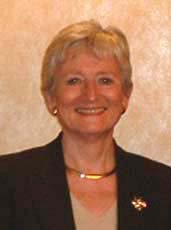
NEVILLE-JONES. Cameron's adviser has 'form'.

TORY leader David Cameron is grabbing the headlines from obliging media with a speech damning "multi-culturalism" and accusing Muslim organisations of fostering separation and being akin to the British National Party.

Who is helping David Cameron with his homework? Up pops the new leading thinker heading Cameron's advisers, Dame Pauline Neville Jones. On TV tonight she admits that her target is not just those who use or advocate violence and terrorism, but anyone whose ideas "threaten the liberal foundations of our society". I'd guess that could include us Marxists, as well as Muslims, folks.

Especially, once that "multicultural" idea is out, those of you whose efforts to be more British than the British aren't judged sufficient. Whether it's your origins or ideology that are "alien" you'd better watch it!

We've met Dame Pauline before. Back in the days when people were being butchered as "Muslims", even if secular ones, while much of the Left preferred looking the other way and had not discovered the word Islamophobia. Pauline Neville-Jones was a Foreign Office political director and chair of the Joint Intelligence Committee. She stood with Foreign Secretary Douglas Hurd for maintaining the arms embargo on Bosnia. Hurd said easing it would only create a "level killing-field". While the Chetniks (Serb nationalists) could sow cluster-bombs and anti-personnel mines, Britain would not let those resisting them even buy mine detection equipment.

Neville-Jones was senior British official at the Dayton peace negiotiations imposed on Bosnia. "Balkan experts remember her from Dayton as a 'very tough' negotiator who was continually pushing the Bosnians to accept the de facto partition of their nation". (Francis Wheen, Guardian, 4 September 1996).

Three months after quitting the Foreign Office, Lord Hurd joined NatWest Markets, investment arm of the National Westminster Bank, on a salary of £250,000 a year. His qualifications for the world of finance were not obvious, but he knew people, and he had a helper - Dame Pauline. The dire duo went out to Belgrade in 1996 for breakfast with Slobodan Milosevic, whose government was strapped for cash, with Serbian workers demanding unpaid wages. NatWest helped Milosevic sell off the post and telephone system, PTT, and obtained a contract to advise on debt management. It eyed up Serbia's electricity industry and oil for further privatisation. While it was Italian and Greek money that went into the telecomms deal, NatWest did well out of tending advice, and so did Lord Hurd and Dame Pauline.

Then Neville-Jones was off to fresh fields. She became a BBC international governor in January 1998. In 2004 the Corporation was brought to heel over its coverage of Iraq, and the Blair government's dodgy dossier on Weapons of Mass Destruction. Following the Hutton report, and after Greg Dyke was made to resign as director general, some people questioned Dame Pauline's objectivity as a governor. It was revealed that besides her intelligence past, she held £50,000 shares in the privatised former Ministry of Defence firm QinetiQ and had earned £133,000 the previous year as chairman.
http://www.bilderberg.org/milne.htm#qinetiq

Last year, the US Carlyle group, - whose investors have included George Bush senior, Colin Powell, former Defense Secretary James Baker and, at one time, members of the Bin Laden family - floated Qinetiq on the stock exchanges, and once again Dame Pauline must have done well out of it. But money, though it doubtless comes in handy, is not her first interest, and off she went last February for an "Intelligence Summit" in Arlington, Virginia, though I dare say her US hosts didn't see her out of pocket for this.

Among those taking part with her were former CIA directors John Deutch and James Wooley, as well as Steve Pomerantz, former director of "counter-terrorism" for the FBI. Not to be confused with Cointelpro, the FBI's programme of domestic infiltration, disruption and assassinations which has been reinstated as part of "Homeland Security". But also billed to appear were Colonel Oded Shoham, Israel army reservist, Yoram Hessel , "former senior Mossad officer", and Israeli-born Yousef Bosasky, now director of the Congress Task Force on Terrorism.

Another speaker was Rachel Ehrenfield, who two years previously warned of dangerous efforts by Tony Blair and the World Bank to pressure Israel into concessions that would lead to "an independent terrorist Palestine state".

Now I'm not suggesting that the head of David Cameron's political advice circle would have agreed with all those she might have rubbed shoulders with at Arlington, anymore than in Belgrade ten years previously. But I can see people asking whether her advice on multiculturalism and Muslims is well-meant, and even questioning her right to lecture anyone on association with extremists.

Labels: , , , , ,

Sunday, February 12, 2006

"War -what is it good for?"

"As on a May morning, on Malvern hills,
Me byfel a ferly of fairy, me thought".
Langland's PIERS PLOWMAN had a vision
of rich and poor striving for wealth and gluttony.
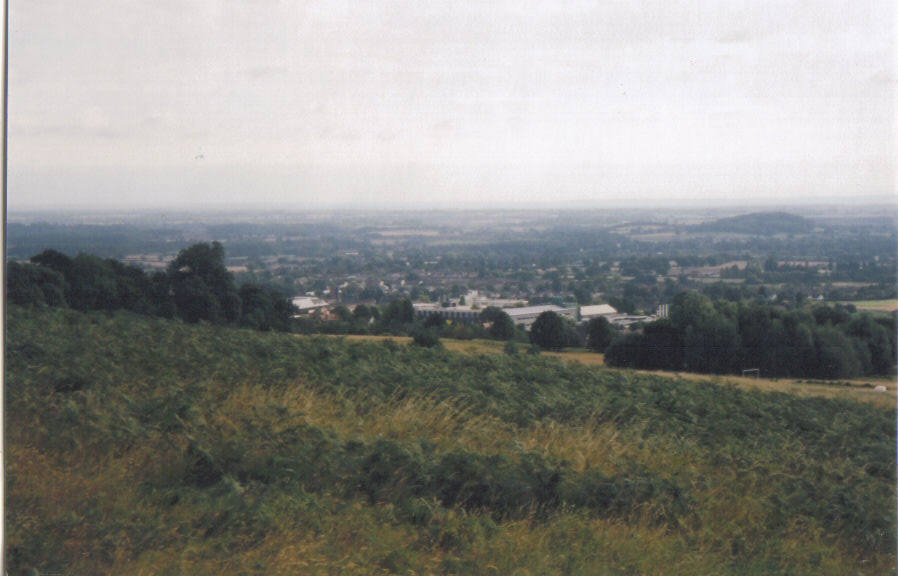
Nowadays he'd see laid out beneath Malvern
the former DERA establishment, now QinetiQ,
and part of Carlyle Group.

It's the economy, stupid. Well, it is for some people

Carlyle group floats QinetiQ shares

In the councils of government, we must guard against the acquisition of unwarranted influence, whether sought or unsought, by the militaryindustrial complex. The potential for the disastrous rise of misplaced power exists and will persist.
We must never let the weight of this combination endanger our liberties or democratic processes. We should take nothing for granted. Only an alert and knowledgeable citizenry can compel the proper meshing of the huge industrial and military machinery of defense with our peaceful methods and goals, so that security and liberty may prosper together.
DWIGHT EISENHOWER


QinetiQ plays an important part in the war on terrorism, ...We are ideally placed to help government authorities and private companies address the numerous security challenges faced in many environments, ranging from Aviation and Maritime Security to Corporate and IT Security, Law Enforcement, Resilience and Defence."
http://www.worldsecurity-index.com/details.php?id=387

CARLYLE is the US private equity group that was dubbed "the president's club" with George Bush senior, Colin Powell and former US Secretary of State James Baker III on the board, and former US Defense Secretary Frank Carlucci as chairman. Specialising in buying up war industry it has done pretty well out of the military spending boom since 9/11 and America's "war on terror"; ironic, since the Bin Laden family were major shareholders till someone decided it didn't look good.

In 2003 Carlyle bought a 31 per cent stake in QinetiQ, the company carved out of Britain's Defence Evaluation and Research Agency, for £42 million. Some 4,000 jobs were lost in the past few years, but profits grew. At least 80 per cent of QinetiQ's work remains for the British government, though it also has US contracts.

On Friday, February 10, QinetiQ was floated on the stock exchange for the first time and since investors don't fear peace will break out in the foreseeable future, shares priced at 200p moved up to 213p as they rushed to buy.
Carlyle was able to raise £160 million and still holds a £180 million stake in the company. QinetiQ executives Sir John Chisholm and Graham Love saw the shares for which they each paid a few hundred thousand pounds now worth well over £20 million. So, if you'd had a few hundred thousand to spare a few years back, and seen which way the wind blew you could have done the same. Mind you, it would have helped if you'd already been in there, and known the right people.

Carlyle's began as a company in September 1987. Founders Stephen Norris and David Rubinstein had done well in brokerage dealings and knowing tax loopholes. They called it after the Carlyle hotel in New York, to give it a luxury image. Carlyle didn't sell shares to just anybody, but drew big name politicians and big private investors.

It was in November that year that President Reagan promoted security adviser Frank Carlucci to be secretary of Defense. He wasn't in the job long, but he was able to re-organise the Pentagon's procurement system. Useful experience. He also made 13 trips abroad. In January 1989, six days after quitting Defense, Carlucci joined the Carlyle.Group.

Fred Malek had joined Carlyle in September 1988, after resigning as chairman of the Republican National Committee. There had been reports that while working for Nixon he compiled figures on the number of Jews working in the Bureau of Labor and Statistics. Malek, a friend of George Bush senior, found a place for young George Dubya on the board of Caterair, a Carlyle subsidiary, in February 1990. It was not a great success, and George Dubya left it off his resume when running for governor of Texas in 1994.

The following year Carlyle sold off Caterair for less than it had acquired it, leaving the falling airline catering business to concentrate on its core arms and security interests. It had bought BDM Consulting, a defence consultancy, with useful expertise for defence buyouts in 1990. Via BDM it also bought Vinnel Corp, a construction company that had branched out into training the Saudi National Guard. BDM had been accused by rivals of buying influence in the Pentagon, by hiring the wife of a naval officer in charge of procurement, Melvyn Paisley. Paisley was later convicted in corruption investigations, but BDM was not badly affected.

The following year Carlyle acquired an interest in Harsco, manufacturers of military vehicles, which enabled it eventually to buy United Defense. Soon after this it acted as broker for Prince Alwaleed of Saudi Arabia to buy $590 million stock in Citicorp, America's largest bank. In 1992 Carlyle together with Northrop-Grunman won control of LTV Corp's defense and aerospace division, selling its holding on to Northrop two years later.

In February 1993, Richard Darman who had been director of the Office of Management and Management in the outgoing Bush administration joined Carlyle, and the following month he was joined by former Secretary of State James Baker. Later that year George Soros invested $100 million in Carlyle Partners II.

Though George Dubya. may have been coy over his career with Carlyle's less successful ventures, a few weeks after he became governor of Texas the University of Texas Investment Management Company placed a $10 investment in the Carlyle Group.

In September 1997, Carlyle bought United Defense for $850 million, one of the company’s largest buyouts ever. United Defense has plans to build the Army a 60-ton mobile howitzer called Crusader.

In March 1998, former Tory prime minister John Major joined Carlyle as European adviser. He went on to become chairman of Carlyle Europe in May 2001. In May 1999—Former US President George Herbert Walker Bush visited South Korea on behalf of Carlyle, cultivating business and political ties that resulted in Carlyle’s investing more than $1 billion in South Korea’s struggling economy.

In July 1999, former Connecticut State Treasurer Paul Silvester had to resign a position at Park Strategies after the FBI launched an investigation into a series of investments he made with Connecticut State Pension funds before he left office. Among the investments is a $50 million placement with Carlyle Asia. In September Silvester pleaded guilty to corruption. But in January 2001, SBC Communications, a Carlyle client, gained FCC approval to offer long-distance phone service in Texas, Oklahoma, and Kansas, after the US Justice Department had rejected the company’s request. Approval was given on the last day of FCC Chairman William Kennard’s tenure. Three months later, Kennard was given a job at Carlyle.

September 11, 2001 came the attacks on the World Trade Centre and though less devastatingly, the Pentagon. Carlyle companies stood to do well from increased military spending in the "war on terror" and more immediately security contarcts such as clearing supposed anthrax threats. But news reports about the bin Laden family's involvment in Caryle forced them to luiqidate these holdings. .

In December 2001 Carlyle floated United Defence shares after newly approved military spending temporarily secured the Crusader project. The company earned $237 million in one day on the sale of shares, and on paper made more than $800 million. In April 2002, Cynthia McKinney, a Democratic congresswoman from Georgia called for an investigation into the September 11 attacks, pointing out the President’s extensive ties with the Carlyle Group.

In May 2002 the US Army was forced to investigate whether its own officials illegally lobbied Congress in support of the Crusader in the face of the program’s cancellation. In August 2002 United Defense announced the cancellation of the Crusader program, but said it had won the contract to build another gun that would replace Crusader.

Dame Pauline Neville-Jones, a former chairman of the British Joint Intelligence Committee, associate of Lord Hurd and adviser to John Major, now an adviser to Tory leader David Cameron, became chair of QinetiQ while still on the BBC board of governors. A supporter of the war in Iraq who disapproved of BBC critical reporting, she was one of the "two posh ladies" who ex-BBC chair Greg Dyke blamed for his resignation. (The other being Sarah Hogg, former head of John Major's policy advisory unit) Some people asked how QinteiQ and Dame Pauline's defence interests tallied with BBC "independence". The dame denied Dyke's claims, but resigned herself a month befor her term as governor was completed. http://observer.guardian.co.uk/uk_news/story/0,6903,1318577,00.html

Dame Pauline, who did well helping NatWest Markets advise accused war criminal Slobodan Milosevic on Serbia's telecomms privatisation, owned a 0.04 per cent stake in QinteiQ acquired at the same time as Carlyle bought in. She served as non-executive chairman for four years, retiring last summer, and was paid a salary of £135,000 in 2005-06. It is thought she would have paid no more than £60,000 for her holding, but with flotation it should be worth at least £440,000 giving her a profit of at least £380,000.

If you'd like that kind of money you could always try the national lottery.

For more info. on QinetiQ, its website is
http://www.qinetiq.com/

And now here's a little plug for the latest piece of ingenuity from QinetiQ: http://www.engadget.com/2006/02/08/qinetiq-exploding-ink-could-enable-point-and-click-f

QinetiQ exploding ink could enable point-and-click fuses

UK defense contractor QinetiQ has filed a patent for an explosive ink that could allow fuses to be designed on a computer and then printed directly onto ordinary paper. The ink is stable when wet, and only becomes active when a current is fed through a metal strip placed on top of the printed fuse. Once the fuse is activated, it can be used to trigger just about any kind of explosive device, from fireworks to munitions. (We don't even want to know what happens if you get a paper jam.) Somehow, we expect the defense industry to do its best to keep this one under lock and key, and we sort of hope they succeed, if only so we can avoid having to wait as TSA officials disassemble our portable inkjet every time we pass through customs.
..
I'm just waiting to see if Abu Hamza had any of this on order. The press keeps reporting "discoveries" made under Finsbury Park mosque, though he'd been ousted from there long before he was arrested.
I know the Bin Ladens disowned their prodigal son Osama and have given up their share in Carlyle holdings.
But I'd be careful of anyone offering to flog me hooky printer ink right now. What happens if there's a heat-making paper jam?

Labels: ,

Friday, January 27, 2006

The Perils of Pauline


From breakfast in Belgrade....

SET to make £400,000 from a controversial defence deal which the National Audit Office has been asked to look into, a former Foreign Office intelligence chair and adviser to John Major, Dame Pauline Neville-Jones is off to Washington next month for a gathering of "security" and intelligence experts.

In a deal which could yield up to 800% profit for US arms equity group Carlyle, the government has agreed to the flotation of QinetiQ, the former Defence Establishment Research establishment in which it holds a 56 per cent stake. Carlyle bought a one third share of QinetiQ in March 2003, for £42 million. This is expected to be worth £341 million at flotation, if the company meets valuation hopes of £1.1 billion. Carlyle is expected to sell at least half its stake, potentially netting £170 million from the deal.

http://business.timesonline.co.uk/article/0,,9067-1983170,00.html

Dame Pauline, a close aide of Lord Hurd as Tory Foreign Secretary, became a BBC governor, and was chair of QinetiQ until September last year, when she was replaced by former General Motors and BP executive Sir John Chisholm. She has recently been appointed a security adviser to new Tory leader David Camerdon, but still looks to benefit from the Carlyle deal.

The Independent reported on January 15, 2006

Fresh QinetiQ bonanza: Cameron's adviser to make nearly £400,000
MPs round on £1.1bn listing of old MoD body, where US venture capitalist paid £42.4m for a one-third stake

Dame Pauline Neville-Jones, who last week became a policy adviser to David Cameron, the new leader of the Conservative Party, is set to make around £400,000 from the controversial flotation of defence research group QinetiQ.
http://news.independent.co.uk/business/news/article338591.ece

This is not the first time Dame Pauline has reaped rich rewards from the coincidence of her official appointments with controversial deal involving public assets and privatisers.

As Foreign Office political director and chair of the Joint Intelligence Committee, Pauline Neville-Jones stood with Foreign Secretary Douglas Hurd for maintaining the arms embargo on Bosnia. The Foreign Office made sure the BBC always referred to the Bosnian people and their government as "the Muslims", implying the war was between three equally bloodthirsty warring ethnic factions, so that as Old Etonian Hurd said, lifting the embargo would only "create a level killing field".

Neville-Jones was senior British official at the Dayton peace negiotiations imposed on Bosnia. "Balkan experts remember her from Dayton as a 'very tough' negotiator who was continually pushing the Bosnians to accept the de facto partition of their nation". (Francis Wheen, Guardian, 4 September 1996). Slobodan Milosevic must have found the British representatives very helpful.

Three months after quitting the Foreign Office, Lord Hurd obtained a new job with NatWest Markets, investment arm of the National Westminster Bank, on a salary of £250,000 a year. He had no known qualifications or experience in finance, but he presumably knew a lot of people, and he had an enthusiastic helper - none other than Dame Pauline.

On July 24, 1996, the dynamic (some say dire) duo went for a "discreet breakfast" in Belgrade with Slobodan Milosevic. The Serb president had shifted much of his own loot via discreet banks in Cyprus and property deals, but his government was hard up, workers were clamouring for unpaid wages, and he needed to get the army ready for trouble at home as well as in Kosova.

NatWest agreed to prepare the Serbian post and telephone system, PTT, for privatisation -- for a fee of more than $10million. It also obtained a contract to advise the Milosevic government on debt management. It eyed up Serbia's electricity industry and oil for further privatisation.

Dame Pauline has pointed out that it was largely Italian and Greek money that went into the telecomms deal. (Last thing we heard Italian authorities were still probing the amounts involved) NatWest's role -and hers and Lord Hurd's -was purely advisory. But none the less remunerative.

Dame Pauline became a BBC international governor in January 1998. Her role came in for critical attention in 2004 when the Corporation was brought to heel after the Hutton report. Some blamed her for Greg Dyke's resignation as director general. It was revealed that besides her intelligence past, she held £50,000 shares in defence firm QinetiQ and had earned £133,000 the previous year as chairman.
http://www.spinwatch.org/modules.php?name=News&file=article&sid=245

....to dinner in Arlington, VA

So who will host Dame Pauline in the United States next month?
On February 17-20 she will be at the 2006 "Intelligence Summit", being held at the Hyatt Regency Crystal City, Arlington, Virginia. Described as a "non-profit" (hence tax-free) "educational" forum, this is concerned with countering "terrorism", and threats to the security of the United States or its allies:

Homeland Security Session: Some of our allies have very different approaches to domestic security. What can we learn form Singapore, Taiwan, the United Kingdom and Israel? This is a must session for law enforcement and first responders from the national, state and local levels of every free nation around the world.
http://www.intelligencesummit.org/about.php

I'd hazard a guess that their definition of what constitutes "terrorism" and threats to security will be fairly wide, but that it will not include attacks on Cuba, blowing up Cuban airliners, coup plots in Chile and Venezuela, Mossad and MI6 operations in the Middle East, or the fascist "strategy of tension" in Italy. And certainly not bombs dropped from a safe strategic height.

Dame Pauline's fellow participants will include former high-ranking US air force and army officers, and former CIA directors John Deutch and James Wooley. Also Steve Pomerantz, former director of "counterterrorism" for the FBI. Not to be confused with Cointelpro, the FBI's programme of domestic infiltration, disruption and assassinations which has been reinstated as part of "Homeland Security"?

Besides the obviously counter-revolutionary bias, there appears to be a more particular slant on the "Intelligence Summit" Among others billed to appear are Colonel Oded Shoham, Israel army reservist, and Yoram Hessel , "former senior Mossad officer"., along with Israeli-born Yousef Bosasky, now director of the Congress Task Force on Terrorism.

Presided over by journalist John Loftus, the Intelligence Summit is tip of an iceberg in which right wing US and Zionist "security" interests have been compacted, the offshoot of a body that was originally supposed to combat racism!.

Originally incorporated as the International Holocaust Education Center(3), after 9/11 IHEC rapidly expanded its educational mission from fighting racism to fighting terrorism, and is now known as the Intelligence and Homeland Security Education Center.

Now that's what I call hijacking!

To sample its real flavour, I had a look at an an article by another Intelligence Summit speaker, Rachel Ehrenfeld, director of the American Center for Democracy, Published in 2004, and entitled "Blair's Palestine Problem", it perceives a dangerous influence in Downing Street:-

"However, the pressure put on Israel by the British premier Tony Blair and World Bank President James Wolfenson will only assist in the creation of an independent terrorist Palestine. Arafat’s replacement, Mahmoud Abbas, is widely perceived as being more pragmatic than his predecessor, especially since he keeps repeating his commitment to peace. But at the same time, like Arafat, he calls on the Palestinian people to "continue the struggle…to raise the Palestinian flag on the walls of Jerusalem, the capital of our independent Palestinian state."

Wow! If he really wants peace he should roll over on his back, tell his people to do likewise, and invite Kahane's mad followers from the 'States to tramp in over them. That might just almost satisfy the Ehrenfelds.

But Ehrenfeld's article does indicate where the Board of Deputies of British Jews gets its dafter ideas from. Referring to the Palestinian charity Interpal, which has since successfully sued the Board for linking it with terrorism, she wrote:

"Why does the Blair administration allow a HAMAS front to openly operate in the UK? After all, following US pressure, the European Union as well as the UK have outlawed HAMAS as a terrorist organization and prohibited the collection of money to assist terrorist organizations for any purpose, including civilian. Is the electoral support of the anti-Israeli lobby that crucial to the Blair administration staying in power?"
Blair;s Palestine Problem Dr. Rachel EhrenfeldFrontPageMagazine.com December 24, 2004 http://www.frontpagemag.com/Articles/ReadArticle.asp?ID=16411

What is this powerful "anti-Israel lobby"? How come we had not seen it? Could Ehrenfeld perchance be alluding not to the Foreign Office Arabist bogy of old, but to the "Muslim vote"?

The latest issue of FrontPage says:
"With Hamas' victory in the Palestinian elections, the Islamist yearning to purge the world of Jews returns to the limelight. What causes this craving ...."

Don't know about any craving, but I can recognise a right-wing US-Zionist raving .....

I was going to say Dame Pauline, moving from breakfast in Belgrade to dinner in Arlington had come up in the world, but now I'm not so sure. Still, I suppose the money is still good. It has been at most stages in her career.

Labels: ,